Jul 02 2008

Top 10

Print This Post Published by Laylita under All

Paz of The Cooking Adventures of Chef Paz has tagged me for a meme called 10.

Here are the rules:
1. Post 10 of your own favorite food shots.
2. Pass the opportunity on to others by leaving a message on their comments page just so they’re aware of it.

So here are my top ten favorite food photos:

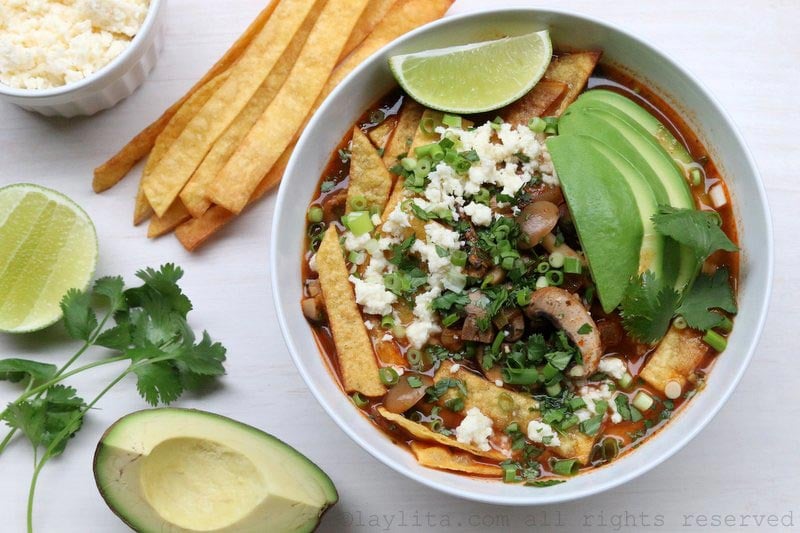
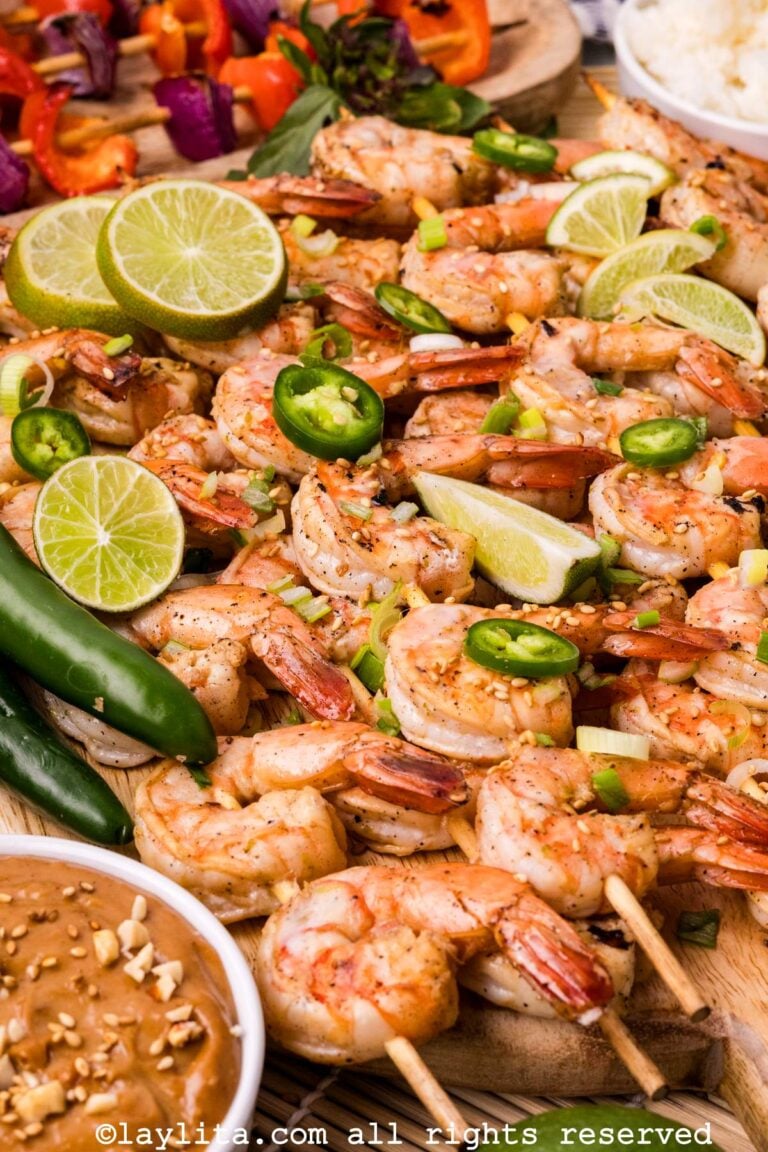
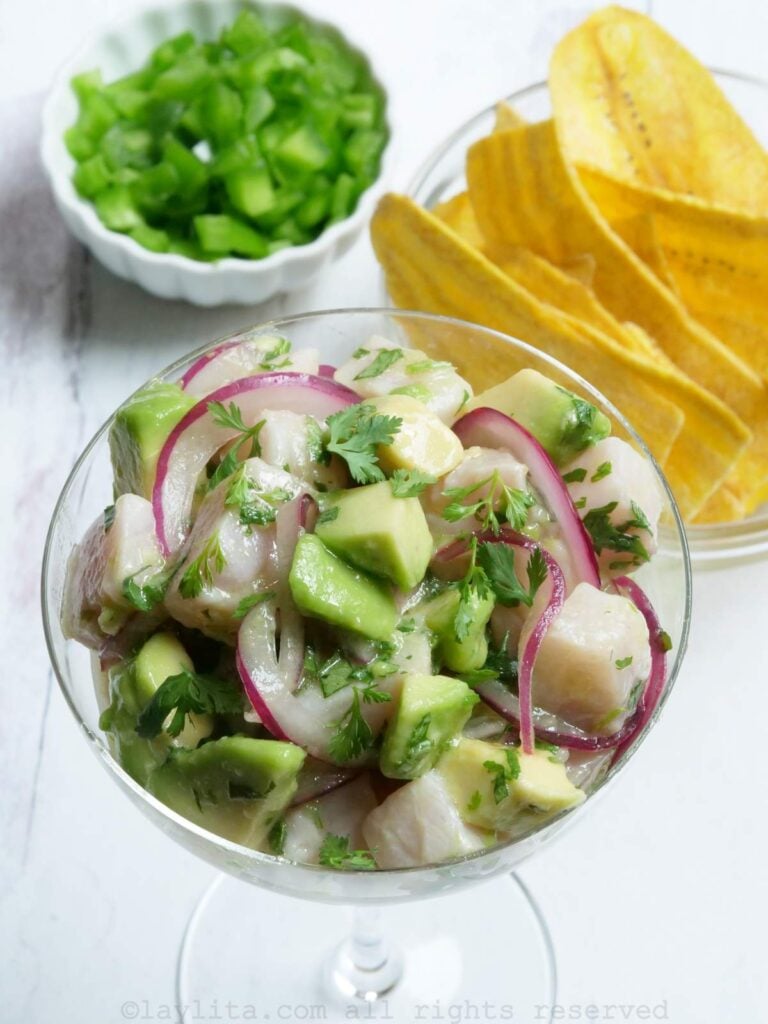
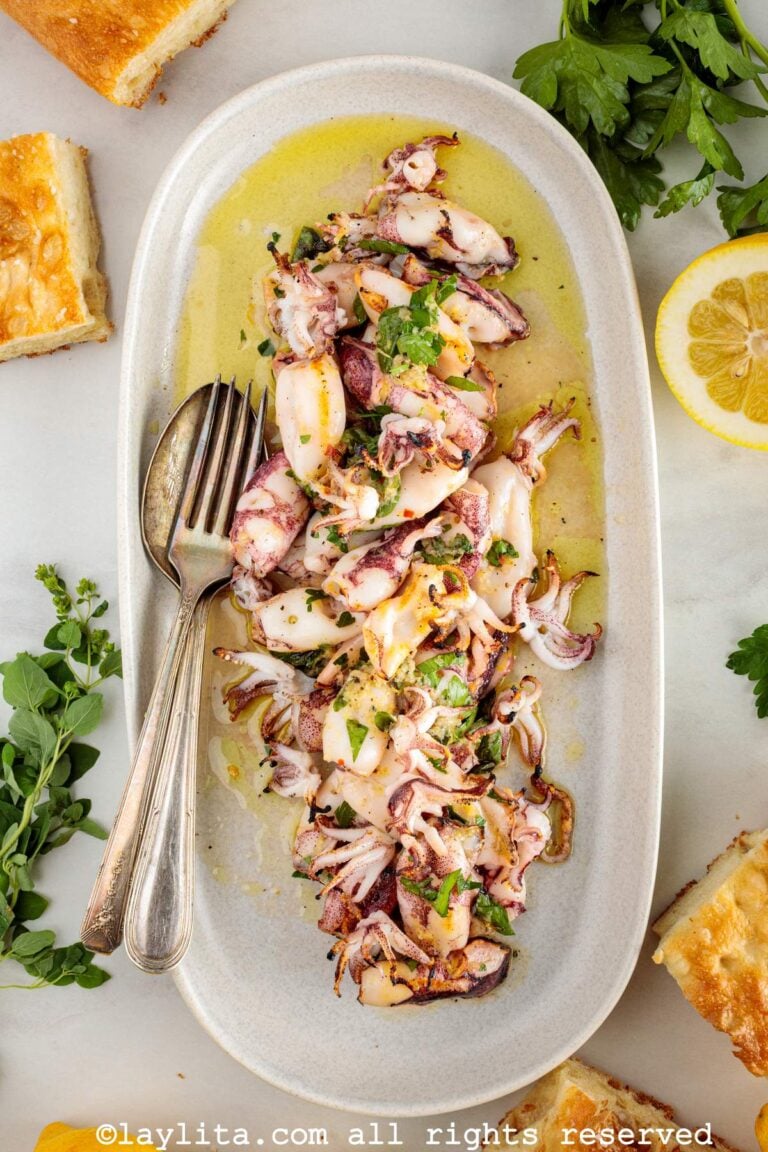
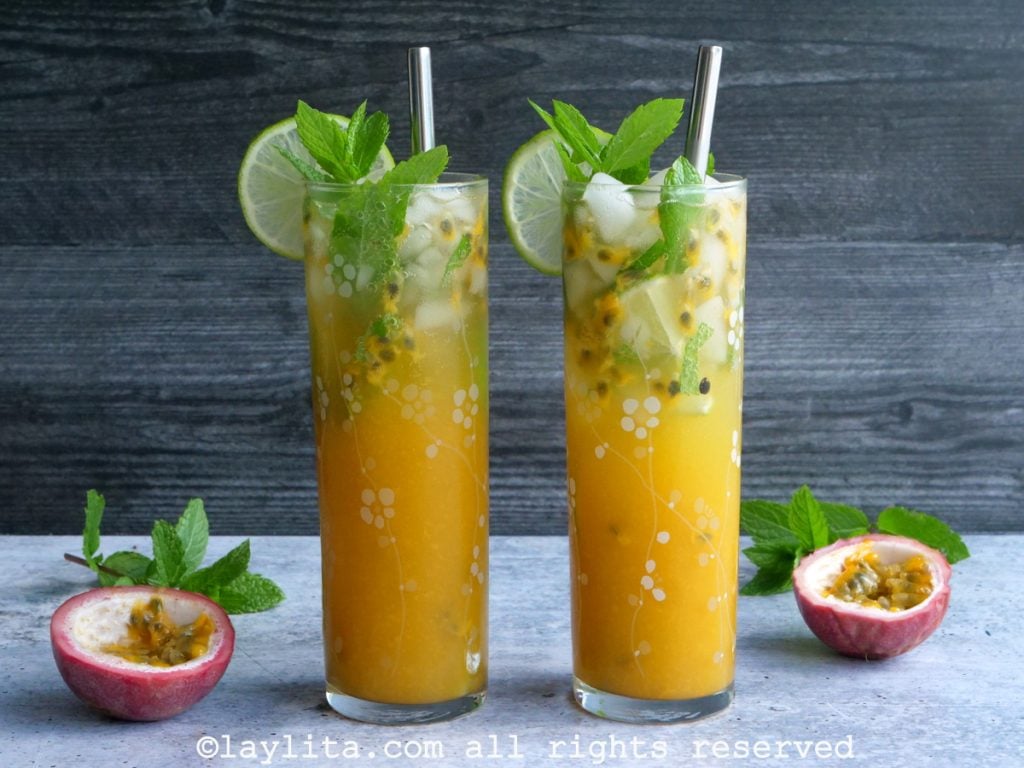
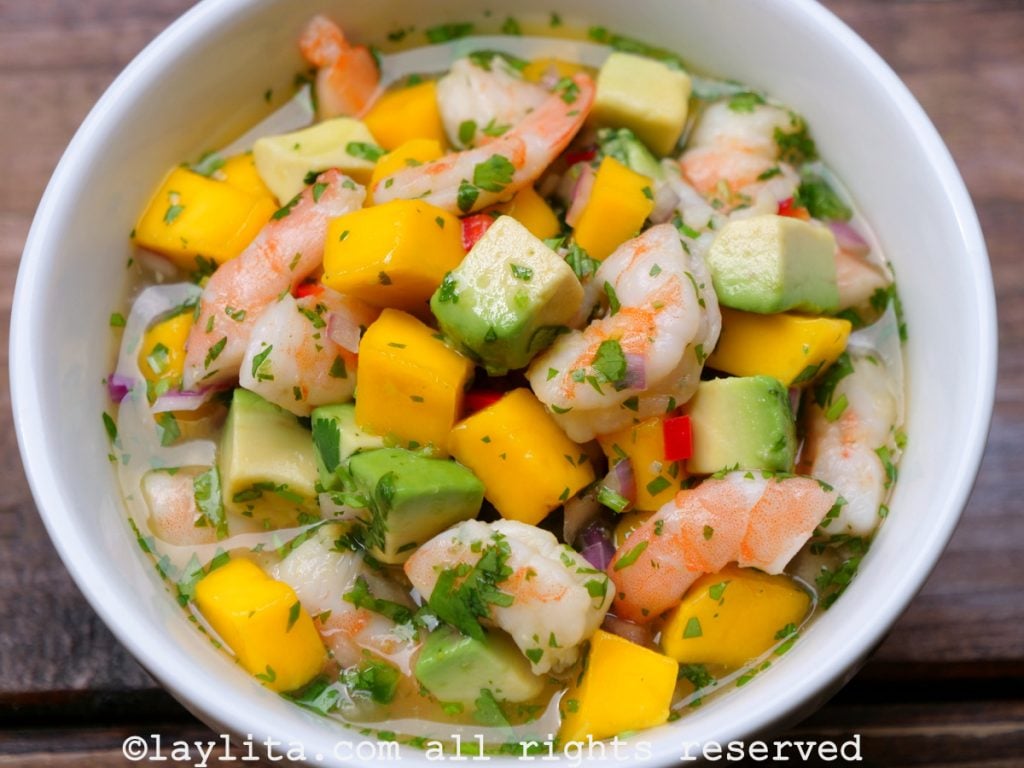
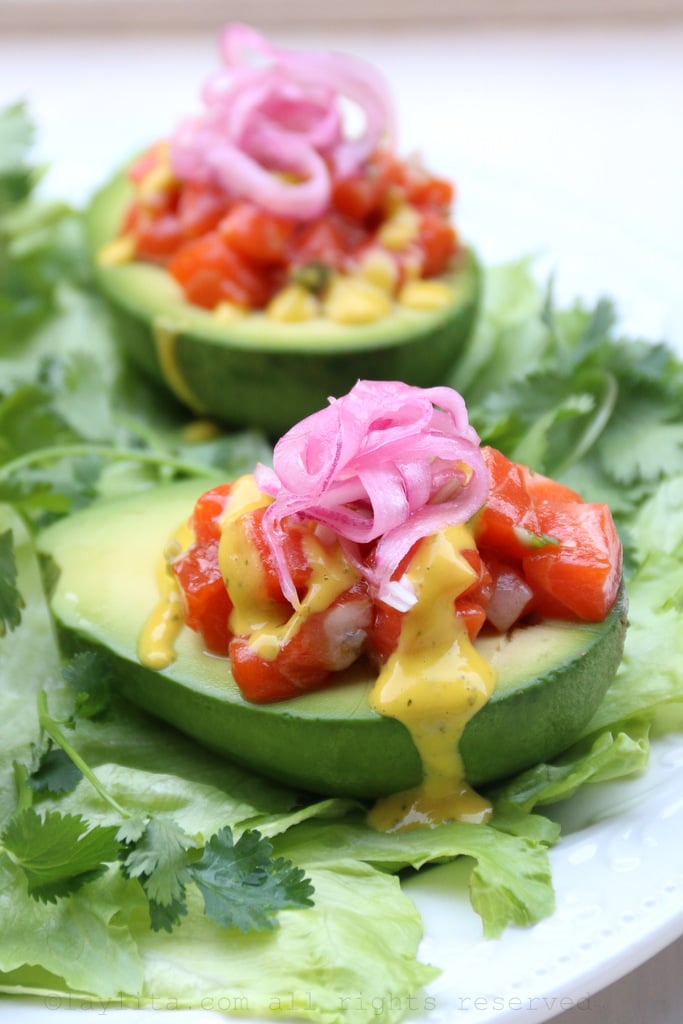
Avocado stuffed with tuna salad Mango, avocado and arugula salad

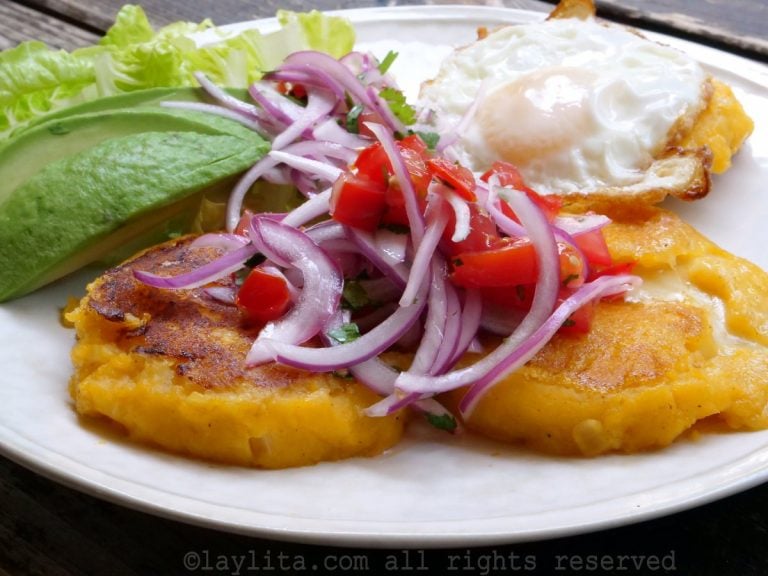
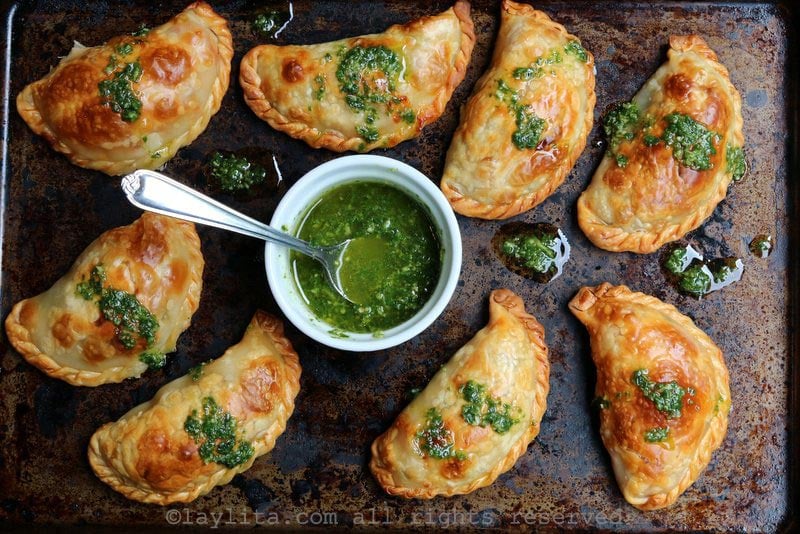
Fried empanadas stuffed with cheese and onions LLapingachos or cheese stuffed potato patties

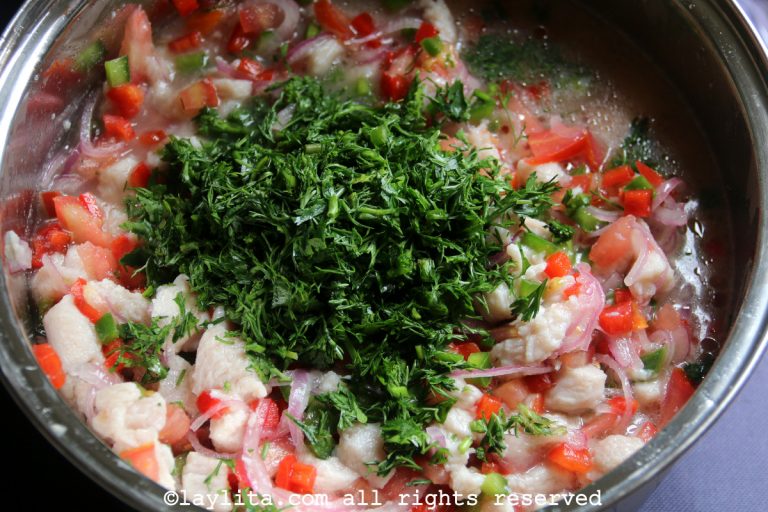
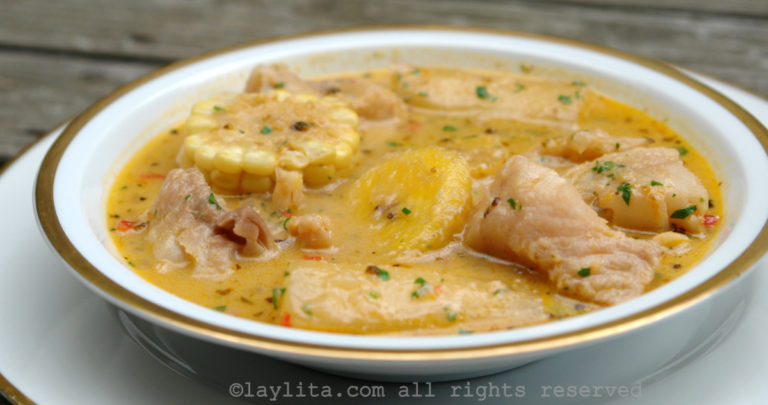
Encebollado de pescado Aji criollo or hot sauce

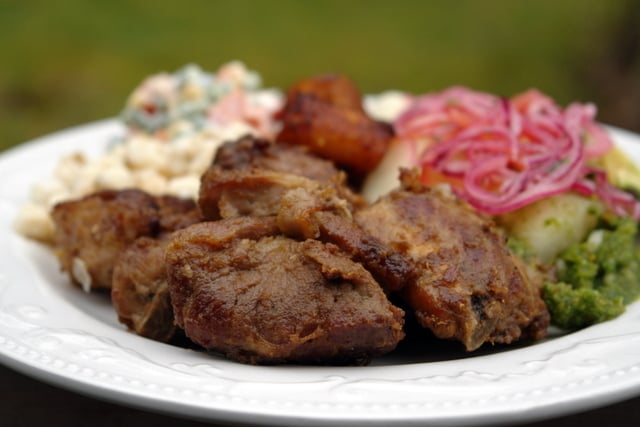
Lentil stew with rice and carne asada Braised pork, Ecuadorian style

Mixed berries broiled with cream Mango and blood orange sorbet

I am tagging:

Sticky, Gooey, Creamy, Chewy

Mango Power Girl

Cook Eat FRET

El Almuerzo de Leticia y Don Lucho

La vida en Buenos Aires y afines

8 responses so far

Jul 01 2008

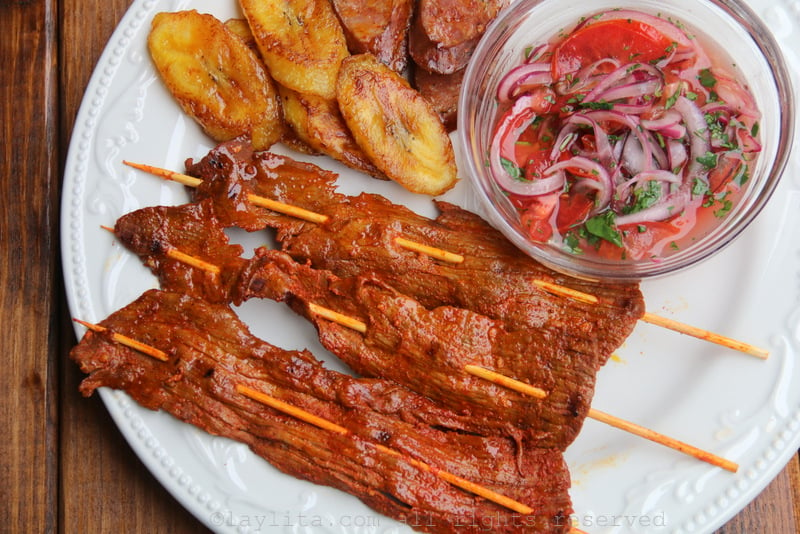
Carne en palito or meat on a stick

Carne en palito or meat on a stick

The first thing that comes to mind when I think of carne en palito, literally translates as meat on a stick, are snack carts selling these hot and delicious thin cuts of meat on a stick at the feria, an annual fair or carnival in honor of the Virgen del Cisne that takes place every September in the city of Loja, Ecuador. The feria was always a big deal for me; it was a two-week event full of fun, games and awesome snack food. Most kids (and teenagers) go to the feria a few times during those two weeks , but I was lucky and got to spend all of my time there, kind of like a kid that lived at the circus, except my parents didn’t abandon me there or anything like that. First of all, our school year started in October so September was still our vacation time and when I was young my mom used to sell her food products at the feria while my dad sold musical instruments (marimbas, charangos, drums, etc) that he made as well as performed at the music shows that took place there, so of course I spent the whole day wandering around the fair. Every night there were large firework displays called “castillos”, these took place in the center of the city. Some of the most exiting activities (for a 9 year old) were the ferris wheel, the carousel, the bumper cars, the games where you could “win” prizes – one of the best games consisted of this huge board with chewing gum boxes and a few $ bills, you had to take a rifle that shot these small arrows and you won whatever your arrow landed on. Another interesting attraction was the caged naked lady with a snake, she was semi-naked during the day when kids were allowed in, for some reason this was very fascinating to me, though I think I was more impressed by the fact that she had a huge snake wrapped around her than by what she was wearing, and I had this evil dream that the snake would eat her or something exciting would happen, but it never did.

The feria was also a street food heaven for me: apples covered with red caramel, delicious bocadillos or sweets made with brown cane sugar and peanuts, cocadas or coconut sweets, huevitos chilenos or deep fried pastry balls covered with sugar, helados de paila or fresh fruit ice cream made in large bowls, salchipapas, and of course carne en palito or meat on a stick. Carne en palito is also sold on the beaches in Ecuador, in the north - closer to the Colombian border - and in Colombia these little pieces of meat on a stick are also known as chuzos. Carne en palito is made with the very thin cuts of meat, if your butcher or supermarket meat section has carne asada or milanesa cuts these are ideal for this, the meat is seasoned with a marinade of orange juice, olive oil, garlic, achiote or annatto powder, cumin and salt. This is the first time I’ve ever made “carne on palito” at home though I’ve grilled a lot of carne asada steaks and kebabs, for some reason I had this mental idea of “carne on palito” being something that you buy on the street but you don’t necessarily make it at home, I have to say that it they make great appetizers and I will be making them a lot more frequently now. I served these with a basic aji criollo or hot sauce, but next time I will try serving them with a few different sauces.

Carne en palito

Ingredients:

1 lb beef, thinly cut carne asada style and cut in long strips

2 tbs orange juice

1 tbs olive oil

6-8 garlic cloves, crushed

2 tsp achiote powder

1 tsp ground cumin

Salt

Preparation:

  1. Mix the orange juice, olive oil, garlic, achiote, cumin, salt and pepper together to make a marinade.
  2. Season the meat with the marinade and refrigerate for a couple of hours.
  3. Slide the meat onto the skewers and grill on each side until done, depending on your grill this should just take a few minutes per side, make sure the grill is very hot.
  4. Serve immediately with aji criollo or other sauces.

Carne asada steaks Marinade for meat

Grilling carne en palito

Chuzos or carne en palito Carne en palito or chuzos

7 responses so far

Jun 30 2008

Salmon a la parrilla con salsa de aguacate or grilled salmon with avocado salsa

Grilled salmon with avocado salsa

Summer seems to finally be here, which means spending a lot of time outside: in the water, playing in the backyard with the kids, grilling outside and having lunch or dinner on the patio. Of course there is also a sort of nice laziness associated with summer, you want meals to be easy and quick to prepare, but also refreshing and filling, this grilled salmon is seasoned with coriander, cumin, paprika and onion powder to give it a nice spicy flavor, grilled and then topped with a salsa made with avocado, onion, mild hot peppers, cilantro, lime juice and olive oil. Salmon and avocado are one of those perfect matches; whoever was the first person to put these two together was a genius. The salmon and the avocado both have that creaminess melt in your mouth feeling, while the lime, onion, hot pepper and cilantro add a great contrast of flavors. I’ve probably said this before but if I had to go to a deserted island and could only choose a few food items to take with me, avocados would be one of them (I’m hoping I could learn how to catch some fish on my island); they’re also one of those items – along with cilantro and limes - that whenever I run out of them it means that I need to go grocery shopping. I’ve made this before with tuna and it was also a great match, you can season the fish in the morning and let it marinate all day or season it while the grills warms up, the avocado salsa can be made in about 5 minutes, I served this dish with rice and some patacones or thick green plantain chips.

Grilled salmon with avocado salsa, rice and patacones

Ingredients (for 4 people):

2 lbs salmon, cut into 4 pieces

1 tbs olive oil

1 tsp salt

1 tsp ground coriander

1 tsp ground cumin

1 tsp paprika powder

1 tsp onion powder

1 tsp black pepper

Avocado salsa

1 avocado, peeled, seeded and sliced

1 small red onion, sliced

3 mild hot peppers, seeded and deveined, diced or sliced

Juice from 2 limes

3 tbs olive oil

2 tbs finely chopped cilantro

Salt to taste

Suggested sides Rice and patacones

Preparation:

  1. Mix the salt, coriander, cumin, paprika, onion and black pepper together, rub the salmon fillets with olive oil and this seasoning mix, and refrigerate for at least 30 minutes.
  2. Pre-heat the grill.
  3. Combine the avocado, onion, hot peppers, cilantro, lime juice, olive oil and salt in a bowl and mix well, chill until ready to use.
  4. Grill the salmon to desired doneness.
  5. Serve the salmon topped with the avocado salsa, and with rice and patacones or thick green plantain chips on the side.

Grilled salmon

Avocado salsa

Grilled salmon with avocado salsa, rice and patacones

7 responses so far

Jun 30 2008

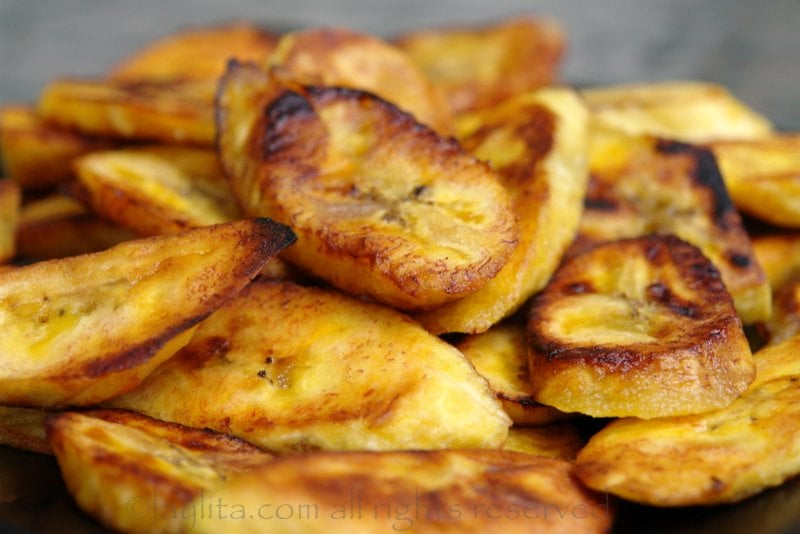
Patacones or thick fried green plantains

Patacones, also known as tostones , are fried green plantain slices, and unlike chifles - very thin green bananas or green plantain chips- patacones are thicker and are always made with green plantains (unlike chifles which can be made with green bananas), the most typical way to make patacones is to fry them once, remove them from the hot oil, smash them with a wood mortar and pestle to flatten them a little - the bottom of glass jar or glass also works- and fry them again until crispy. Patacones are very easy to make and probably way past due to be posted here since I’ve mentioned them already as suggested side dishes for quite a few different recipes. My brother Ramon makes some of the best patacones and he finally showed me his secret method: instead of frying them twice, he boils the green bananas first, then he gently smashes them and next he fries them, they are perfectly crispy on the outside but soft on the inside, and unlike the twice-fried patacones they stay this way even when they get cold, the twice-fried ones are great when they’re warm abut can get rock hard if they get cold.

Patacones - boiled and fried

Patacones are one of those perfect snacks, especially on a sunny day, they can be eaten alone, with dipping sauces and also as sides for ceviches, seafood dishes, pretty much anything. The plantains should be green, a few touches of yellow green is okay, in fact Ramon prefers the ones that are barely starting to get a few hints of yellow green because they are less likely to break or crack too much when smashing them, you have to be careful though because if the plantains are getting ripe you could end up with sweet patacones.

Ingredients:

2 green plantains, use about 1 plantain per person for an appetizer and 1 plantain per 2 people for a side dish – you can get about 5 patacones per plantain

Canola oil for frying

Salt to taste

Optional – crushed garlic, hot pepper powder, other seasonings if desired

Preparation:

Twice fried

  1. Peel the plantains, the easiest way to peel a green plantain is to make the lengthwise cut on one of the angles, the cut should be skin deep without touching the actual flesh of the plantain, then use the knife to raise the skin and peel it off.
  2. Cut the plantains into thick slices, you can make straight cuts or slightly diagonal cuts.
  3. Heat the canola oil over medium high heat in a frying pan – use enough oil to almost cover the plantain slices - or a deep fryer, temperature should be about 350 F, fry the plantains until they start to get yellow, but not golden.
  4. Remove the plantains and place on paper towels to drain the oil.
  5. Use a wood mortar and pestle (or the bottom of a glass jar or glass) to smash and flatten the plantains, do this gently to keep the slices from breaking, a few cracks is ok as long as the whole slice remains in one piece.
  6. Sprinkle the plantain slices with salt and other seasonings (if using the raw garlic rub it on the slices).
  7. Reheat the oil, temperature should be about 375 F and fry the plantains until golden on each side, about 1-2 minutes per side.
  8. Remove from the oil, drain again on paper towels, and add additional seasoning if needed.
  9. Serve warm as a side dish or as an appetizer with dipping sauces.

Suggested dipping sauces: aji criollo or hot sauce, tree tomato hot sauce, chimichurri sauce, or cilantro aioli.

Frying patacones or tostones

Boiled and fried

  1. Peel the green plantains, cut in half and place in pot with sufficient water to cover them.
  2. Bring the water to a boil and boil for about 25 minutes or until tender.
  3. Remove from the heat but the leave the plantains in the water.
  4. Cut the plantains in thick slices and gently flatten – as much as possible without cracking - with a wood mortar and pestle or the bottom of a glass.
  5. Sprinkle the flattened plantain slices with salt and seasonings.
  6. Heat the oil in large frying pan over high heat and cook the plantains until golden, about 2 minutes on each side.
  7. Transfer to a paper towel to drain the oil.
  8. Add additional salt and seasonings if needed and serve warm with dipping sauces or as a side dish.

2 responses so far

Jun 25 2008

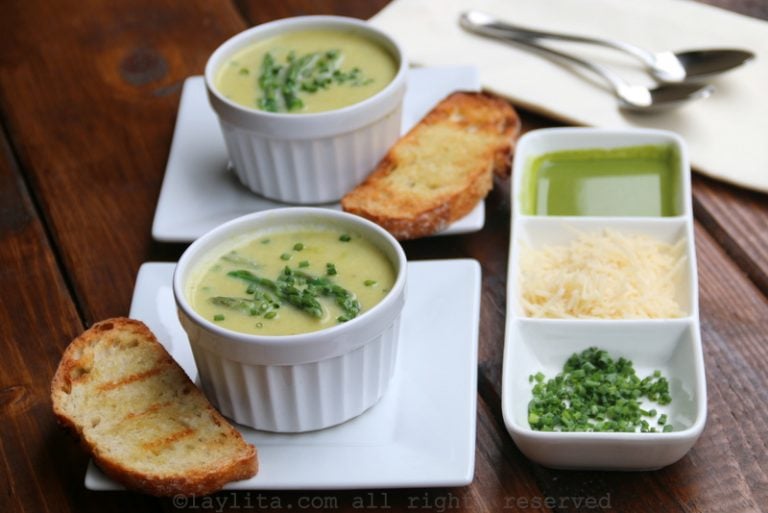
Grilled asparagus with parsley sauce

We’re having a very long spring here in the Pacific Northwest -at least in the Seattle area-, which means that while I’m still waiting for that fresh local corn there is still plenty of other good things at the market, like asparagus, which my kids love and will eat non-stop, but I still have to find different ways to prepare it, or at least a different sauce to serve with the asparagus. Another good thing we have in Seattle is a Basque restaurant called Harvest Vine and back in April I had some of their grilled asparagus and it was just perfect, very simple, but just delicious, and one thing that they had on the plate were these tiny drops of bright green sauce, which from the taste had to be made with parsley, lemon juice, maybe a little olive oil, very good, but of course not enough sauce for me, I love sauces and think people should be generous with sauce (I guess I could have asked for more but I didn’t). So just like when you have a crepe with Nutella at a restaurant and they give you a tiny bit of Nutella and then you come home and eat it directly from the jar with a spoon, I decided to make my own version of that parsley sauce and completely drench my grilled asparagus in the sauce, and when the asparagus was all gone, we used bread to soak up the remaining sauce and finished every single drop. I grilled the asparagus on an electric grill; I get lazy and impatient about using the charcoal grill when I’m just grilling a couple of things, you could also roast the asparagus in the oven. My original plan was to have the grilled asparagus as a side dish for dinner, but they ended up as an appetizer.

Ingredients:

1 bunch asparagus

2 tbs olive oil

Salt

Parsley sauce

1 cup parsley leaves

Juice of 2 lemons

3 tbs olive oil

4-6 garlic cloves

Salt to taste

Preparation:

  1. Toss the asparagus with the olive oil and salt, begin heating the grill.
  2. Blend the parsley leaves, garlic cloves, and lemon juice until completely pureed.
  3. Strain the parsley sauce and place the strained sauce in a jar with the olive oil and the salt, shake the jar until the sauce is well mixed, refrigerate until ready to use.
  4. Grill the asparagus until tender and serve with the parsley sauce.

6 responses so far

Jun 25 2008

Flan de piña or pineapple flan

En español

I enjoy a good flan every now and then, but if it were up to Nicolas we would eat flan every day. I also like to have a change from the classic vanilla flan and add different flavors to the flans. In Ecuador, especially on the coast, it is very common to find flans made with pineapple, coconut, mango, or other fruit. I’ve mentioned before that when I’m cooking for friends I like to make desserts that are relatively low maintenance and that can be made ahead so that I can focus on the appetizers and main meal; flan definitely falls into this category. I used freshly made pure pineapple juice for this flan, you have to strain it and then let the foam rise to the top and remove the foam, but if you are in a hurry you can substitute with a good quality store bought pineapple juice, though you might want to reduce the amount of sugar for the flan if the store bought juice already has sugar. I used whole milk for this pineapple flan because I was out of evaporated milk and it worked just fine, whenever we made any type of flan with my high school friends we always used evaporated milk or condensed milk or a mix of both, I’m not sure why but a lot of Latin American desserts use them, we were talking about this with some friends from Mexico the other day and our guess was that it has something to do with marketing by a certain large Swiss food product company.

This recipe makes about 10 small individual flans, you can also use a large flan mold as well, just adjust the cooking time.


Ingredients:


2 cups sugar, 1 cup for caramel and 1 cup for the flan
½ cup of water
2 ½ cups pure fresh pineapple juice, strained and foam removed, from 1 pineapple
1 tbs tapioca starch – can also use corn starch
1 cup whole milk
10 eggs
1 tsp vanilla extract
2 tbs rum
10 buttered oven proof ramekins or flan molds
Large oven proof dish filled with water
Serve with: brown sugar and pineapple slices for caramelized pineapple slices

Preparation:

  1. To make the caramel, bring 1 cup of sugar and ½ cup of water to a boil over medium heat and boil until it gets a deep amber color, about 8-10 minutes.
  2. Pour the hot caramel into the previously buttered flan molds or ramekins and try to distribute it evenly on the bottom of the molds.
  3. Combine the pineapple juice with the sugar and tapioca starch in a small saucepan over low heat and bring to a boil, keep an eye on it as it is prone to boil over, let simmer until it begins to thicken, about 5-8 minutes, remove and cool completely.
  4. Pre-heat oven to 350 F
  5. Beat the eggs on low speed; slowly mix in the pineapple mixture, the vanilla, and the rum until well combined
  6. Strain the flan mixture and pour into the caramel coated molds.
  7. Place the flan molds in the oven dish with water – the water should cover at least ½ of the height of the ramekins - and bake until the flans solidify, about 45-50 minutes.
  8. Let the flans cool completely, then refrigerate for a couple of hour.
  9. To help release the flans place the ramekins in a bowl with warm water before serving to melt the caramel and loosen the flan.
  10. Serve alone or accompanied by fresh berries or caramelized pineapple slices – pour a spoonful of brown sugar over a pineapple slice and broil until the sugar begins to bubble and caramelize.

9 responses so far

Jun 19 2008

Chicha de piña or spiced pineapple drink

Chicha de pina or spice pineapple drink

I’ve been working on some pineapple recipes lately (recipes coming soon), but one of my favorite parts of cooking with pineapple or just eating a pineapple is using the pineapple skins and the core – which most people usually throw away - and boiling them with water, panela and spices to make pineapple chicha or a spiced pineapple drink. Traditional chicha is a fermented drink that is typically made from corn, sometimes also from yuca or cassava root, rice, oats, among others, but there are other lighter and easier to make versions of chicha.

My mom would make this drink for us whenever we had a pineapple, we loved it and would drink it pretty quickly, which meant it never really got to the true fermentation point, and while most traditional chichas are fermented – you can easily distinguish that spiciness that the fermentation adds to the drink - there are a lot of drinks in Ecuador that we call chicha but are much lighter versions that are freshly made and not fermented at all or just barely fermented. The true traditional chicha is made by chewing the corn and then spitting it back into a clay pot, spices and panela are also added, as a kid (ok and as an adult too) I thought that was just gross, most chichas you drink in Ecuador are not made this way anymore, the modern method is to grind the dried corn kernels with a rock (a somewhat primitive mortar and pestle), though if you really want to you can probably find a place to experience the “true” chicha.

This pineapple drink is sweetened with a hard brown cane sugar called panela, also known as piloncillo or panocha; it comes in a brick or cone shape and can be found in most Latin grocery stores or even in certain mainstream grocery stores. Panela is made directly from sugar cane juice, most of the panela you find in the US imported from Colombia and is probably produced in a more industrial setting; however in the town where I grew up in Ecuador the process is it a little bit more old-fashioned, the panela is prepared in trapiches, which are a very rustic processing area. There were a few trapiches close to our farm, where we had a small field of sugar cane and when ready to harvest, the canes were cut with machetes (the bases are left and grow back), then the sugar cane was loaded unto donkeys - which were wearing these special wood devices to carry the sugar cane-, next the sugar cane was taken to the nearest trapiche, where it first goes through a press that squeezes the juice out. The juice, which is called guarapo and is delicious mixed with bitter orange juice, is then cooked in these large rectangular metal devices (that have fires going underneath) and stirred with these huge wooden spoons (that almost look like kayaking paddles), it goes through several different of these cooking stages until at the end you have a very thick syrup, which is then poured into small brick shape wood molds, once the panela dries it hardens and the molds are removed. It is a very interesting process and just the trapiche part takes about an entire day, and of course as a kid it was great fun to drink some guarapo and taste the cane juice syrup. In Ecuador we use panela as most people would use sugar: to sweeten coffee, tea, juice, to bake and to make marmalades or fruit preserves; the panelas are kept in their hard brick form until ready to use and then they are melted down with water to make a syrup called miel de panela (panela honey) which is used to sweeten things, or it is also grated when used in certain dishes or for baking.

My recipe for chicha de piña does not cause the drink to ferment, though you can keep it for several days in the fridge, with the skins and spices in the drink, and it just gets better and better. If you do want it to ferment a little you can prepare the chicha by only boiling half of the pineapple skins with the panela and the spices, then mix this with the remaining raw pineapple skins and core, let it sit covered at room temperature (assuming room temperature is about 60 F) for day, and then refrigerate until it starts to ferment (obviously if it starts to rot or mold you shouldn’t drink it). Most of the time this pineapple chicha is served chilled – very refreshing on a warm day – but I also love to drink it hot, especially on a cold day, it’s almost like a variation of spiced apple cider. In fact, as far as spices go you can use a similar mix to what you would use to make spiced cider or mulled wine (a good way to use those spices up if you still have any leftover from winter), you’re entire house will smell so good when you are making this drink! You can strain it if you are drinking it immediately or leave some of the skins and spices in the drink.

P.S. On a non-food note we are making some updates to the site - finally upgrading to a current version of Wordpress - and there are some technical challenges, including broken links and comments lost in limbo or delayed, hopefully everything will be fixed soon. If you have any questions about any of the recipes and need a quick answer send me an email layla at laylita dot com. Thanks

Ingredients:

The skins and core of 1 pineapple, organic if possible and well washed

½ to ¾ lb of panela or brown sugar, whole or in chunks – more or less to taste

Assorted spices: cinnamon sticks, all spice peppers, cloves, anise, etc

10-12 cups of water

Preparation:

  1. Combine all of the ingredients in large saucepan or pot
  2. Bring to a boil and simmer partially covered for at about an hour, stirring occasionally.
  3. Let cool down, unless you are drinking it warm or hot, you can drink it immediately or let it rest refrigerated to allow the spices and pineapple flavor to concentrate.

8 responses so far

Jun 16 2008

Biche de pescado or fish soup

Biche de pescado or fish soup

En español

This soup is called biche de pescado and is a typical soup of the province of Manabí, but is served all over the coastal region of Ecuador. It has been quite some time since I’ve had this delicious fish soup, it’s very thick, almost a stew, and the contrast of flavors is amazing: fish, yuca or cassava, sweet plantains, sweet corn, peanut, onions, garlic, spices, and cilantro. Preparing this soup brought back so many memories, especially when I got to the point where I could start smelling the final result it (and even more as I tasted it), it’s one of those soups that is so good and comforting, if you’ve ever had it before you’ll remember the taste just by thinking of it or looking at a picture of it, and if you never had it before, try it, you will not be disappointed, it will become one of your favorites. There is something about soups in Ecuador, we take them very seriously, probably because we eat them almost every day, when I go to a restaurant in Ecuador it isn’t a questions of whether to have soup but which soup to have, but anywhere else (US, Europe) that I’ve been unless there’s a strong recommendation for the soup I usually don’t order soup, even at home I need to eat soup at least once a week.

Additional vegetables, such as squash, sweet potatoes, green beans, and other types of beans, are sometimes added to this fish soup. For a summer soup I prefer it a little bit lighter and am not adding more than the essential sweet plantains, yuca, and corn. Biche de pescado can also be made with shrimp (biche de camaron) instead of fish or a mixed version that includes shrimp and fish, they’re all very good. The soup is prepared using a quick homemade seafood broth, which is usually made with fish heads, unfortunately I arrived at the fish market at little bit early –and apparently the best time to find fish heads is after 3pm – so instead of making the broth with fish heads and bones, I bought a small ¾ lb trout, cut in a few pieces and used it to make the broth. You can also substitute with store bought seafood stock or just use plain water instead. Most of my dishes always have a few side dishes, but this is one of this really simple ones, lime or lemon slices are a must have, and hot sauce is optional, I like it with hot sauce, but my husband thought the soup was so good and the flavor was perfect that it didn’t need hot sauce, I took this a compliment since it came from a guy who doesn’t really like peanuts that much and is a huge hot sauce consumer.

Biche de pescado or fish soup

Ingredients:

Fish and peanut broth

½ - ¾ lb fish heads and bones, or use a small whole fish

8 cups + 2-4 cups water, adjust based on how thick you want the soup

1 cup milk

1 cup peanuts, lightly toasted

2 tbs sunflower oil

1 cup chopped red onion

1 tsp ground cumin

4 garlic cloves, crushed

Salt

Fish soup

2 lbs white fish fillets (halibut, monkfish, ling cod, sea bass, etc), cut in medium sized pieces

2 tbs butter or oil

2 cups chopped red onion, about 1 whole onion

6 garlic cloves, crushed

1 bell pepper, diced, about 1 cup

1 tbs dried oregano

½ tbs ground cumin

1 tsp achiote or annatto powder

2 tbs plain peanut butter, unsweetened

1 ½ lb yuca or cassava, peeled and quartered, fresh or frozen

2 very ripe plantains (the ones that are starting to get black), sliced in about 10 rounds per plantains

2 corn ears, cut into 6-8 small rounds per ear of corn

2-3 finely chopped cilantro or parsley

Salt and pepper to taste

To serve: Lime slices and hot sauce

Preparation:

Fish and peanut broth

  1. Bring 8 cups of lightly salted water to boil, add the fish heads, bones and other pieces, boil for about 30 minutes or until the pieces begin to come apart, strain the broth.
  2. Heat the 2 tbs of oil over medium heat to prepare a quick refrito, add the onions, garlic, cumin and salt, cook until the onions are soft, about 5 minutes.
  3. Blend the lightly toasted peanuts with the refrito, the milk, and 2 cups of the fish broth, blend until smooth.
  4. Strain the peanut, milk, refrito and broth mixture and mix with the remaining fish broth plus 2-4 cups of cold water.

Fish soup

  1. Heat the 2 tbs of oil over medium heat; add the chopped onions, garlic, pepper, achiote powder, cumin, oregano, salt, and cook over low heat until the onions are translucent, about 10 minutes.
  2. Add the fish peanut broth and bring to a gentle boil.
  3. Add the corn and the yuca and simmer for about 35-40 minutes or until the yuca is cooked.
  4. Add the plantain slices and the fish chunks, cook on low heat until the fish is cooked, about 8-10 minutes.
  5. Sprinkle with the chopped cilantro and serve warm with lime slices.

Fish soup preparation Fish soup preparation

Fish soup preparation Corn for fish soup

Cassava or yuca for fish soup Cassava or yuca for fish soup

Ripe plantains for fish soup Ling cod for fish soup preparation

Preparation of biche de pescado soup Biche de pescado or fish soup preparation

Fish soup preparation Fish soup preparation

Fish soup with plantains, yuca and corn Biche de pescado

10 responses so far

Jun 11 2008

Empanadas mendocinas for Empanada of the Month

Empanadas mendocinas

Rebecca of From Argentina With Love is having an empanada of the month event and if you’ve visited this blog before you know that I love empanadas and am always looking for new recipes to try. The empanada recipe for this month is the empanada mendocina from the Mendoza region in Argentina (also known for great wines), and while empanada mendocinas are very famous I have never made them before so this was a great opportunity to learn how to make them and what makes them different from other meat filled baked empanadas. I started with Rebecca’s recipe for the meat filling or picadillo, I adjusted the spice quantities a little bit, just based on my personal taste, and added fresh oregano and green onions, I also halved the quantity of meat (from 2 lbs to 1 lb) and had more than enough for 25 empanadas. I wanted to learn what makes these empanadas so special and found out that when it comes to the filling you can make them either with ground beef or chopped beef, also the empanadas mendocinas are known for not using raisins- which are common in other types of empanadas - and to finish the paprika and picante or hot pepper are very important, in addition to the flavor they give the meat a bright red coloring that is considered a distinguishing factor for empanadas mendocinas.

The other thing that differentiates these empanadas is the dough, I was planning on making my standard baking empanada dough for these or even using the store bought discs, but as I did my Google research I found out that the dough for empanadas mendocinas is unique because it is made with milk which give it a creaminess and softness that the standard empanada dough doesn’t have, so I adapted and translated the recipe for the dough from Recetas Ya and Club Gourmet. The recipes all called for making the dough by hand, but of course I took the food processor shortcut and made a few conversions, if you have the time I really recommend making the dough from scratch, it made such a difference and my empanadas just baked beautifully, this is my new favorite baking empanada dough recipe, most of the time I experiment with different fillings and this time it was so much fun to try a different way to prepare the dough.

Empanadas mendocinas

Another important part of these empanadas - and empanadas in general – is the repulgue or the curvy ornate seal, Rebecca has a very cool video on her post that shows how to do this; I confess that I’ve never really been good at making a nice perfect repulgue, in addition I’m always paranoid that the empanadas are going to leak, so my strategy is to seal them brushing the edges with egg white, then I press the edges with my fingers, I attempt to fold the edges and get a very clumsy crooked looking result so to kind of even it out and seal it I finish by pressing down again with the tip of a fork, it works and actually doesn’t look too bad when the empanadas come out of the oven.

The day before I made these empanadas I just happened to be reading Ines del Alma Mia by Isabel Allende and the main character in the book is a woman from Spain who travels to South America (and helps establish a Spanish colony in Santiago, Chile), the book is part fiction part history, but one of her talents is making empanadas, which helps her and others survive during situations of limited food availability, so I have to admit that I really don’t a whole lot about the history of empanadas, but for some reason I thought that their origin was Argentinean or Chilean (I’m sure there’s a big dispute on the subject already and don’t want to get any wars started), but at least based on this book it seems they came from Spain, however I guess South Americans in general have done a better job of perfecting (and marketing) the empanada.

Finally I had to make a couple of dipping sauces and made two slightly different chimichurri sauces for these, the first one is a blended sauce with a little bit of white wine vinegar and for the second sauce I chopped the herbs instead and used balsamic vinegar, both worked well, Nicolas isn’t much of a balsamic vinegar fan (I know, what is wrong with him?) but I loved it; an aji criollo type hot sauce or tree tomato hot sauce would also go well with these delicious empanadas.

Empanadas mendocinas with sauce

Ingredients:

Dough for empanadas mendocinas – makes about 20 medium or 30 small empanadas

3 cups flour

1 egg yolk

½ cup of grasa - lard or butter or mix of both

¾ cup to 1 cup of warm milk

½ tsp salt

Beef picadillo filling

1 lb ground beef

2 white onions, diced, about 3 cups

1/2 cup lard or butter

2 tbs smoked paprika

2 tbs chili powder or any ground hot pepper

1 tbs finely chopped fresh oregano

½ tbs ground cumin

1 bunch green onions, finely chopped

3 hard boiled eggs, sliced

¼ cup sliced green olives

Salt and pepper to taste

1 egg, white and yolk separated and lightly whisked

Suggested dipping sauces - chimichurri sauce (quick version and balsamic version) , aji criollo sauce or tree tomato hot sauce

Empanadas mendocinas

Preparation:

Empanada dough

  1. Mix the flour and salt in a food processor, pulse until well combined.
  2. Add the lard or butter, blend well.
  3. Add the egg yolk and the milk in small amounts, pulse until small dough clumps start to form.
  4. Make a couple of balls, flatten into disks and chill in the refrigerator for about 30 minutes.
  5. On a lightly floured surface roll out the dough into a thin sheet and cut out round disc shapes for empanadas (use round molds or a small plate).
  6. Use the empanada discs immediately or store in the refrigerator or freezer until ready to use.

Empanada dough preparation Making homemade empanada dough

Homemade empanada dough Making homemade empanada discs

Beef picadillo filling and empanada assembly

  1. Combine the ground beef, paprika, red pepper, cumin, salt and pepper in a large bowl, mix all the ingredients together and chill until ready to use.
  2. Melt the lard in a large frying pan or sauté pan, add the onions and salt, cook until the onions are soft, about 8 minutes.
  3. Add the meat mixture to the onions and cook on medium heat until the meat is done, stir frequently.
  4. Let the meat mixture or picadillo cool down, and then mix in the chopped green onions and chopped oregano.
  5. To assemble the empanadas add a spoonful of the meat mixture on the center of each empanada disc, add a slice of egg and sliced olive.
  6. Brush the edges of the empanada discs with the egg whites, you can also use water but the egg white is a good natural “glue” that helps seal the empanada.
  7. Fold the empanada discs and seal the edges gently with your fingers, twist and fold the edges of the empanadas with your fingers, as a final step use a fork to press down and finish sealing the empanadas.
  8. Lightly brush the top of the empanadas with the egg yolk; this will give them a nice golden glow when they bake.
  9. Let the empanadas rest in the fridge for about 30 minutes or until ready to bake.
  10. Pre-heat the oven to 400 F and bake for about 25 minutes.
  11. Serve warm with chimichurri sauce or other dipping sauces.

Empanada mendocina preparation Empanada mendocina preparation

Empanada mendocina preparation Picadillo preparation

Empanada assembly Empanada assembly

Empanada assembly Making homemade empanadas

Baking empanadas mendocinas Empanadas mendocinas

Meat empanadas Empanadas mendocinas

Empanadas with chimichurri sauce Empanadas with dipping sauce

13 responses so far

Jun 11 2008

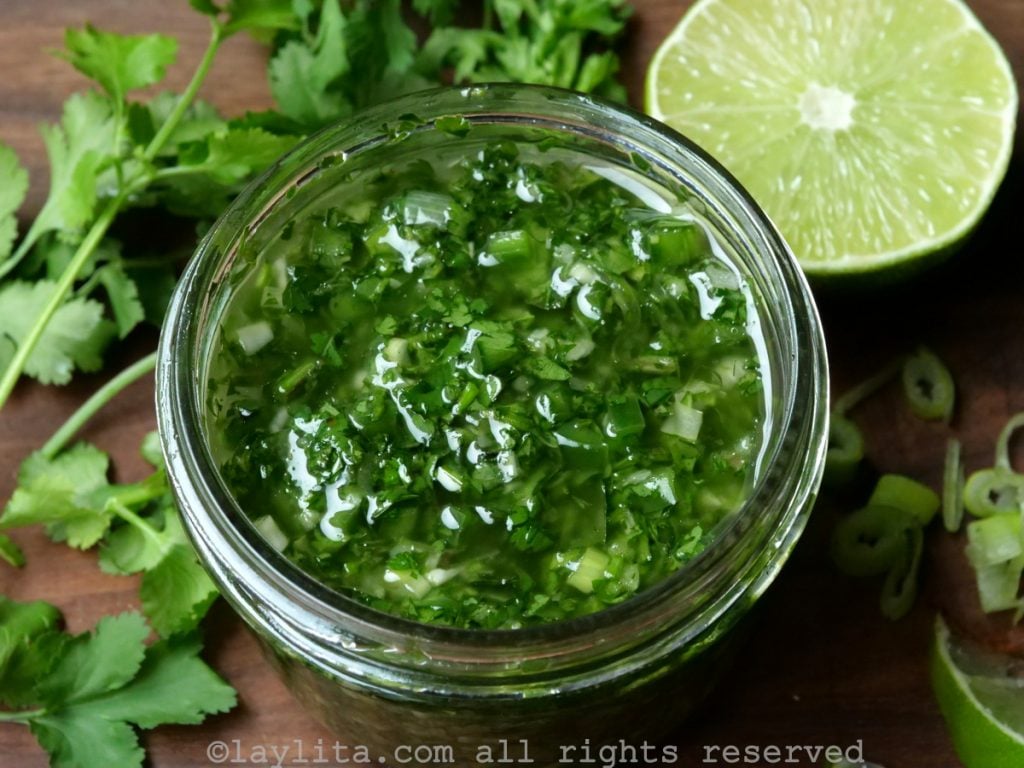
Balsamic chimichurri sauce

Balsamic chimichurri sauce

I wanted to make a chimichurri sauce with a different consistency than the previous blended chimichurri, and once I started making it I decided to also change the flavor a little bit by replacing white wine vinegar with balsamic vinegar, using more oregano than parsley – which when I think of a chimichurri sauce the first thing that comes to my mind is oregano, thanks to Argentinean neighbors in Ecuador -, and also added some chopped green onions. I really liked this sauce, Nicolas (the sometimes picky husband), thought it was great except for the balsamic vinegar, but lately he doesn’t like balsamic vinegar, so if you do you’ll probably enjoy this sauce. Same warning as for the previous chimichurri sauce: be careful as mixing garlic and oil can produce dangerous toxins, so this sauce should not be left at room temperature and should be consumed the same day.

Oregano for chimichurri sauce

Ingredients:

3 tbs finely chopped fresh oregano

2 tbs finely chopped parsley

4 garlic cloves, minced

2 tbs balsamic vinegar

5 tbs olive oil

1 tsp chili powder

3 tbs finely chopped scallions or green onions

Salt and pepper to taste

Preparation:

Combine all of the ingredients in a jar or container with a tight lid, shake well.

Refrigerate until ready to use (but use the same day).

Balsamic chimichurri sauce

No responses yet

Next »