
How to cook rice Ecuadorian/Latin style

This is my easy go to recipe for cooking rice the way we do in Ecuador and other Latin American countries. It includes both the basic white rice or arroz blanco, plus the arroz amarillo or yellow achiote rice recipe.
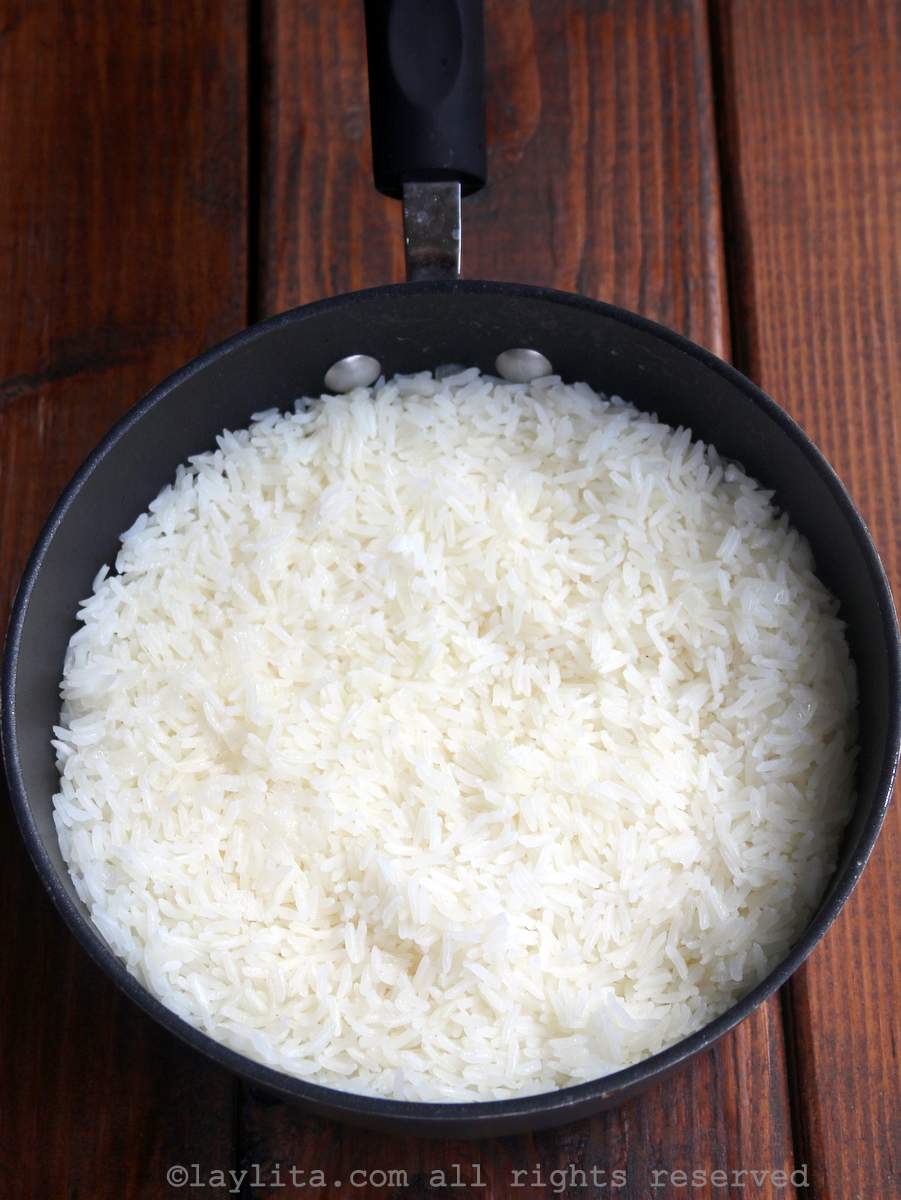
Most people know how to cook rice and different countries or regions have slightly different ways of preparing it. I cook it Ecuadorian style because that is how I learned to do it when I was growing up. I think it tastes great this way. Nicolas (the husband) sometimes cooks rice the way he learned in France: boil the rice in a lot of water (very similar to how pastas are cooked) until it is done, drain it and that’s it.
The Ecuadorian and Latin way of cooking rice is a little bit different and more precise. The rice should be perfectly cooked, not too hard, not too soft, firm and the grains should be fluffy and separate easily. Depending on where you live and the rice you buy, you might need to sort through the rice to remove any bad ones or small rocks. In that case you probably also want to wash and rinse it well. If you are using a short grain or glutinous rice you can also rinse it. Though one of my favorite short grain rices (Calrose) says on the instructions that rinsing isn’t neccessary.
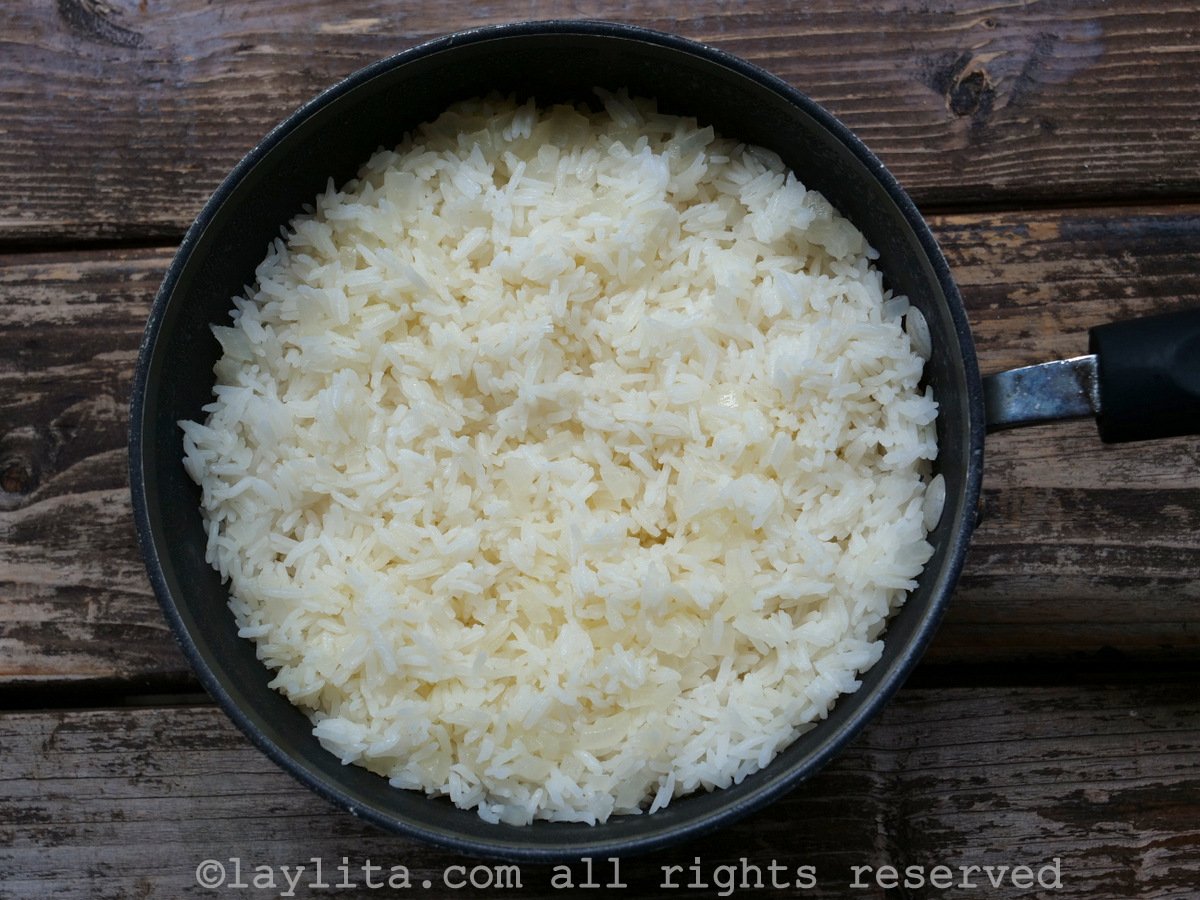
Also, if you live in a higher altitude location, you’ll probably need to add more water and let it cook for a little bit longer. I currently live almost at sea level, so I use the minimum amount of water, but when I lived in Loja (2100 m or almost 6900 ft), I would use about double the amount of water for rice. Many times, I find that the instructions on the rice packages include more water than I usually use (except for the perfect Calrose rice). This is probably because the rice is added to the boiling water and set to simmer immediately versus cooking on high heat for longer (Ecuadorian method).
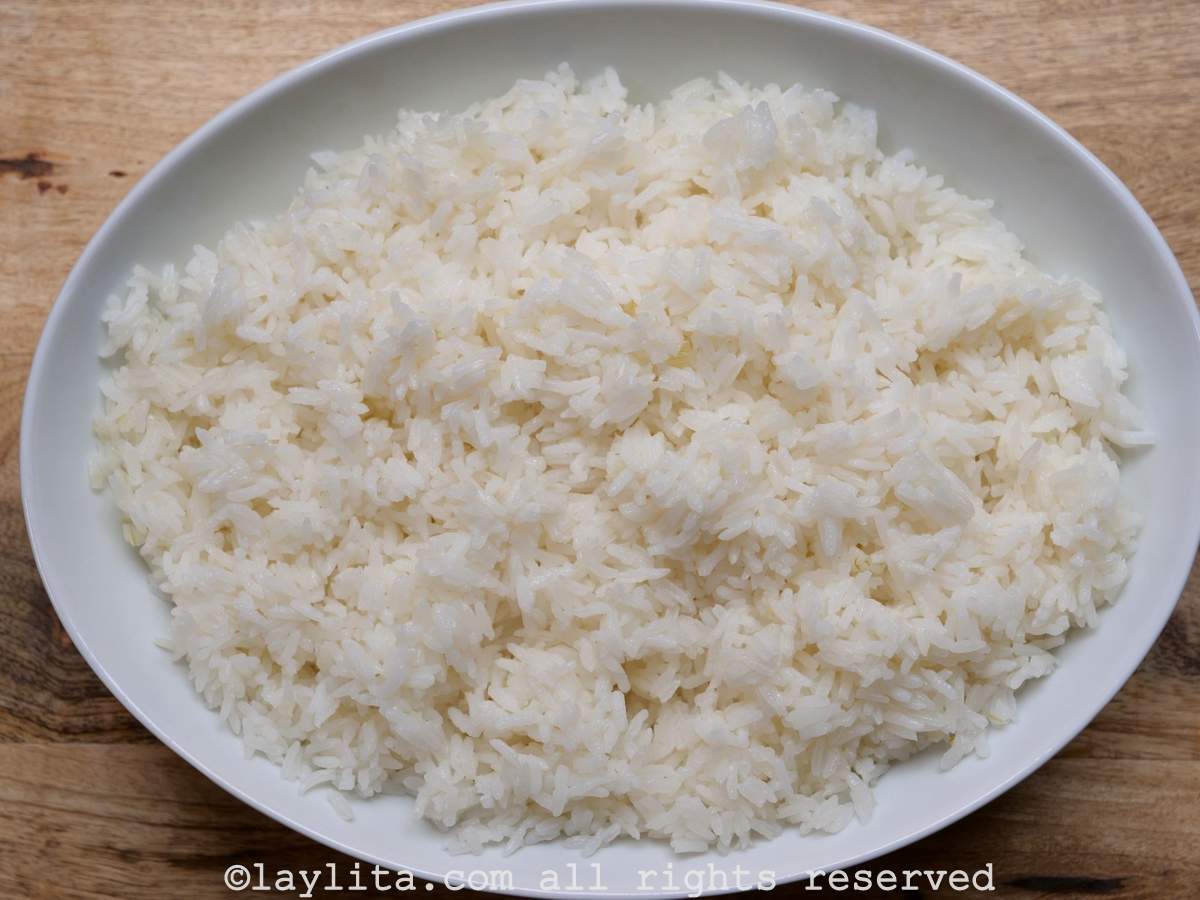
The Ecuadorian rice cooking method is to saute finely diced onions with butter or oil, then add rice and stir it until coated (similar to risotto). Then I add the water, plus some salt, and bring it to a boil. Once it boils, I let it continue boiling until the water has evaporated. At this point, I lower the heat to simmer and cover the pot with a lid. I originally used to mainly use long-grain rice, but in recent years, I’ve become a big fan of short-grain calrose rice. It turns out perfectly and uses that minimal amount of water.
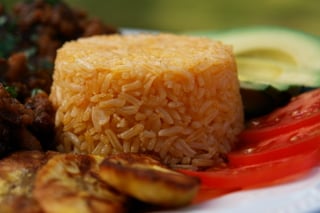
A lot of Ecuadorian main dishes use arroz amarillo or yellow achiote rice as a side dish. The arroz Camarillo is cooked the same way as below, just add ground achiote powder, achiote paste or annatto oil when cooking the onions. Another option is to cook it as regular white rice, then separately made a simple refrito or sofrito with oil, onions or garlic, plus achiote – then mix this into your fully cooked white rice. You can add paprika or saffron if you don’t have achiote available, but the flavor will be different.
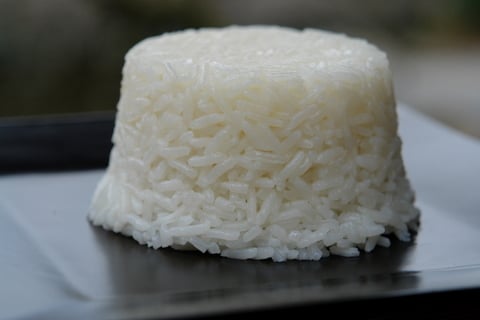
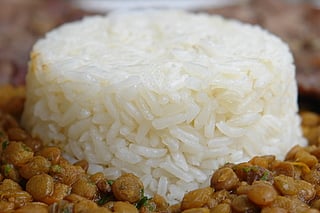
How to cook rice – Ecuadorian or Latin American style white rice
Ingredients
- 2 cups of uncooked white rice I like to use long grain rice (sorted and rinsed if needed) or calrose short grain rice
- 2 tbs oil or butter – plus extra butter for finishing (optional)
- 2 tbs minced or finely chopped white onions
- Optional – 1 garlic clove minced
- 2 1/2 cups water adjust based on the type of rice and altitude
- Salt to taste add the salt when you add the water and the water should taste like a lightly salted broth, for a lightly salted rice I add about 1/4 teaspoon of salt
For arroz amarillo or yellow achiote rice:
- ½ teaspoon of ground achiote or annatto powder
Instructions
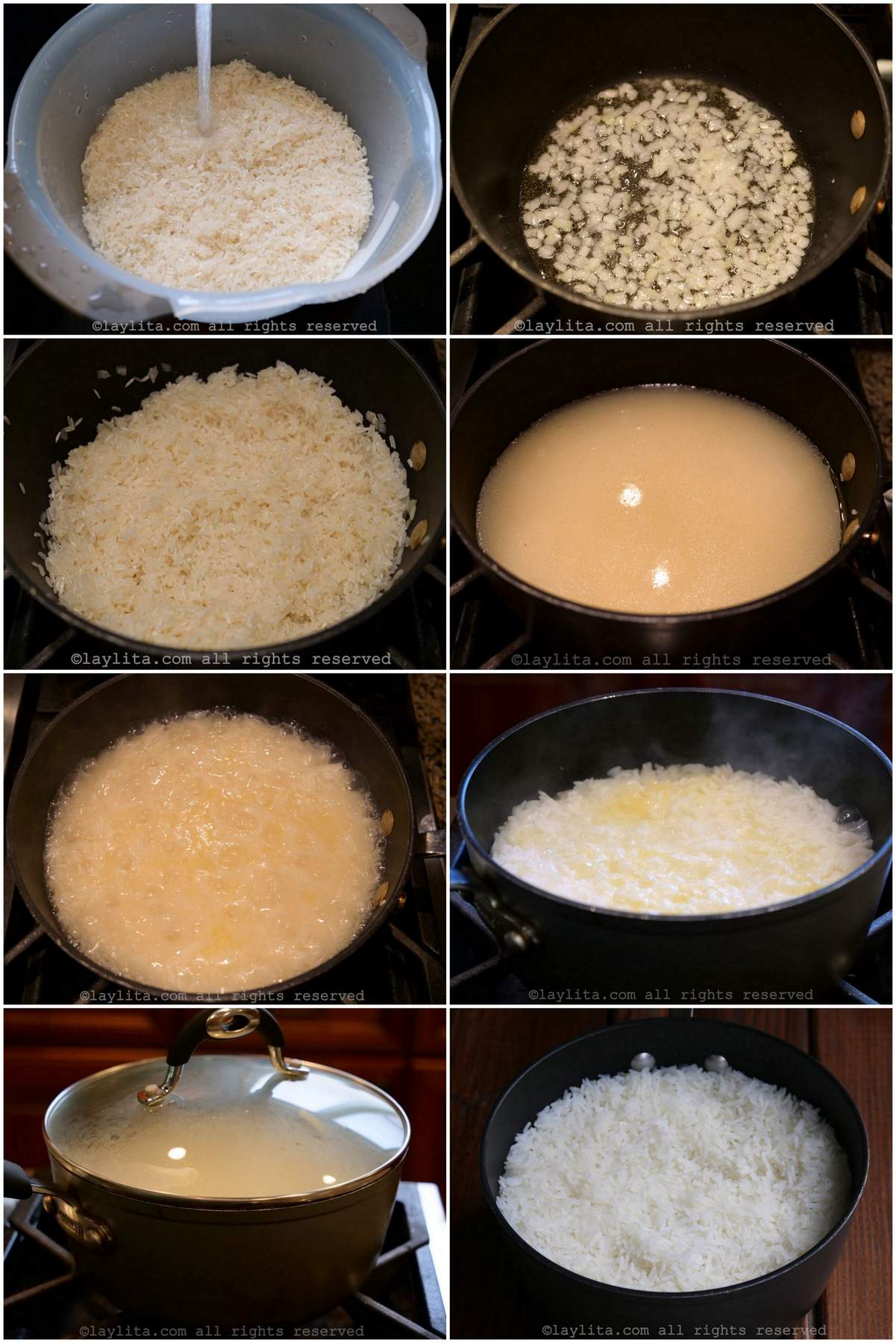
- Rinse the rice if needed (in Latin America and in Europe I always rinse it before cooking, in the US I usually don't unless the packet says to rinse it).

- Heat the oil or butter on medium temperature in medium sized saucepan or pot. Add the minced onions and garlic (and achiote powder or paste if making arroz amarillo or yellow rice). Cook until the onions are translucent or soft, about 2 minutes.
- Add the rice and stir it in so that it is well coated by the oil,
- Add the water and salt. Stir well and taste, the water should be lightly salted.
- Increase the heat and bring it to a boil.
- Let the water boil and reduce until it barely covers the rice.
- Cover with a tight lid, reduce the temperature to simmer and cook for about 15-18 minutes. Taste and make sure it's fully cooked. If the rice is on the older side it might take an extra 5-10 minutes to cook.
- Turn off the heat, gently fluff it wiht a fork, and cover again for 5 minutes before serving. For an extra bit of indulgent flavor you can add 1-2 tbs of butter (in small slices) to the rice during those last 5 minutes while it's resting.
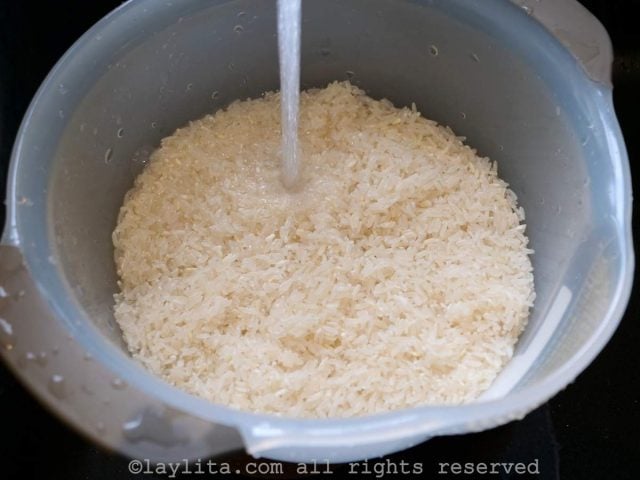
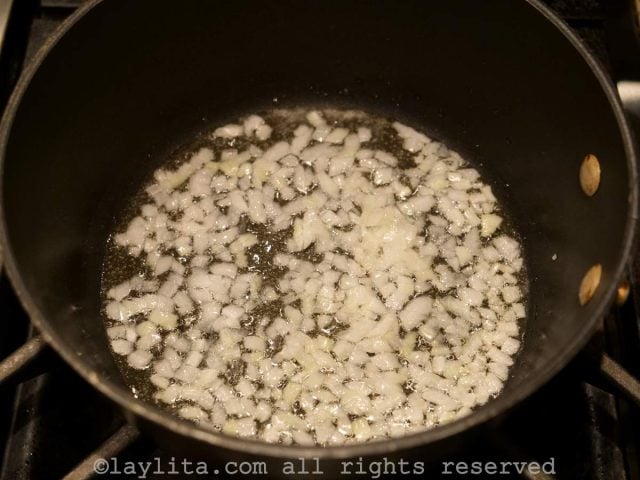
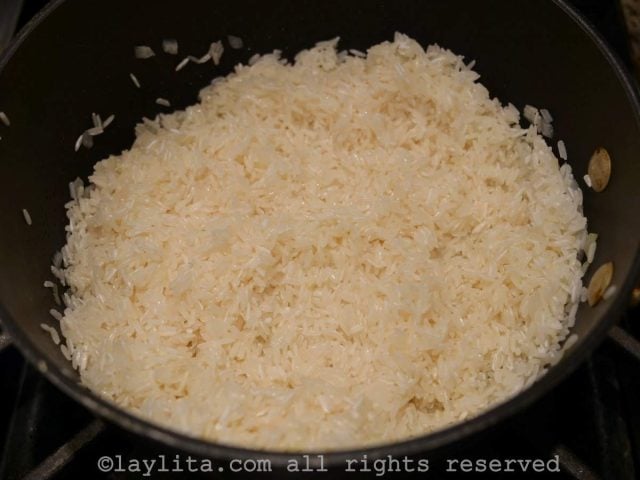
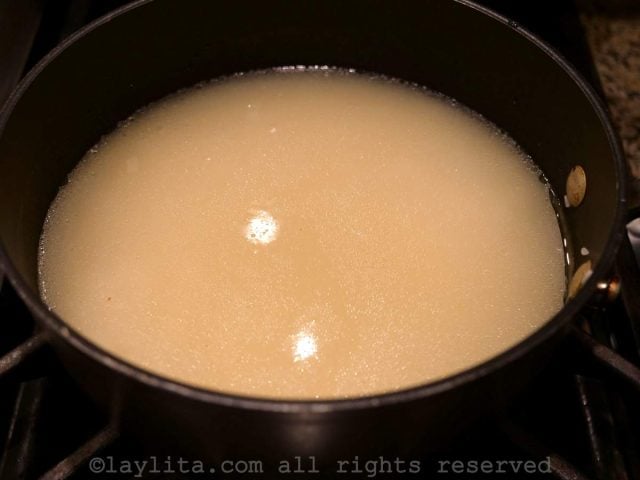
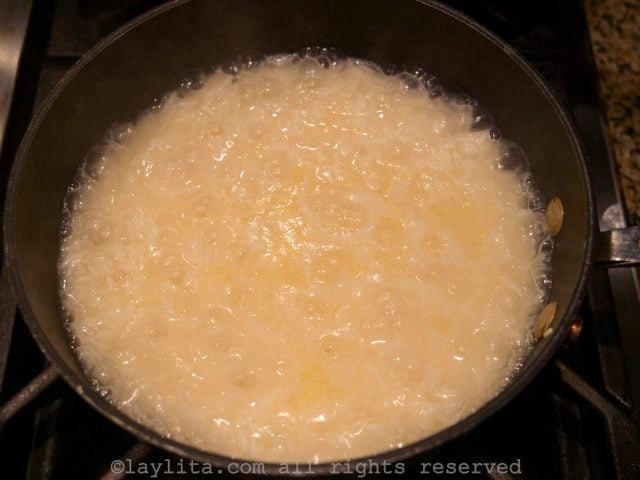
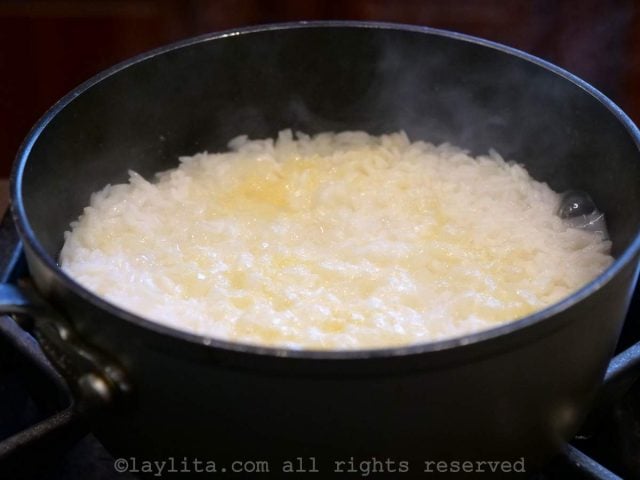
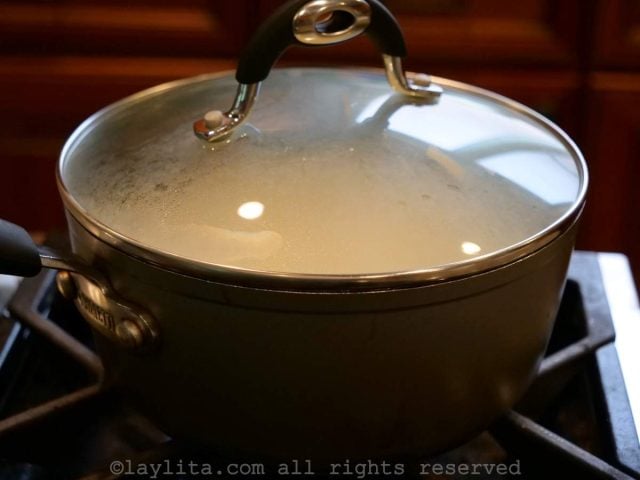
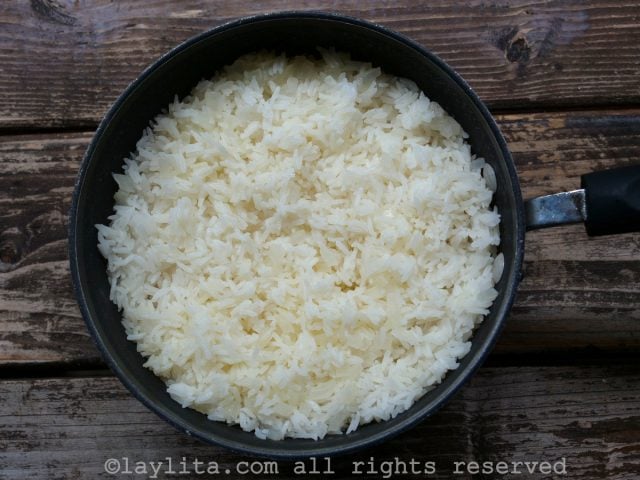
Step-by-step preparation photos for Ecuadorian-style white rice:
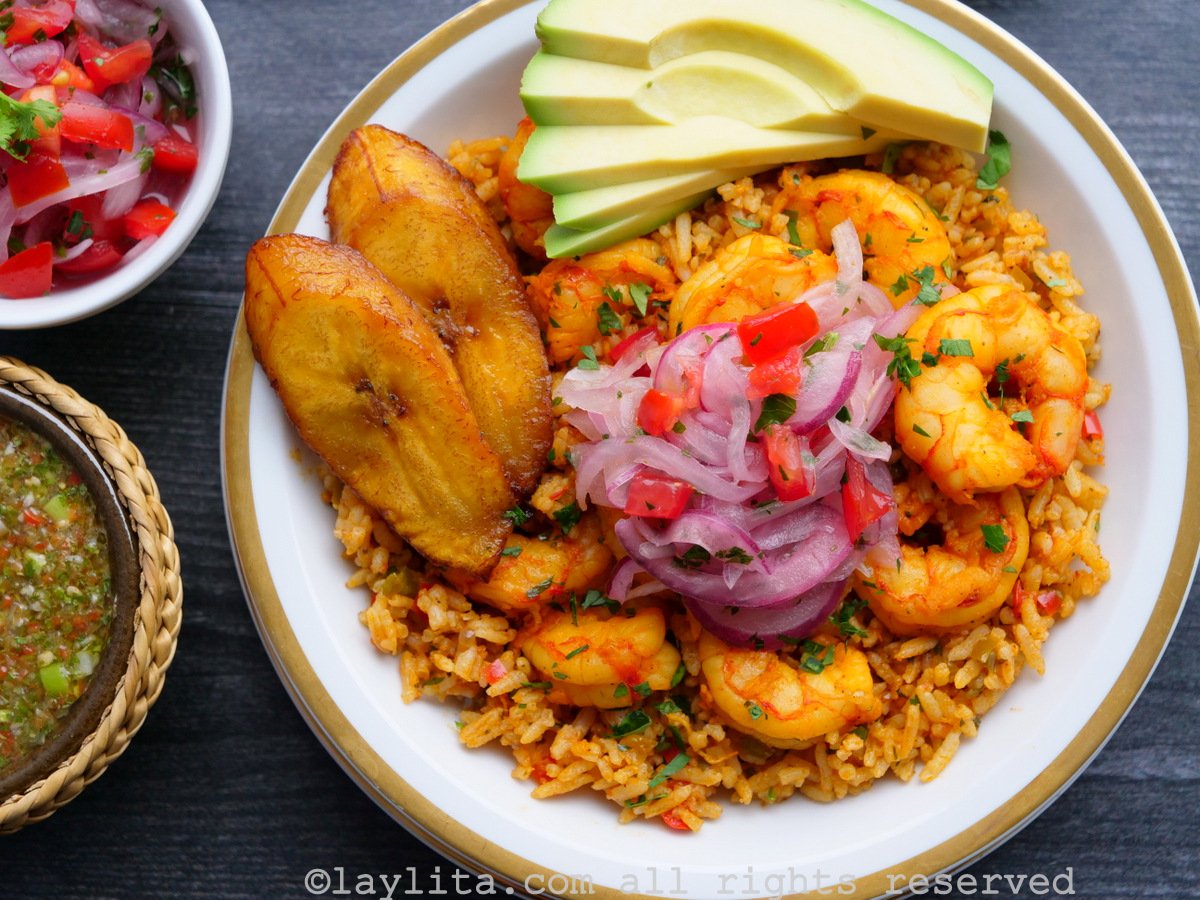
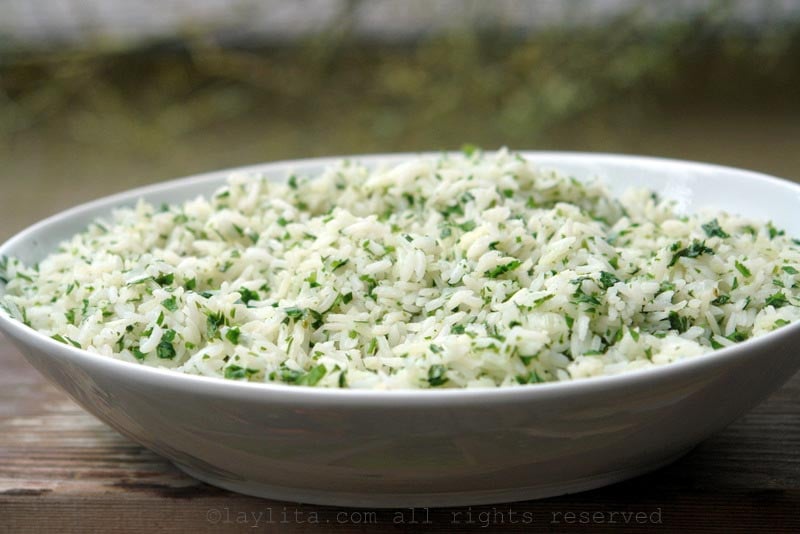
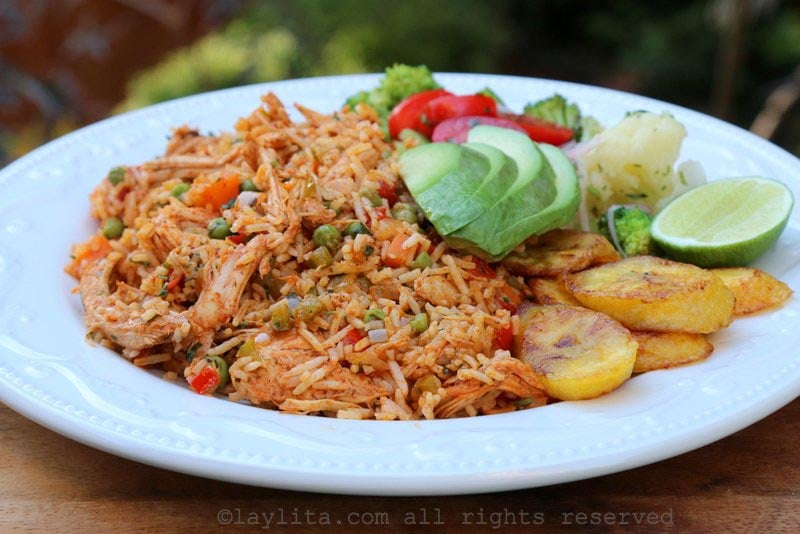
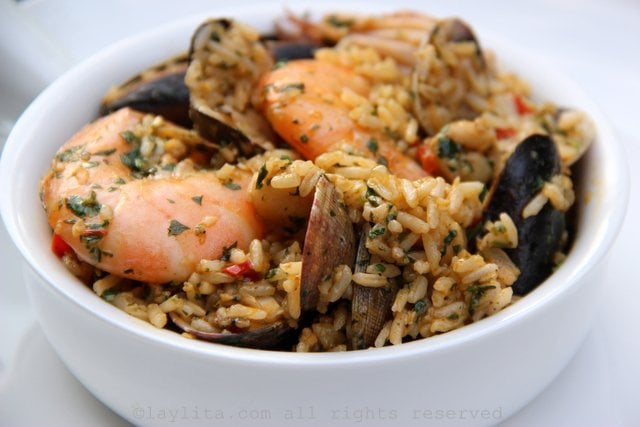
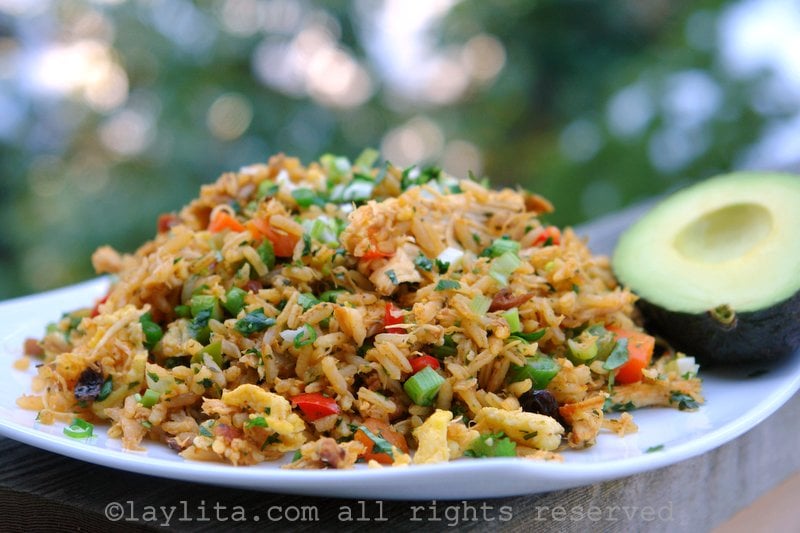
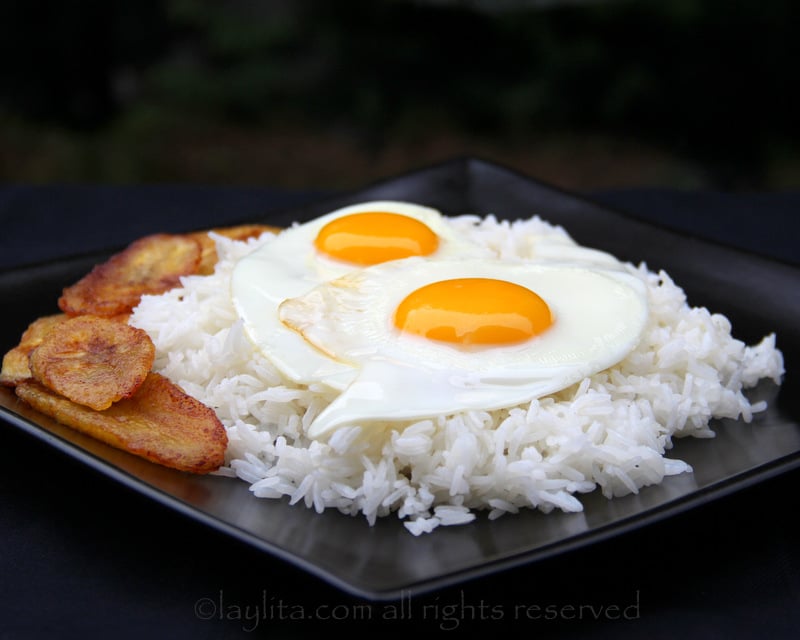
Additional rice recipes to try:
Discover more from Laylita's Recipes
Subscribe to get the latest posts sent to your email.
Okay, I just made this and this is officially my go-to rice from now on! Thank you!
I prepared this rice with a Mexican Black Bean recipe for an office, Cinco de Mayo gathering. What a hit, it was gone in a blink and I will definitely make this again. The fact that the first boy I loved was from Ecuador had nothing to do with selecting it. Thank you.
Hands down best Ecuadorian recipes! Thank you Laylita!!!
I am from Portoviejo, Ecuador. I love cooking always did since I was a little girl. Even though we always had a cook at my house growing up I was always in the kitchen helping out and cooking with recipes from books. Now I live in NYC and I have 3 kids and 2 grandsons. They all love my cooking, my daughter’s favorite is my shrimp ceviche. Thanks to you I made fish encebollado for the first time and loved it, I didn’t even tried it in Ecuador when I lived there. I have made it 4 times already and everyone loved it so much even American friends. I have also used other of your recipes to cook, like shrimp and rice, aguado de gallina. One of the things I missed the most from Ecuador is the gastronomy, nothing compares it for me, no even the fanciest restaurants in NYC. My fiance is from Russian and he absolutely loves Ecuadorean food, he says he can eat ceviche every day LOL. I am going to use your fish recipe today using halibut, I like the texture is similar to the corvina, which I am unable to find in NY. Anyway thanks so much for your recipes!
Hello! I lived in Ecuador (Quito) for over a year, and I’m so happy to find a recipe for the type of rice they always served on the coast. I can’t wait to make this along with your encocado recipe (encocado is one of my favorite dishes ever).
Also, you wouldn’t happen to have a cazuela de mariscos recipe on this site, would you?
It’s on my pending list of recipes to add :)
Thank you for posting such delicious recipies. I love that you include pictures of what I should be doing. I have never cooked Ecuadorian food and my hubby, from Guyaquil loves it! Muchisimas Gracias!
A recipe about Ecuadorian rice, and no mention of the cocolon? Ha ha ha! I loved living in Ecuador, and I love this blog. Thank you!
thank you so much this really helped me make a surprise dinner :)
I came across your site a while back during a simple web search for Ecuadorian recipes. And it remains my main go-to site for resources.
I was born in California, while my mother is from Quito, Ecuador. Ecuadorian food was a common staple in my childhood years and I never learned how to cook it. Today I am married and living on the other side of the country and oftentimes finding myself so nostalgic. I occasionally call my mother for cooking tips, but decided to start looking for recipes online for easier access. I was overjoyed to discover old dishes that I haven’t seen in years and finally have a name for them!
I haven’t started cooking anything yet due to the morning sickness brought on by my pregnancy. But I am madly craving Ecuadorian rice as my mother made it. I can’t wait to get started on it soon!
Thank you for sharing such a wonderful site. Keep it up!
My boyfriend is from Florida but was raised in Ecuador. He loves my cooking, but since I’m from Texas the extent of my knowledge in the kitchen is limited to American, Mexican, and Tex-Mex. It’s a nice surprise to find a site that offers something that hits a bit closer to home for him. I’m sure he’ll be surprised to find out I’ve found new recipes. Thanks so much.
Rock on Laylita,
My wife and daughters are Ecuadorian and they are coming to live here in England with me shortly. I’ve searched and searched for similar rice varieties to those I used to buy in Quito’s Centro Historico (where I used to live). Using this recipe I’ve just used standard white long grain rice from the supermarket but managed to get that proper authentic taste back….. now just looking for chochos, peeled corn and ripe fruit. My wife will be very chuffed thanks!
If you live in London you can find chochos in Elephant and Castle and Seven Sisters. Good luck!