
Fanesca ecuatoriana: Ecuadorian Easter soup

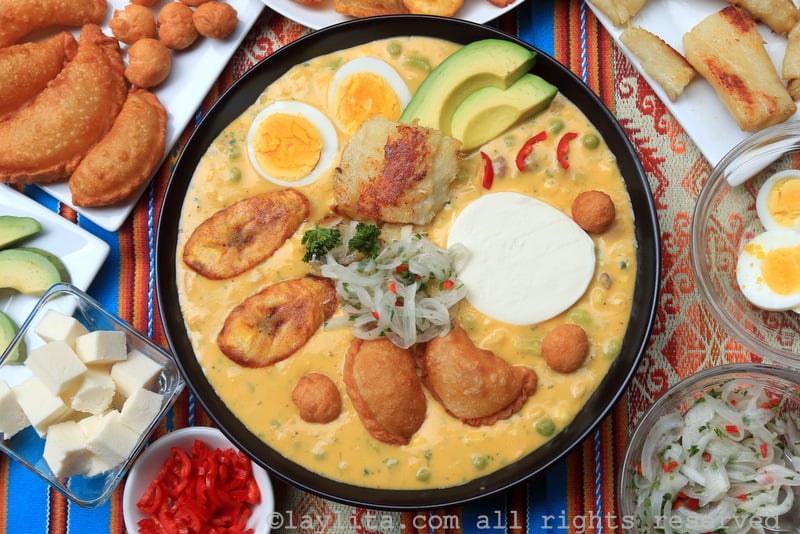
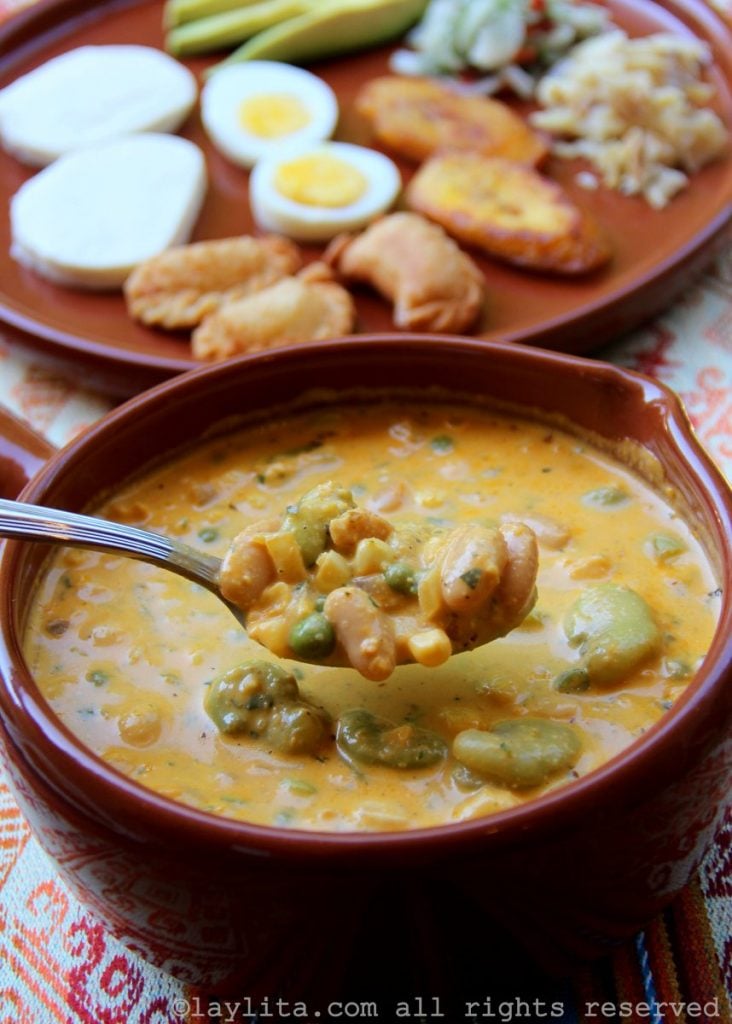
Fanesca is a very traditional soup from Ecuador and is a special soup or stew because it is only prepared once a year during Easter and Lent. This special soup is made with bacalao or dry salted cod, a mix of fresh squash and hard squash, fava beans, chochos, corn, peas, porotos or fresh beans, rice, onions, garlic, cumin, achiote, peanuts, milk, cream and cheese.
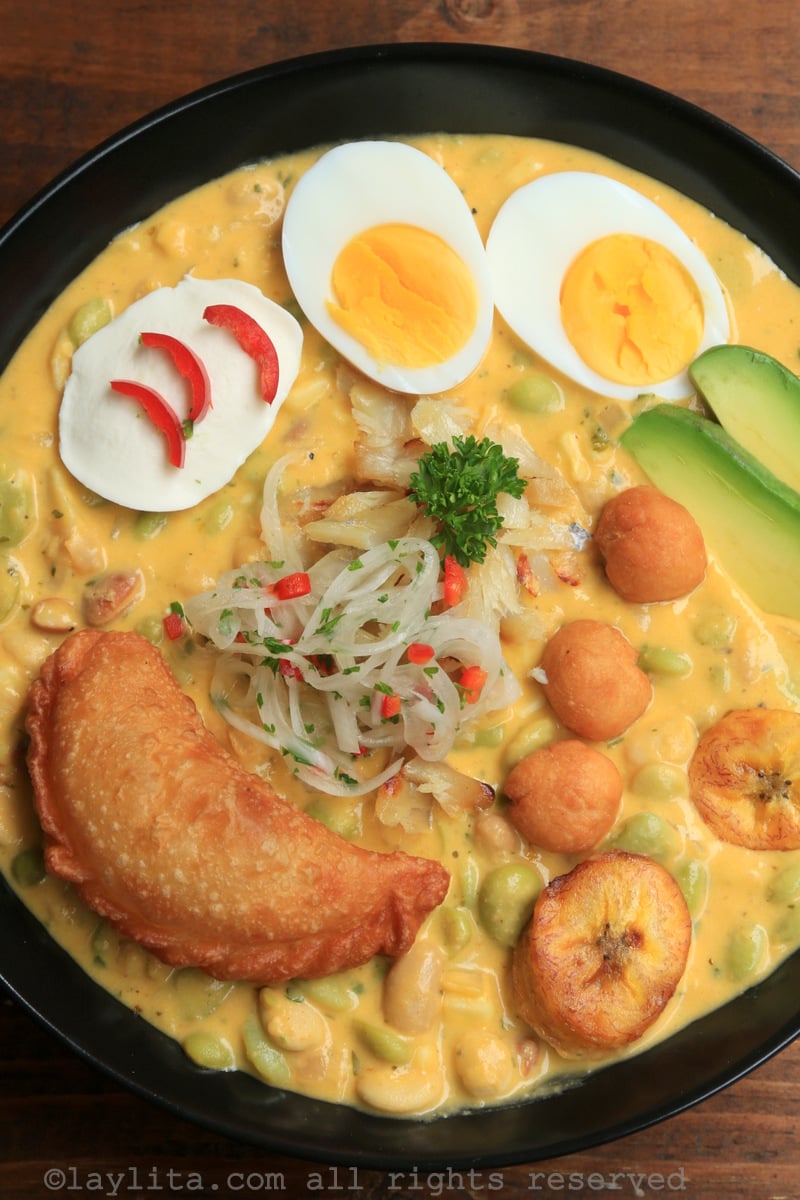
The exact ingredients vary from one region or family to another, but one of the consistent factors is the variety of different grains, some of which unique to the Andean highlands (more about Easter in Ecuador and the cultural significance of fanesca).
Jump to Recipe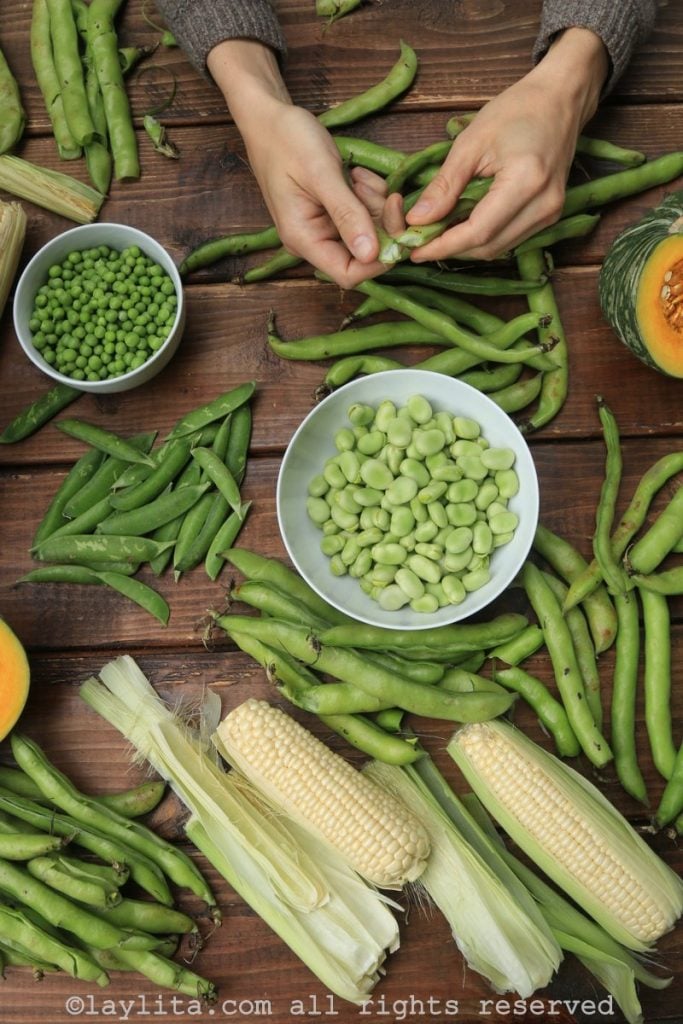
This hearty dish is made with fresh grains, of course sometimes it is very hard to find fresh grains in the US and Europe. I try to replace the fresh beans and grains with either frozen grains in the case of the fava beans, green peas and lima beans or dry grains in the case of the cannellini beans. Ecuador has an amazing variety of porotos or beans.
It is very common to find these beans fresh, at the markets, most of the time in the pods (or you pay a little extra to buy them already peeled). I love the taste of cooked fresh beans, it’s on a completely different level than the standard canned beans – or even cooked from scratch dry beans.
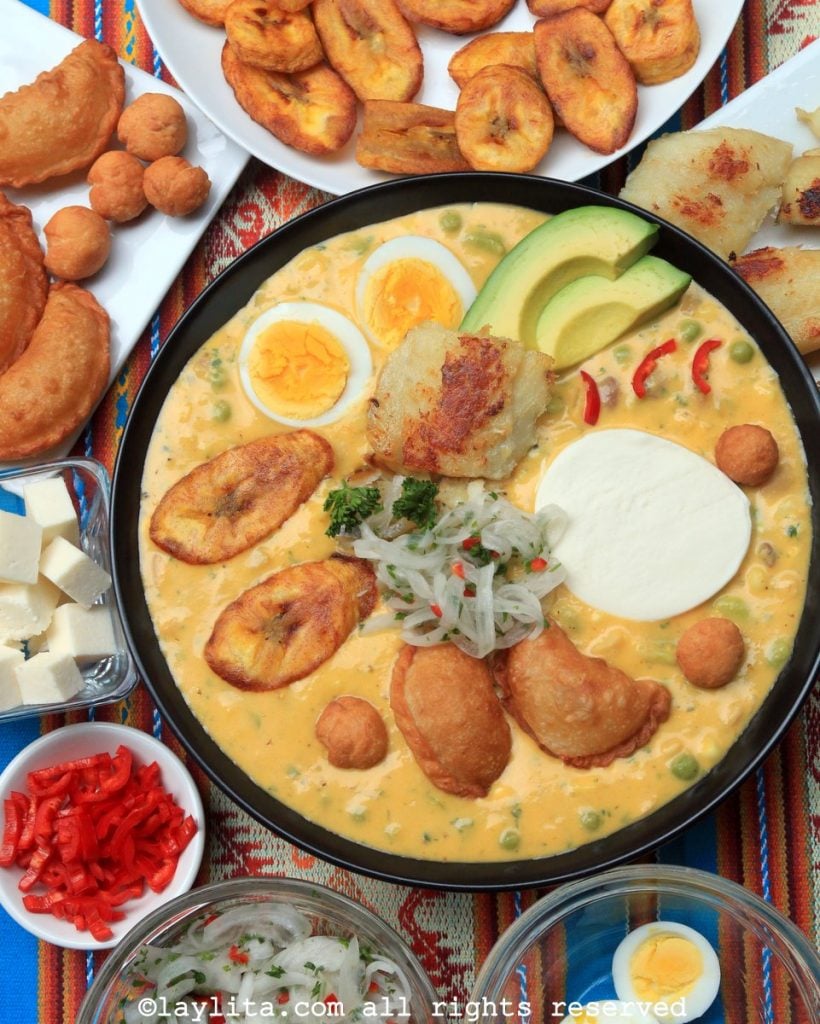
Fanesca can be made with a lot of different types of beans, habas or fava beans are used pretty consistently for this dish. I used a combination of lima beans and alubias or cannellini beans, but the other choices are limitless. Some people prefer to use red beans or a combination of red and white beans, some people add all the grains they can find. I have seen this prepared with lentils, garbanzos, split peas, mote or hominy, among others, so it really varies from one home to another.
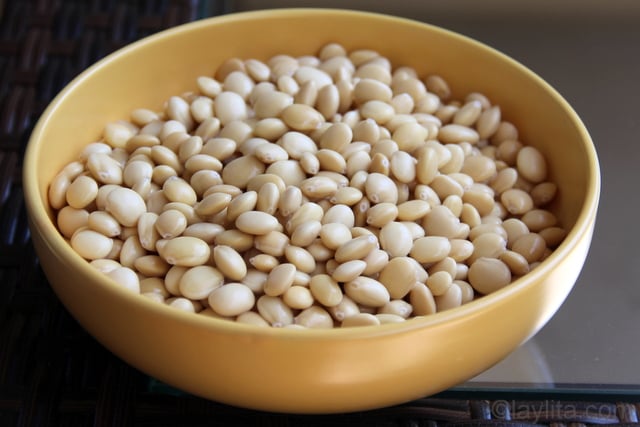
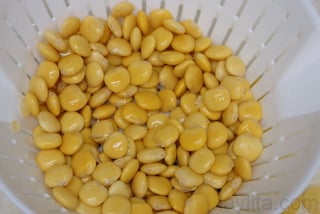
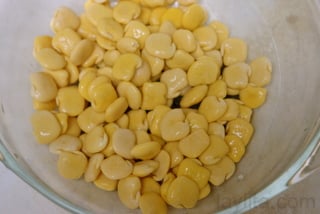
Sometimes mellocos, which are small and very starchy type of Andean potatoes, are also added to this dish. Another key ingredient are chochos, also known as tremoco or lupini beans, these used to be very hard to find but now you can find them either in jars in brine or dried. They have a thick skin and need to be peeled (similar to fava beans, but the skin is a lot tougher).
All the grains are cooked separately, except for the chochos or lupini beans, which are added during the last 5 minutes. The rice should be cooked in a lot of water, so that it comes out very tender, it needs to be soft and moist enough to make a puree by mashing or blending it. In recent years, I’ve also made variations where I add quinoa to the fanesca. Considering the importance of quinoa to Andean people, I’m surprised that it wasn’t included before, and hopefully will be part of the modern versions of this dish.
A key ingredient to fanesca is the bacalao seco or dried salt cod. It needs to be soaked for 24 hours and doing this properly is very important. You don’t want the salt cod flavor to overwhelm and make the soup bitter. The cod is cooked in milk and then based on how much taste of it you want “infused” in the soup, you can either add the milk and the cod to the soup, or you can drain the cod and add only the milk. You then fry the fish and serve on the side or on top of the soup.
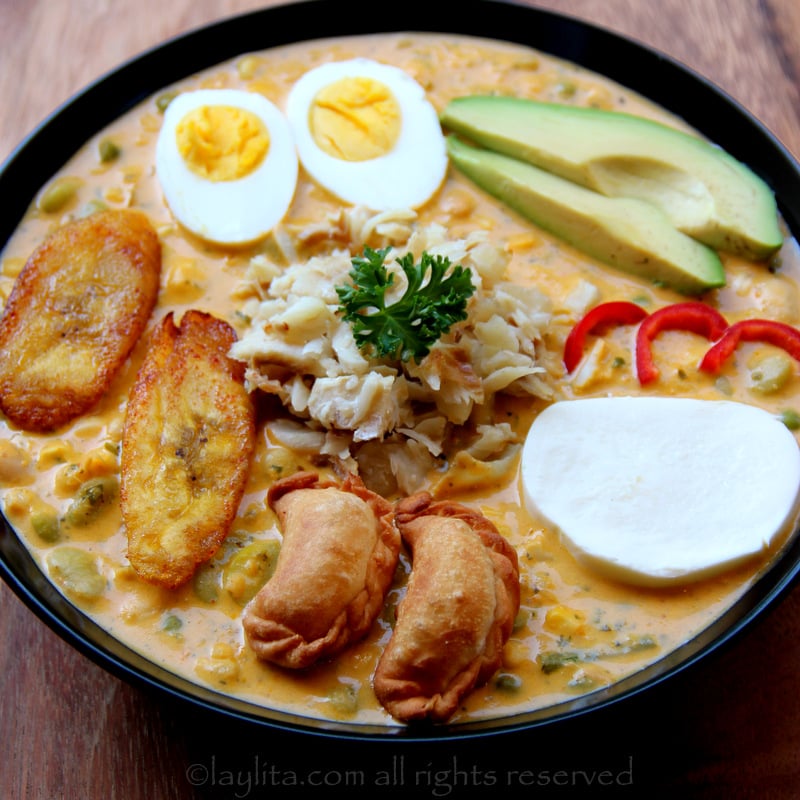
My personal preference is to have the most subtle taste of salt cod in the soup, so I fry it separately. If you are trying this soup for the first time or are serving this to fanesca virgins then you might want to do this as well. Of course I know some super hard core fanesca fans that not only add the cod, but also add some of the water it was soaked in and add that to the soup.
This soup can be quite complex to make as it involves several different steps. The good thing is that quite a lot of the preparation can be made in advance as most of the ingredients are cooked separately and added together (and you only make it once a year). It’s also a great dish to make with a group of friend or family, this way you divide up the work, but also get to bond over making a delicious meal togeher.
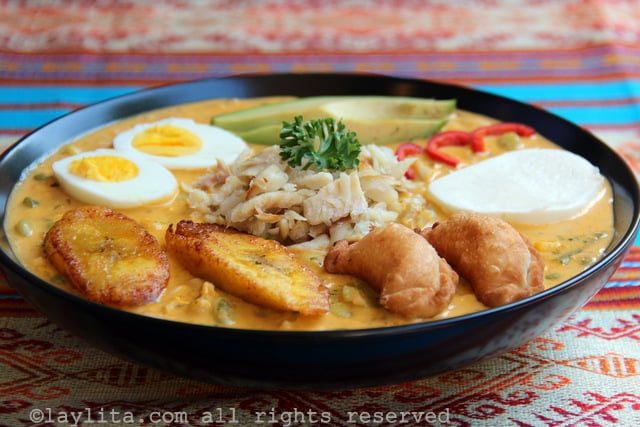
The very traditional fanesca is only made with milk, no water should be added, but for a lighter version you can also reserve the broth where the vegetables where cooked and add that in place of some of the milk. Also the soup should be very thick, but if you feel it is too thick you can adjust by adding more milk (or broth).
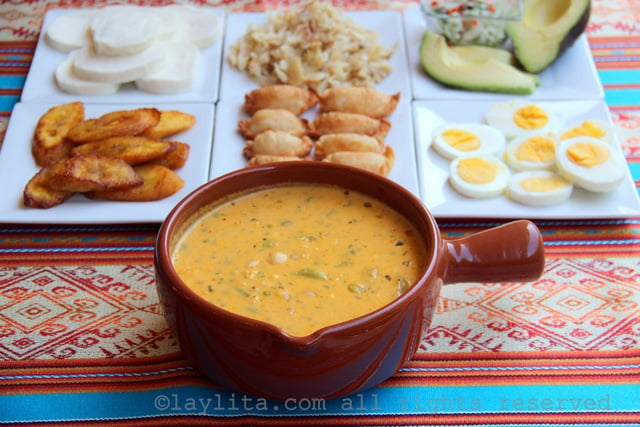
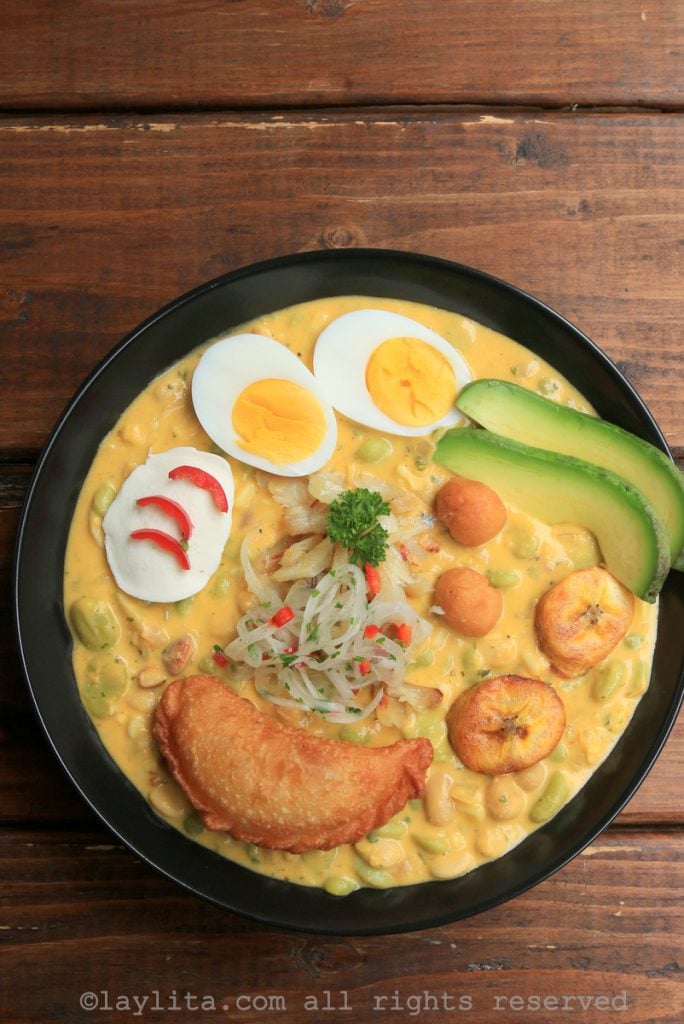
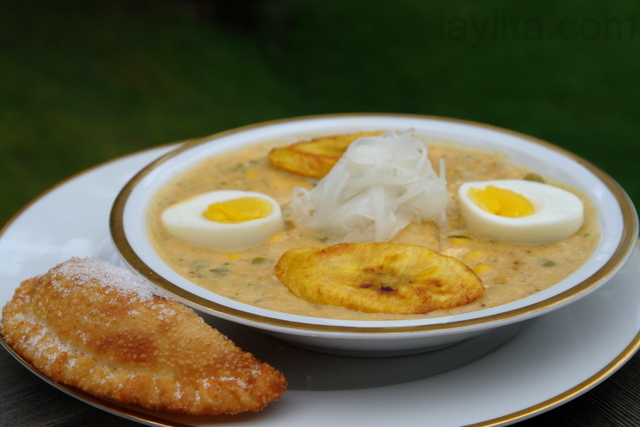
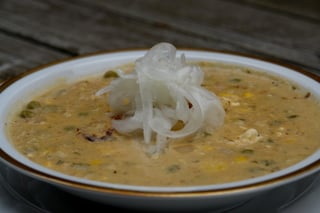
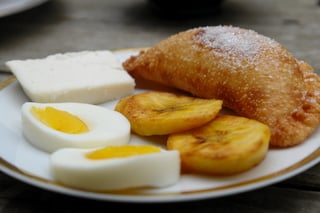
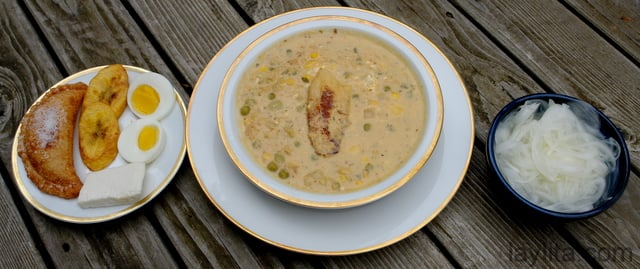
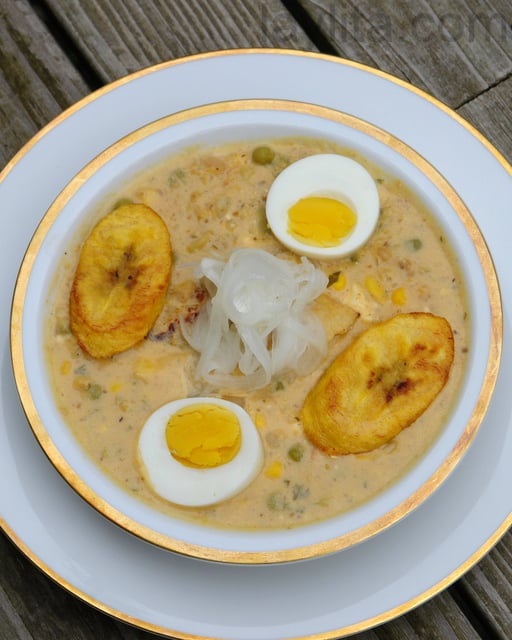
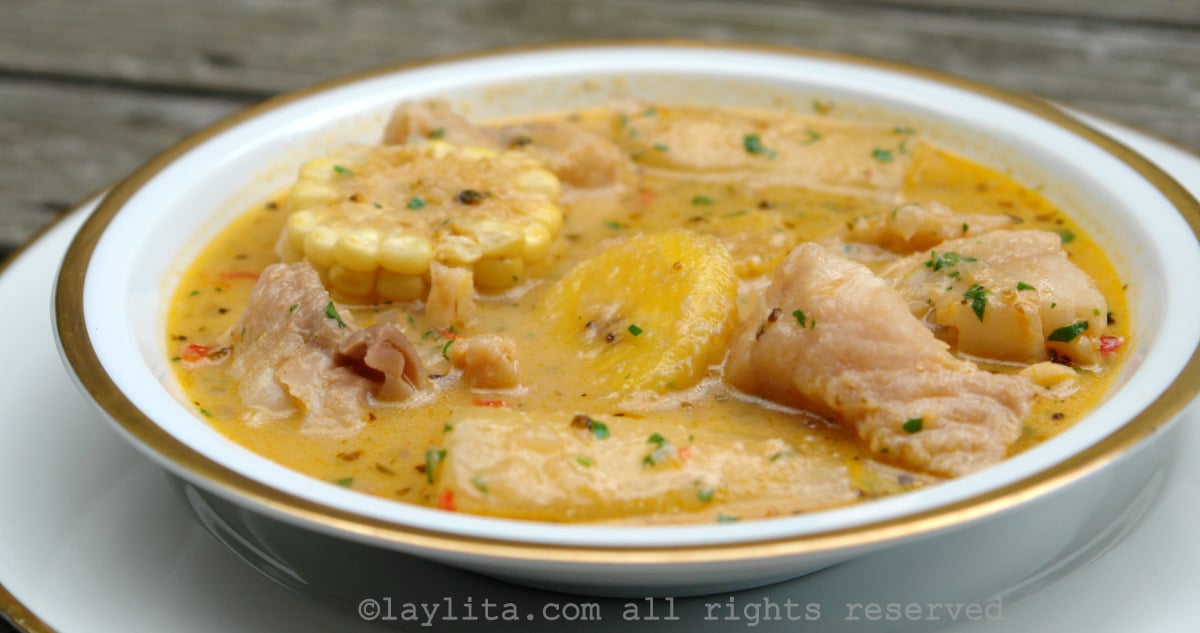
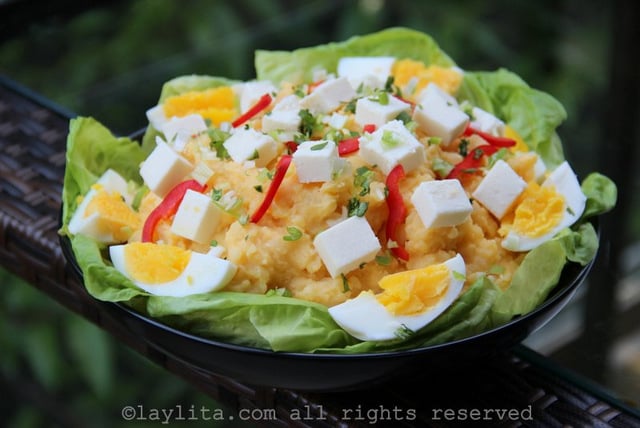
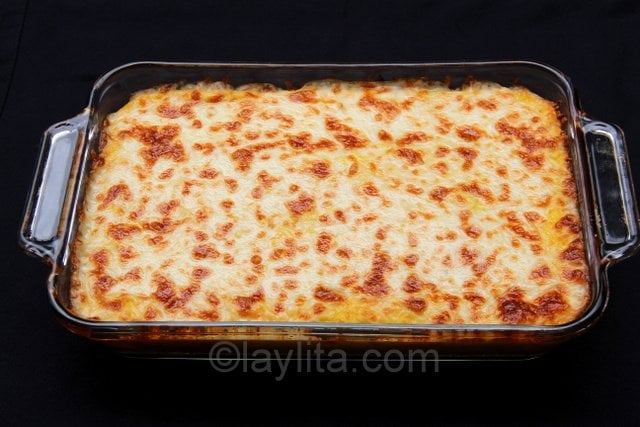
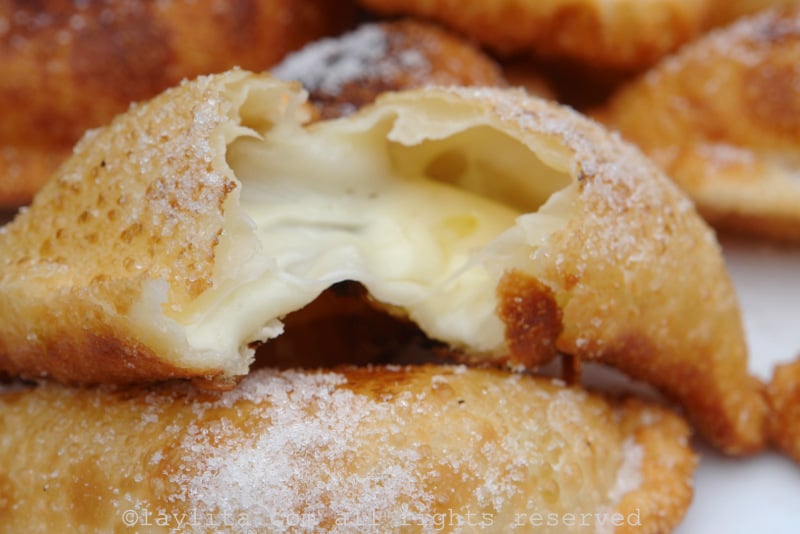
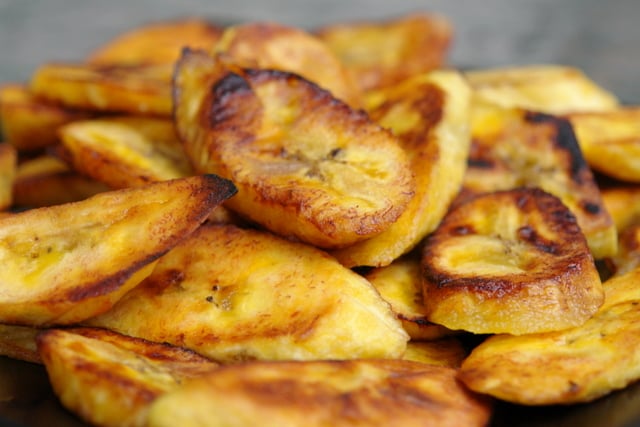
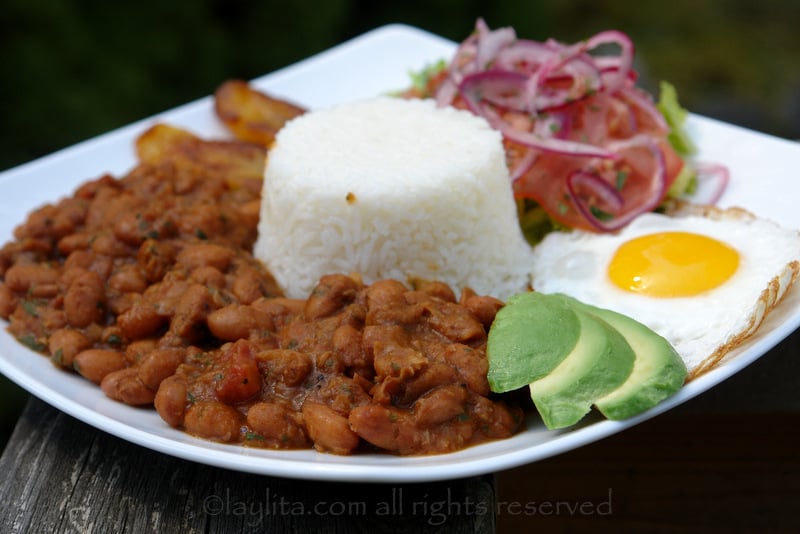
And of course, side dishes are very important and this soup must be served with slices of hardboiled eggs, fried ripe plantains, slices of queso fresco, slices of hot peppers or a good Ecuadorian hot sauce, white onions marinated in lime juice, and empanadas de viento or fried empanadas. These last empanadas are sometimes replaced by masitas or just the empanada dough shaped into small balls and fried. Fanesca is usually followed a dish of Ecuadorian mashed potatoes called molo. Finally, the proportions I have below are for enough soup to feed at least 25 people.
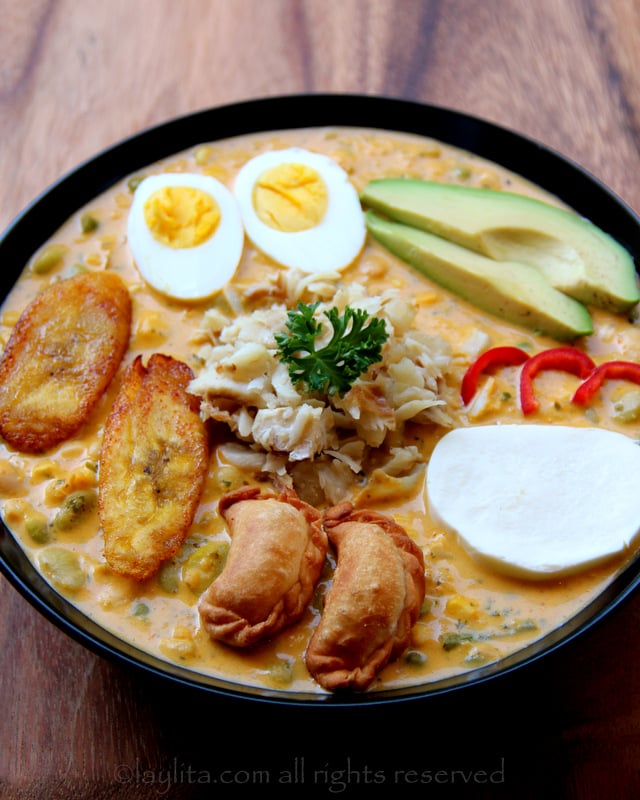
Fanesca or Ecuadorian Easter soup
Ingredients
- 2 lbs bacalao seco or dried salt cod
- 6 cups of diced sambo or fresh squash zucchini, about 2 ½ lbs
- 6 cups of diced zapallo or squash about a small sized squash butternut squash or a large kabocha squash
- 2 cups of shredded cabbage
- 4 cups of cooked and peeled fava beans
- 4 cups of cooked corn kernels
- 3 cups of cooked green peas
- 2 cups of cooked lima beans
- 2 cups of cooked alubias or cannellini beans
- 2 cups of chochos or lupini beans peeled
- 2 cups of rice (cooked) – cooked in abundant water and very tender
- 8 tbs butter
- 1 tsp of achiote or annatto powder
- 1 cup of diced white onion
- 1 cup of diced red onion
- 10 garlic cloves crushed
- 1 tbs of ground cumin
- 1 tbs of dry oregano
- 1 tsp of ground pepper
- 2 cups of roasted peanuts
- 10-12 cups of milk you can also use less milk and replace it with the broth where the veggies were cooked for a lighter version
- 1 cup of heavy cream
- 8-12 oz of cream cheese adjust to taste
- 1 cup of crumbled queso fresco can use feta cheese as a replacement
- ½ bunch of cilantro or parsley finely chopped, about 6 tablespoons
- Salt to taste
Other additional ingredients (optional and added if you like them or have them available):
- Garbanzos or chickpeas mellocos (an Andean small tuber), lentils, hominy corn, other types of beans – all ingredients should be previously cooked
Serve with:
- Hardboiled egg slices
- Fried ripe plantains
- Empanadas de viento or Ecuadorian fried cheese empanadas
- Hot peppers slices
- Aji criollo hot sauce
- Curtido de cebolla blanca or white onions marinated in lime juice
- Queso fresco or fresh cheese slices
- Avocado slices
Instructions
- Soak the salt cod in water for 24 hours (or even up to 48 hours if you want a very mild salt cod flavor), changing the water every 6-8 hours. Each time the water should be less and less salty, at the end cut the cod into medium sized pieces (if it doesn’t come already cut).
- Cook the diced butternut squash (or kabocha) and fresh squash/zucchini separately, with a just enough water to cover them, cook until they are very tender. Save the water from cooking the squash and other veggies if you would like to use it (in place or in addition to the milk in the recipe)
- Boil the shredded cabbage with a small amount of water for about 3 minutes.
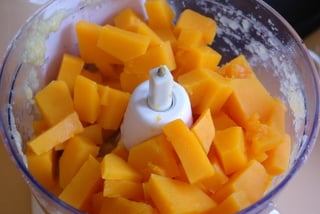
- In a food processor or blender, add the cooked squashes, the cooked rice, and the cooked cabbage. Blend until you have a thick puree, you can add some of veggie broth or water from cooking them, if it’s very thick.
- In a sauce pan, bring 6 cups of milk to boil, add the pieces of soaked and desalted cod, and cook on a low/medium boil for about 8-10 minutes.
- Blend the roasted peanuts with 2 cups of milk, save until ready to add to the soup.
- To begin cooking the soup, in a large stock pot or soup pot, heat the butter over medium heat to make a refrito or base for the soup. Add the onions, garlic, achiote, cumin, oregano and pepper and cook until the onions are tender, about 5 minutes.
- Add the squash, rice and cabbage puree and mix well.
- Add 2 to 4 cups of milk and mix well.
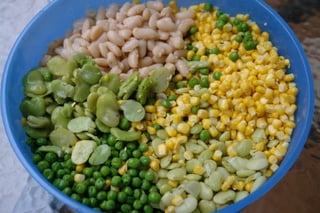
- Add the fava beans, corn, green peas, lima beans and cannellini beans (and any of the other optional ingredients: cooked lentils, garbanzos, mellocos, etc)
- Mix well and let simmer for about 15 minutes, stir frequently to avoid the ingredients from sticking to the bottom of the pan.
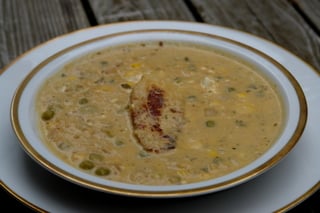
- Add the milk where you cooked the cod to soup. You can also add all the cod, lightly shredded (for a full flavor cod fanesca) or just a small amount for a more mild fanesca. If just adding a little bit of the cod, save the rest for later, then sauté it and serve a little with each bowl of soup.
- At this point you want to taste the soup and add salt if needed, how much you need will depend on the whether you add the salt cod to the soup or not (as well as how well you soaked and rinsed the cod). Keep in mind that you will be adding queso fresco (or feta) at the end so don’t oversalt the soup.
- Add the blended milk and peanut mix to the fanesca soup, cook for another 10 minutes, stirring frequently.
- About 5 to 10 minutes before serving, add the chochos or lupini beans, the cream and the cheeses, stir to help the cheeses dissolve.
- Add the chopped cilantro or parsley and stir well. Taste and add additional salt and pepper if needed.
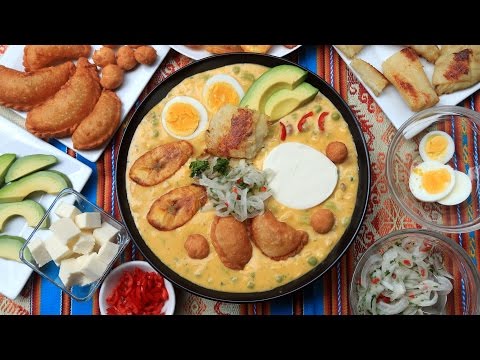
- Serve the fanesca with the shredded or small pieces of fried salt cod (unless they were already added to the soup), hardboiled egg slices, lime marinated white onions, fried ripe plantains, slices of queso fresco, fried cheese empanadas, avocado slices or cubes, and Ecuadorian hot sauce or slices of hot peppers. These can be added on top of the soup or on the side.
Video
Notes
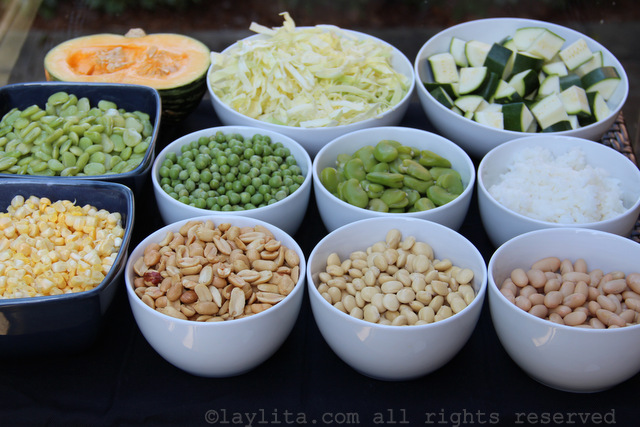
Step by step preparation photos for Ecuadorian fanesca

Other Ecuadorian recipes for Easter and Lent:
Discover more from Laylita's Recipes
Subscribe to get the latest posts sent to your email.

Great recipe!!!!! Look forward to this every year!!!!?
Hi, where do you find the mellocos? I live near Seattle, are they fresh or from a can? Where did you find the fresh beans?
Hi Brenda, I found the mellocos at one of the Latin grocery stores (I used to go to one in Redmond, but it has been a while), they were called by their peruvian name Ollucos. You can omit them if they are hard to find. They are not a super essential ingredient.
The fresh fava beans I would find at Uwajimaya, they also have shelled frozen ones.
Gracias for this recipe! It’s a lot of work but the steps are very clear. This year is the third time mi esposo y yo are making this for Easter! We’re very excited to share this with our community :)
Can we use canned beans when in a pinch?
Yes, you can use canned and frozen beans/grains as replacements for the fresh ones.
I shared your recipe! love your blog! :) http://www.ecuadorestademoda.com/post/115373341223
hello – I’ve been married to my Ecuadorian husband for 20yrs. and I’ve never attempted this plate. I’m planning on making this on Good Friday and I want to know what is chocho beans and where can I find them? I live in Palm Beach, Florida. Also, can I use mozzarella cheese instead of feta?
Gracias :)
Chocho beans are also known as lupini beans, you can buy them online and also at some grocery stores (usually in the section where they have olives/pickles in jars). It’s fine to use mozzarella cheese (queso fresco is also a good option)
Hi, thanks for sharing this recipe! I’ve lived by your site for years to cook for my Ecuadorian husband, but his mother, the real chef, is finally in town. Is there a place you can suggest to find bacalao in the Seattle/Eastside area? Thank you!
Most grocery stores have bacalao/salt cod, it’s usually in the frozen seafood section. For sure you can find it at Metropolitan Market (got it there last year) and also at Uwajimaya.
Ecuadorian to the max! I plan to prepare Fanesca. Wish me well!