
Humitas or steamed fresh corn cakes

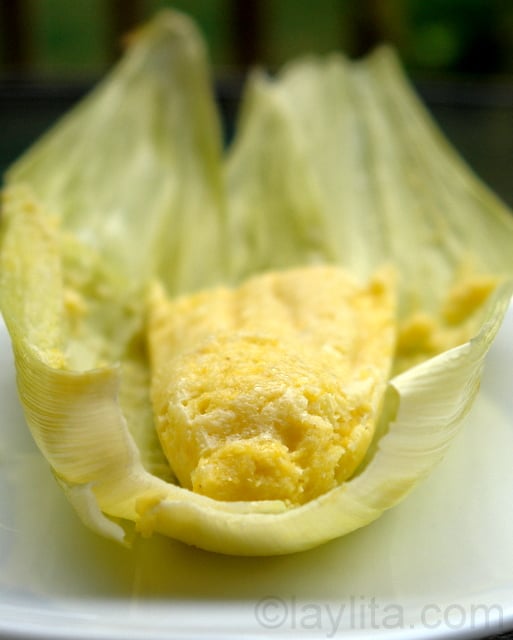
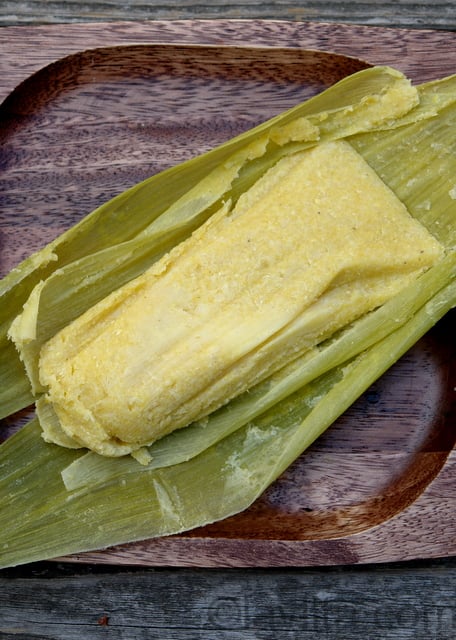
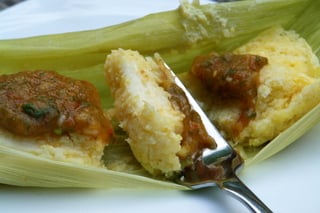
Humitas are savory steamed fresh corn cakes made from a mixture of freshly ground corn, onion, garlic, cheese, eggs, and cream, which is placed inside corn husks and steamed.
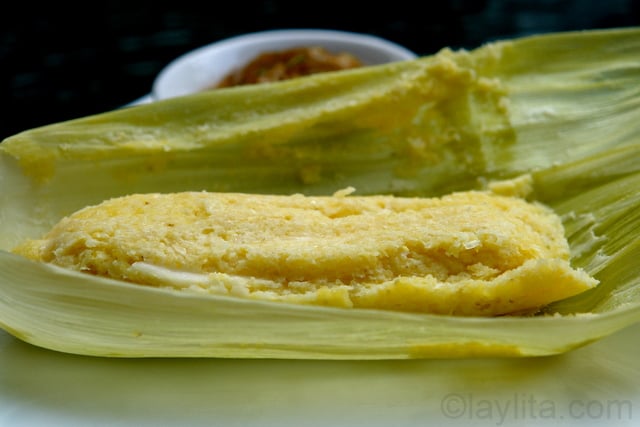
Humitas are hard to translate, if you’ve ever had an humita you know what it is, but to describe them to someone who’s never had them before is a little bit complicated. I guess you could compare them to fresh corn and cheese tamales (and explaining the difference between a tamal from Ecuador and tamal from Mexico is a completely different story). Humitas are made using fresh corn, which is ground with other ingredients and then stuffed in a fresh corn husk and steamed. In Ecuador, humitas are very popular in the Sierra or Highland region, especially in cities like Loja, Cuenca or Quito, and they are typically eaten for breakfast or with the afternoon coffee.
Humita making process: How to fill and close the corn husks
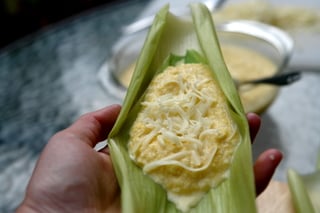
The whole process of filling the humita mixture into the corn husks can be a little bit confusing until you get the hang of it. This is another part that people do differently depending on how they were taught. I’m wishing I had made a small video of this, but hopefully the pictures are helpful. It is one of those things that is easier to learn by watching someone do it than by reading about it, but I’ll try and if you still have any questions just send me an email.
Use the corn husk to create a wrapper for the humitas, the larger ones will be used to make the wrapper and you can use pieces of the smaller husks to tie around the wrappers to keep them sealed. The bigger the husks the better, of course you’ll get to a point where the bigger ones are all gone or most of them will be small to start, so in that case I use 2 husks and place them on top of each other oppositely, i.e. top part of second husk should be placed on top the bottom part of the first husk, and not directly on top, on the side, the idea is to create a wrapper so you want to use both husk to overlap to increase the width.
Next you can place a spoonful of the mixture in the wider part of the husks (upper or lower) and some cheese in the middle, and then close it or you can finish or semi-finish the husk wrapper and then stuff it with the corn mixture.To close the wrapper, fold the left side over the mixture (or where the mixture will be placed), then fold the other half of the husk over – I like to stuff them at this point -, and then fold the right side, if you don’t have any mixture in it you will see that this creates a small pocket that you can then fill with a spoonful of corn mixture, some cheese and some more mixture.
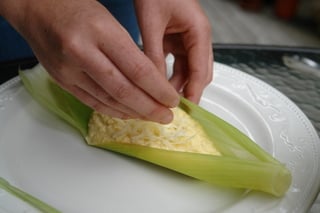
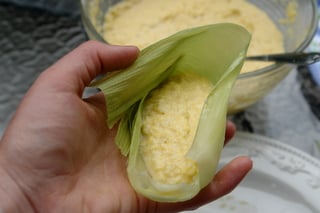
Another way to fold the husks is to fold the top half over the bottom half and then fold each side – you can also fill it in the beginning, middle or end of this process.
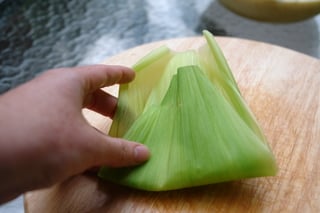
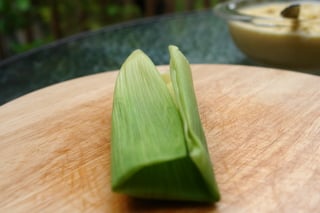
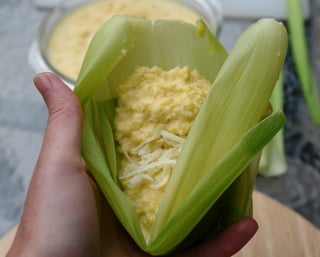
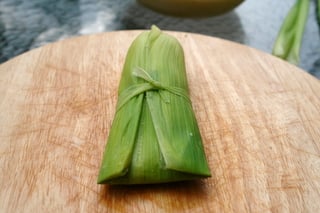
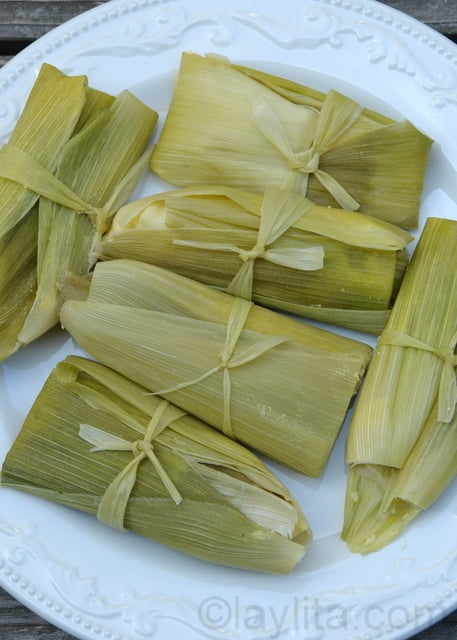
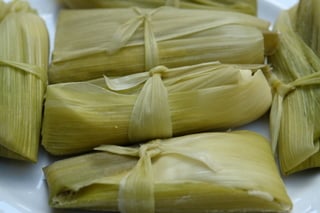
The final step is to close it as well as you can and use the strips of the smaller husks to tie around the humita wrapper, one of the ends of the humita might be slightly open but that is fine.If you prefer to have all the ends closed you can do so by trying to wrap the humita with a first husk and then use the second husk to close any holes, it’s a little bit trickier since it’s hard to find enough large husks to wrap the humitas this way and it really doesn’t make a difference to the final product.
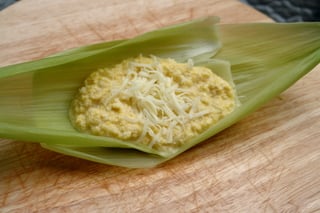
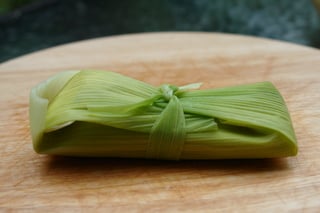
Try practicing how to wrap the humitas just using the husks to find the method that works best for you before filling them with the corn mixture.
When I was a kid, humitas weren’t just something yummy to eat, I loved the whole process of preparing them which actually started with going to pick the corn, either from the small field on our farm or from one of the neighbor’s farms if we were buying it; picking the corn was a lot of fun –of course we sometimes ended up choosing some that were not ready yet and I remember the corn plants to be so tall, which was why I was surprised when I moved to Texas and saw these tiny plants of corn everywhere. After we picked the corn we would take it home and remove the husks, this was also a lot of fun, we didn’t make humitas the way I do now – using less than 10 ears of corn – instead we had costales or big sacs of corn and made a ton of them.
Some of the neighbor ladies would come help us, we would all sit outside of the house with corn all around and while we removed the husks there would always be someone telling a story or legend, most of which were pretty scary and involved the devil, supposedly the devil liked to hang out (during the night only) in the higueron trees, which were these big trees that were all around the valley, we had one on our farm and it was also the tree that our tree house was built on – no more spending the night in the tree house after those stories-, there was also a big higueron on the corner of the road down from the farm and this was where someone was supposed to have seen the devil; I could go on for a long time about all the stories and legends involving the devil –who sometimes he was described as this horrible creature other times he was in form of an extremely handsome man – , as well as other scary characters such as the widow, the witches, the headless priest, etc.
After removing the husks, the corn grains or kernels would be removed from the cob, if you didn’t have a steamer you would save the tusas or cobs to use them as a steamer; next the kernels are ground, my mom had one of those old manual grinders that we would use to grind the corn, today I just put the kernels and other ingredients in the food processor.Most humitas have cheese in them , either in the mix or stuffed in the middle or both, but there are some humitas that are made without any cheese, in our house that was unthinkable, my mom was very generous with the cheese and would mix in with the ground corn and also stuffed a little bit in the middle of each humita, the type of cheese used is called quesillo, which is a very fresh cheese that melts perfectly, the closest I found here in the US is the fresh farmers cheese, which is hard to find and expensive, so I usually use mozzarella for any recipe that requires quesillo.
The type of corn in Ecuador is also very different from the types of corn found in the US, the Ecuadorian corn is less sweet and more dry, the first time I ever made humitas in the US I didn’t know this and I tried to make them just like I remembered, they ended being very sweet and gooey, so now I don’t add any sugar, I minimize the amount of liquids (cream, milk or butter) and also add some corn meal to help the humitas get some consistency; I’ve also noticed that if use corn that is older, which has less water, the consistency is thicker and I adjust the amount of corn meal based on the tenderness of the corn .
Just like many other typical Ecuadorian dishes the recipe for humitas will vary from one family to another, my mom’s recipe is one of the most simple and easy recipes to make: basically just grind the corn, mix in the other ingredients, stuff into the corn husks, place some cheese in the middle, wrap it up and steam them. The mothers of some of my friends had recipes for humitas that were a little bit more complicated and “sophisticated”, which involves separating the eggs and beating the egg whites until stiff .
I used to think that anything made using an electric beater was super sophisticated, I finally convinced my mom to buy one when I was about 17 -, as well adding baking powder, to essentially make the humitas a lit bit more fluffy. I made the humitas both ways and I found that there was not really a difference taste wise and even the consistency was almost the same. My cuñado (brother in law) Matt was visiting and he also thought that they were exactly the same. Matt’s other comment was that he liked that the consistency of both batches of humitas was not too dry.
Sometimes in Ecuador the consistency of the humita can be a little bit dry. Though I only experienced this when I had humitas at a restaurant or café but never at my house or at my friends’ homes . I’ve including both methods for making the humitas, choose and adapt according to your preferences, even though these are great with cheese you can leave out the cheese – and other dairy products – if you are looking to try a dairy free option, same goes for the eggs.
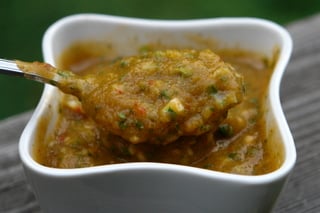
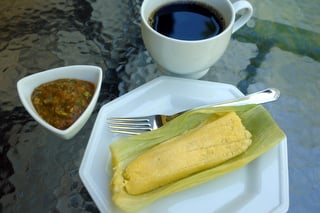
As I mentioned before humitas are perfect for breakfast and go great with a hot cup of coffee, though according to my husband they also go well with wine, an essential side for the humitas is aji or hot sauce, preferably tree tomato hot sauce. Humitas can be re-heated in the microwave or also you can remove a cold humita from the wrapper and fry it over medium high heat with a little bit of oil or butter on each side for a couple of minutes until it is golden and crisp.
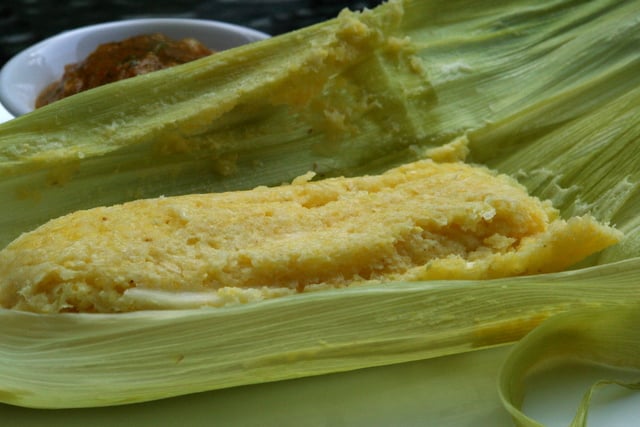
Humitas or steamed fresh corn cakes {My mom’s recipe}
Ingredients
- 6-7 fresh ears of corn with husks
- 3 cups grated or crumbled cheese mozzarella or a fresh farmers cheese
- 1 cup diced white onions about ½ large onion
- 1 tsp ground coriander optional
- 2 garlic cloves crushed
- About 1 cup corn meal
- ¼ cup of heavy cream
- 2 eggs
- 1 tsp salt
Instructions
- Remove the husks from the corn; try to keep each husk intact, the large ones will be used as wrappers for the humitas and the smaller ones will be broken into long strips to tie around the humitas.
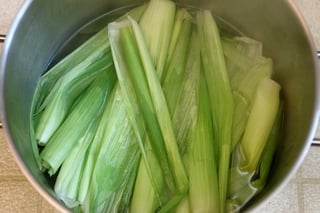
- To help make the corn husks more pliable place them in a pot of boiling water for a couple of minutes, then drain the water and save the husks until ready to use.
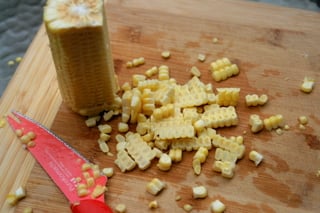
- Remove the silky hairs from the corn and use a knife to cut the corn kernels from the cob, if you don’t have a steamer save the cobs to use as a steamer.
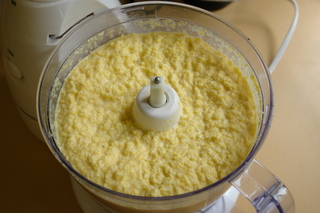
- Place the corn kernels, 1 cup of cheese, diced onions, crushed garlic, ground coriander, corn meal, cream, eggs, and salt in the food processor, mix until the corn is pureed.
- In large deep pot place about 2 ½ cups of water and a steamer, the water should be just below the steamer, if you don’t have a steamer arrange the cobs on the bottom of the pan instead and cover them with some of the leftover husks.
- To fill each humita (see detailed instructions on filling above as well as pictures), use 2 of the large corn husks per humita, place them on top of each other, fold the left side of the husks, then fold the top half over the bottom half, this creates a semi-pocket, fill it with a spoonful of the mixture (how much mixture will depend on the size of the husks, the larger the husks the more filling you can add) and stuff some of theremaining cheese in the middle, now fold over the right side of the husk and tighten it up a little bit, use the thin strips to tie around the wrapper and keep it closed.
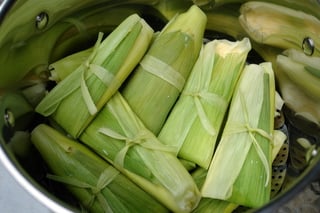
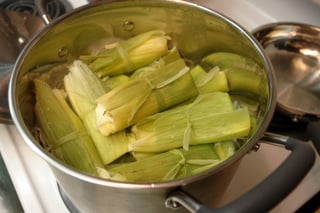
- Place the humitas in the pot on top of the steamer, I like to keep them slightly inclined with the open end on top. Place any leftover husks on top and cover well.
- Place the pot on the stove over high heat until you hear the water boiling, reduce to a simmer and cook for about 35-40 minutes, the cooked humitas will be slightly firm to firm when they are done.
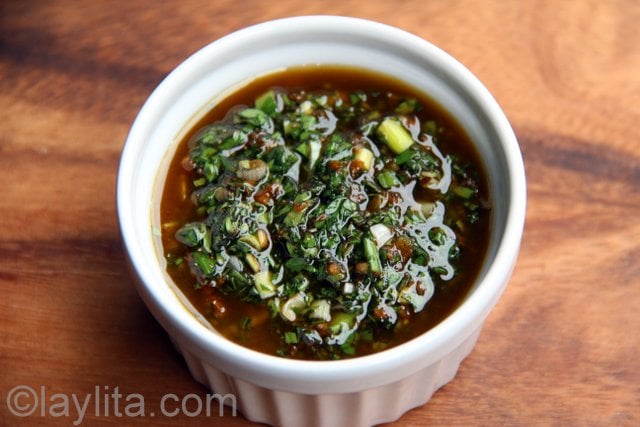
- Serve warm with aji de tomate de arbol or tree tomato hot sauce.
Notes
mix. Also add the melted butter, baking powder and sugar to the mix in the food processor. Beat the egg whites until they are stiff and incorporate the whites into the corn mix. Follow instructions above to assemble the humitas.
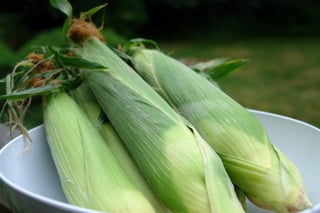
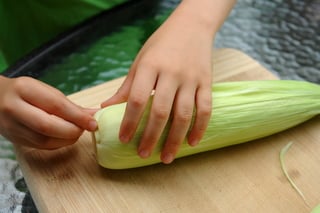
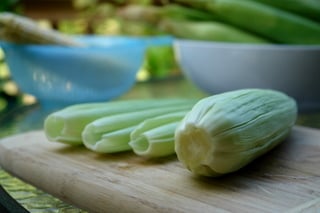
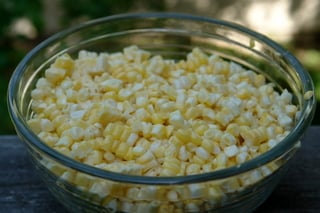
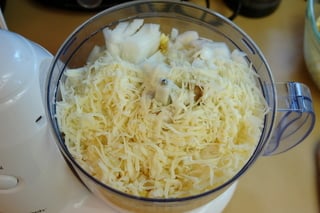
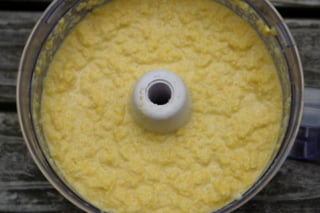
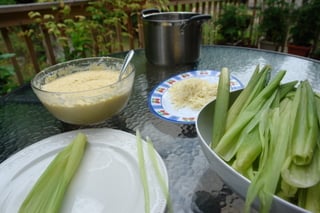
Step by step preparation photos for my mom’s humitas:
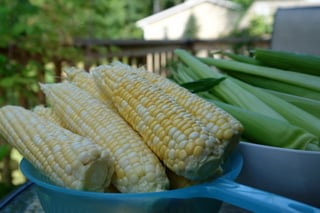
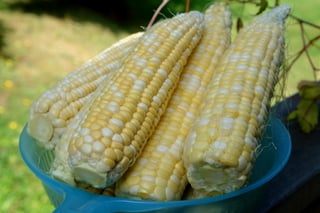
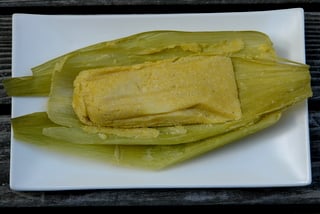
Humitas or fresh corn tamales {with beaten egg whites}
Ingredients
- 6-7 fresh ears of corn with husks
- 3 cups grated or crumbled cheese mozzarella or a fresh farmers cheese
- 1/4 cup heavy cream
- 4 tbs butter melted
- 1 ¼ cups corn meal approximately, add more if needed
- 4 eggs yolks and whites separated
- 1 tsp baking powder
- 1-2 tbs sugar
- ½ tsp salt
Instructions
- Remove the husks from the corn; try to keep each husk intact.The large ones will be used as wrappers for the humitas and the smaller ones will be broken into long strips to tie around the humitas.
- To help make the corn husks more pliable place them in a pot of boiling water for a couple of minutes, then drain the water and save the husks until ready to use.
- Remove the silky hairs from the corn and use a knife to cut the corn kernels from the cob, if you don’t have a steamer save the cobs to use as a steamer.
- Place the corn kernels, 1 cup of cheese, diced onions, corn meal, cream, egg yolks, melted butter, baking powder, sugar and salt in the food processor, mix until the corn is pureed.
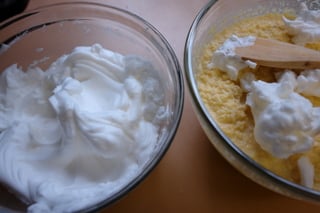
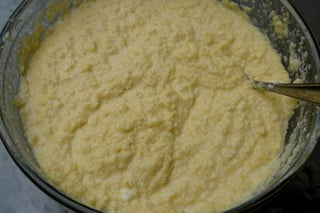
- Beat the egg whites until they are stiff and incorporate the whites into the corn mix.
- In large deep pot place about 2 ½ cups of water and a steamer, the water should be just below the steamer, if you don’t have a steamer arrange the cobs on the bottom of the pan instead and cover them with some of the leftover husks.
- To fill each humita (see detailed instructions on filling above as well as pictures), use 2 of the large corn husks per humita, place them on top of each other, fold the left side of the husks, then fold the top half over the bottom half, this creates a semi-pocket, fill it with a spoonful of the mixture (how much mixture will depend on the size of the husks, the larger the husks the more filling you can add) and stuff some of the remaining cheese in the middle, now fold over the right side of the husk and tighten it up a little bit, use the thin strips to tie around the wrapper and keep it closed.
- Place the humitas in the pot on top of the steamer, I like to keep them slightly inclined with the open end on top. Place any leftover husks on top and cover well.
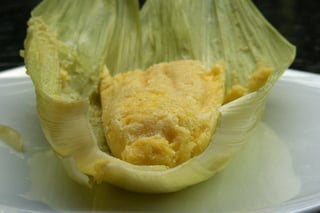
- Place the pot on the stove over high heat until you hear the water boiling, reduce to a simmer and cook for about 35-40 minutes, the cooked humitas will be slightly firm to firm when they are done.
- Serve warm – with an extra slice of cheese and hot coffee.
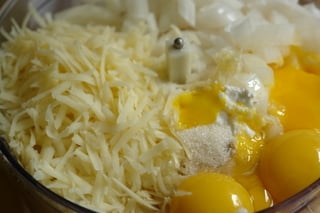
Step by step preparation photos for the more sophisticated humita variation:
Discover more from Laylita's Recipes
Subscribe to get the latest posts sent to your email.
I just made them and came out delicious!! I couldn’t believe it. I used Harina Pan, the yellow sweet one to make cachaps instead of cornmeal. I also used mozzarella and queso fresco and scallions instead of white onion. I made a small batch because I wasn’t sure, but I will try again a bigger batch this time!??
I spent 18 months in Ecuador as a missionary, and I loved eating humitas when I was in Cuenca and Loja. I haven’t had the courage to make many Ecuadorian recipes because they tend to use LOTS of ingredients (some of which are hard to find or expensive here in the States), but this recipe seemed reasonable and quite simple. I added in the ground coriander, and boy! These were delicious! Smelling that fresh steamed corn husk brought me right back to the Andes. And the mozzarella was a great substitute for the queso fresco. Thank you for the recipe! I look forward to trying many more!
Thanks so much for this recipe. Ive been wanting to make these for a long time since I lived in Ecuador 15 years ago. In this time of year when we can’t get fresh corn in Vancouver BC, are there any alternatives (frozen?) or will I just have to wait till summer? Thanks
Hi Angeli – I have a baked casserole style version that I make during the winter, you can use frozen or canned corn for this variation: https://www.laylita.com/recipes/pastel-de-choclo-or-pastel-de-humita/
Also, Costco usually has corn year-round (but without the husks) so if I can find it I try to make it with that.