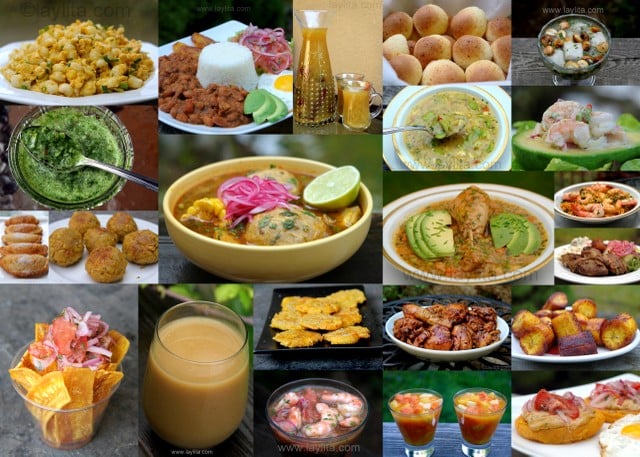
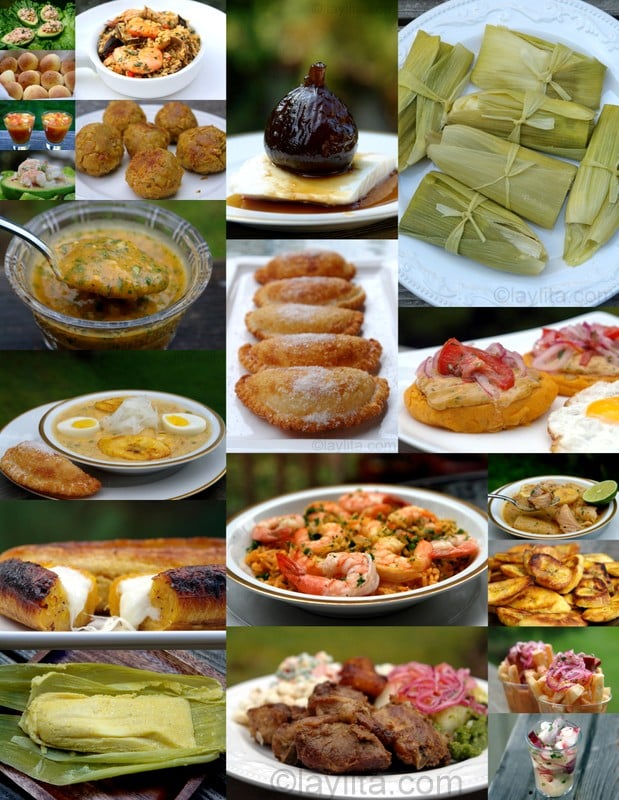
Here you will find my most popular traditional Ecuadorian recipes, including recipes from the different regions of Ecuador and holiday recipes. These classic Ecuadorian recipes are easy to make and most include step by step photos. This list breaks out the recipes by category to make it easier to find the recipe you need.
Some of the most popular Ecuadorian drinks are fresh fruit juices and smoothies, called batidos. In the Ecuadorian highlands or Sierra region there are also several warm drinks that are perfect for a cold evening or morning. Chicha style drinks, the most traditional is called chicha de jora and is made from corn. There are also chicha drinks made using oats, rice, yuca or cassava, and fruit. Cocktails tend to use aguardiente, a sugar cane liquor similar to rum, as their main alcohol component. These days you can find a variety of different aguardientes, some are inexpensive mass produced and others are more artisanal/higher quality (ie less hangover).
1
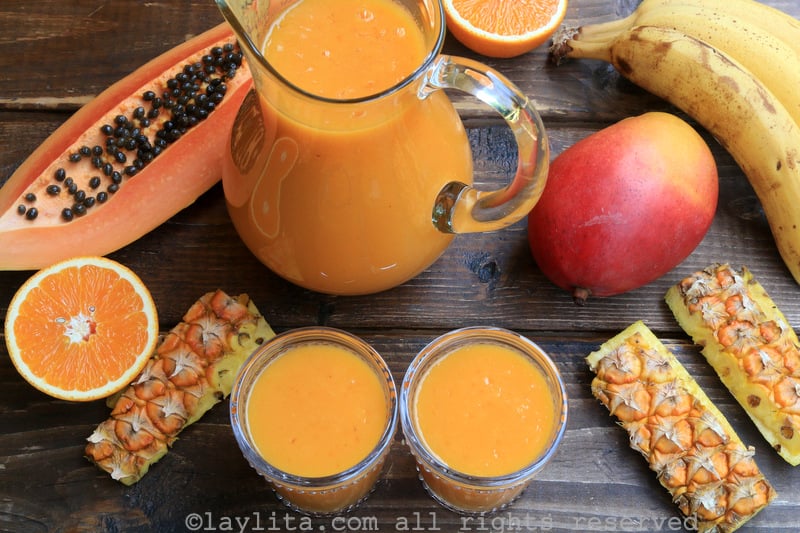
Tropical fruit smoothie
Easy recipe for a refreshing tropical fruit smoothie made with papaya, banana, pineapple, mango, and orange.
Ecuadorian fruity oatmeal drink – Colada de avena con naranjilla
Colada de avena is a traditional Ecuadorian fruity oatmeal drink, it is made with oats, naranjilla fruit, panela or brown sugar, water and cinnamon. Colada can be served cold on warm days or warm during cold winter days.
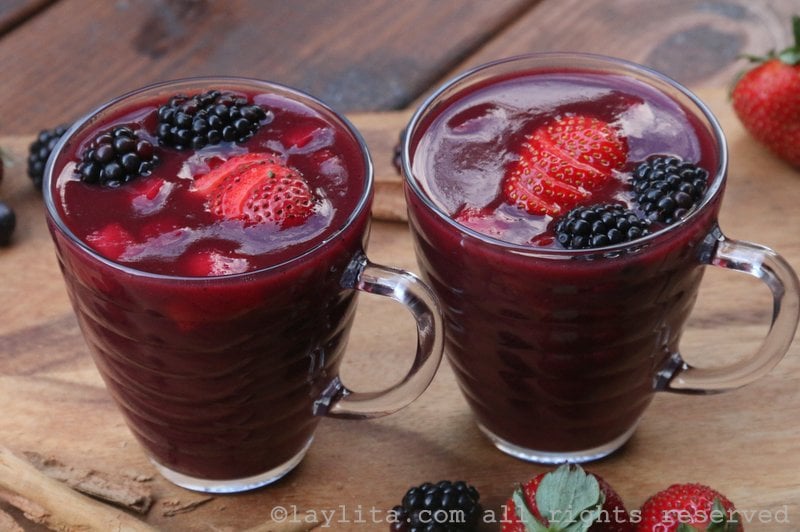
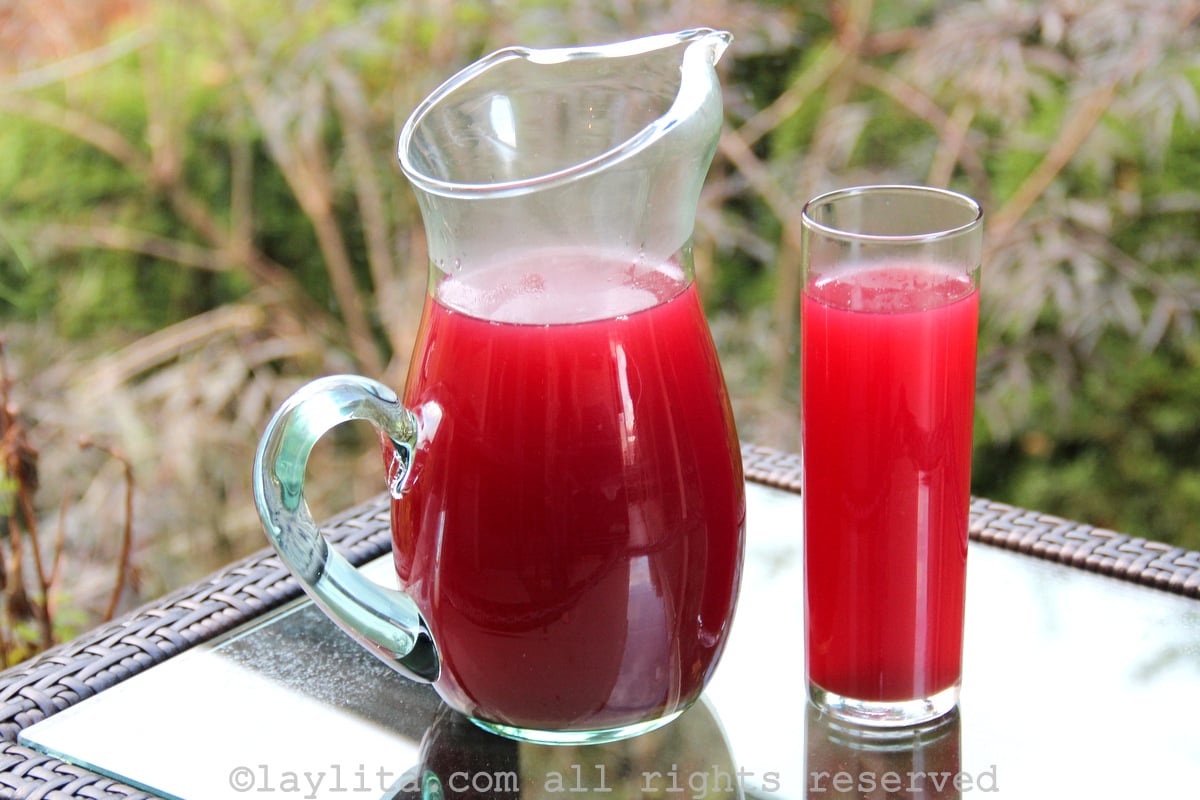
Ecuadorian Colada Morada: a spiced berry and purple corn drink
This Ecuadorian colada morada is a traditional thick drink made with fruits, spices, and purple corn flour. Colada morada is prepared for the Day of the Deceased celebrations in Ecuador.
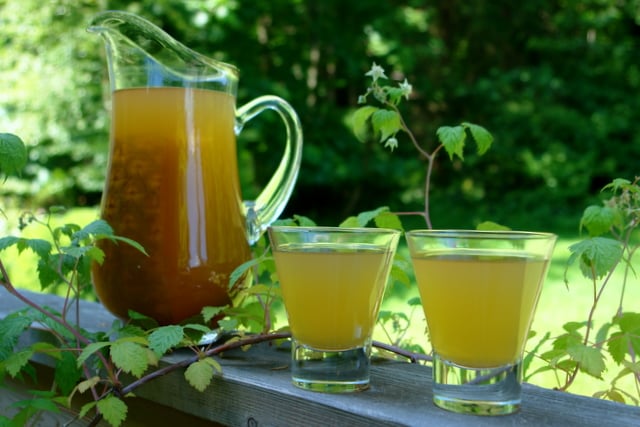
Horchata lojana is a tea type drink made from a variety of herbs and flowers including escancel or bloodleaf, lemon verbena, lemon grass, mint, chamomile, lemon balm, rose geranium, among others.
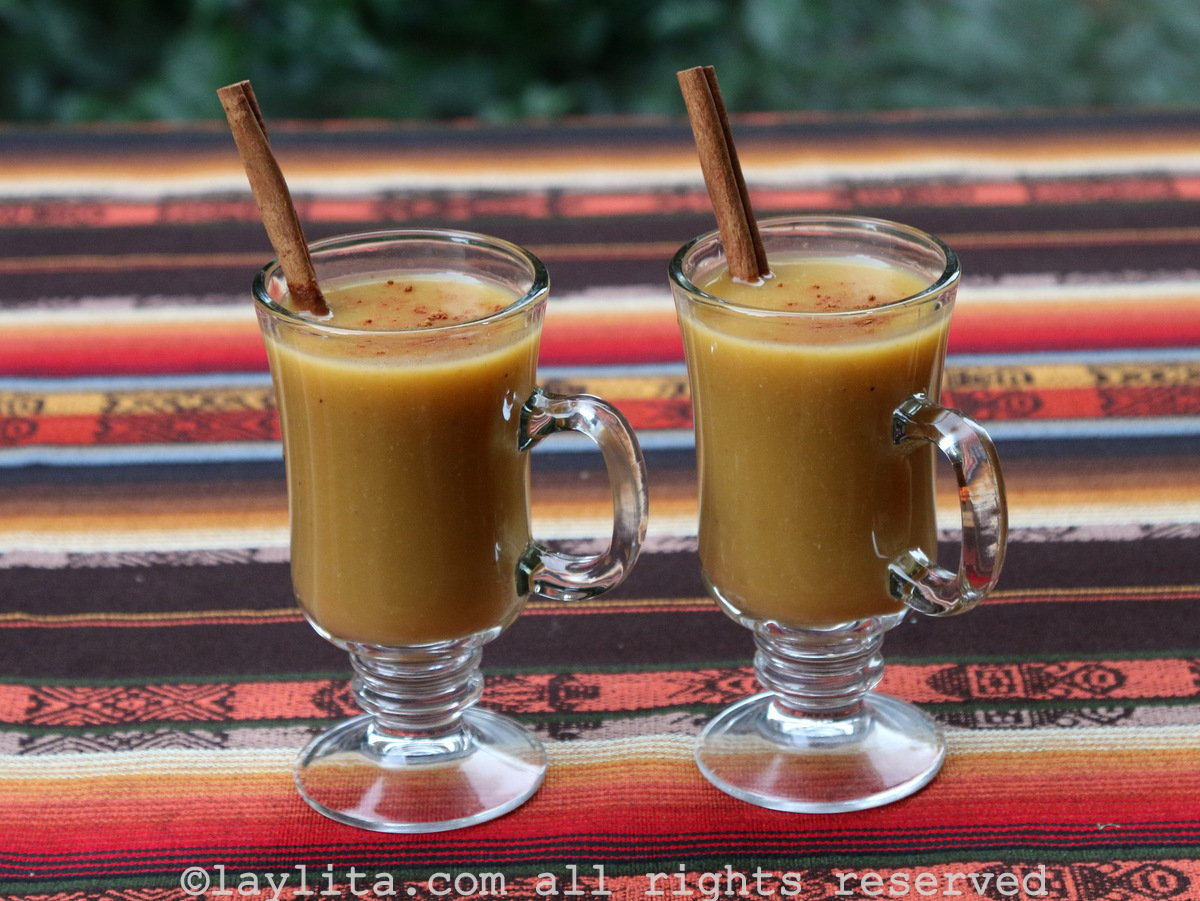
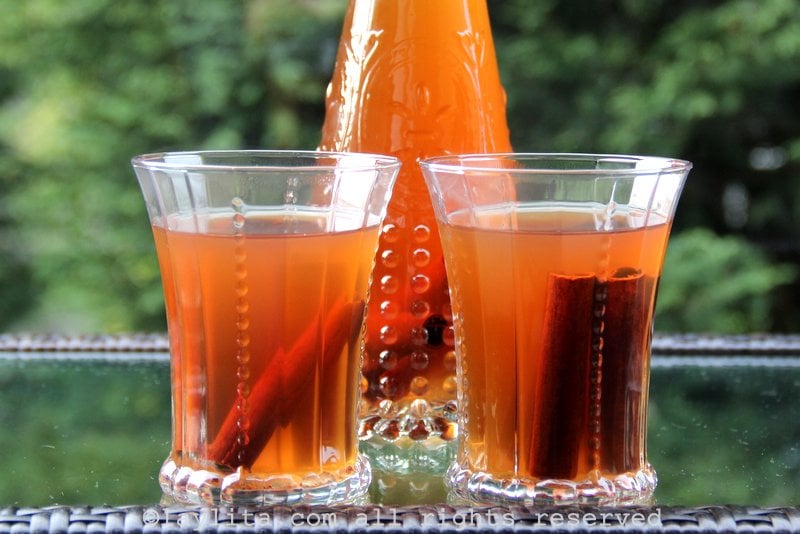
Canelazo is warm spiced cinnamon cocktail made with cinnamon, water, sugar and aguardiente. Naranjillazo is a version of canelazo made with naranjilla fruit juice.
Hot spiced blood orange cocktail inspired by the Ecuadorian canelazo drink made with blood orange juice, cinnamon, spices, and rum or aguardiente sugar cane liquor.
We love snacking in Ecuador, it’s very common to arrive at a restaurant or bar and to be served a simple snack inmediately. Sometimes it’s something as simple as popcorn or crunchy Ecuadorian style corn nuts called maíz tostado. There are so many Ecuadorian dishes that made great appetizers. Some of these dishes can also be served as main entrees depending on the meal. Personally I love serving some of the traditional Ecuadorian street food dishes as appetizers. It’s a great way to sample a variety of different flavors in small bites. Other dishes like stuffed avocados and ceviches work great as a single appetizer for any standard three meal course.
12
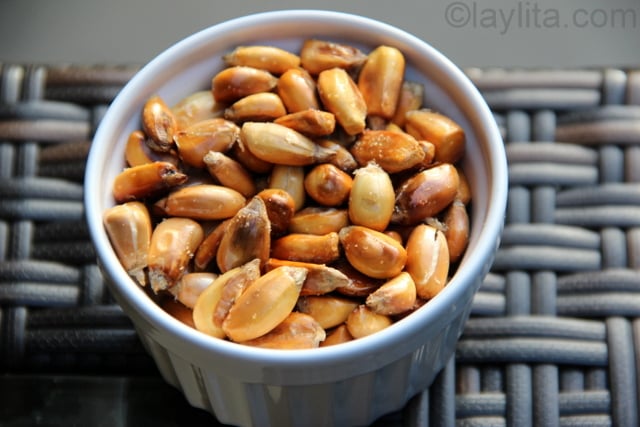
Maiz tostado or South American cancha corn nuts
Maiz tostado is a South American snack made by toasting cancha or chulpe corn.
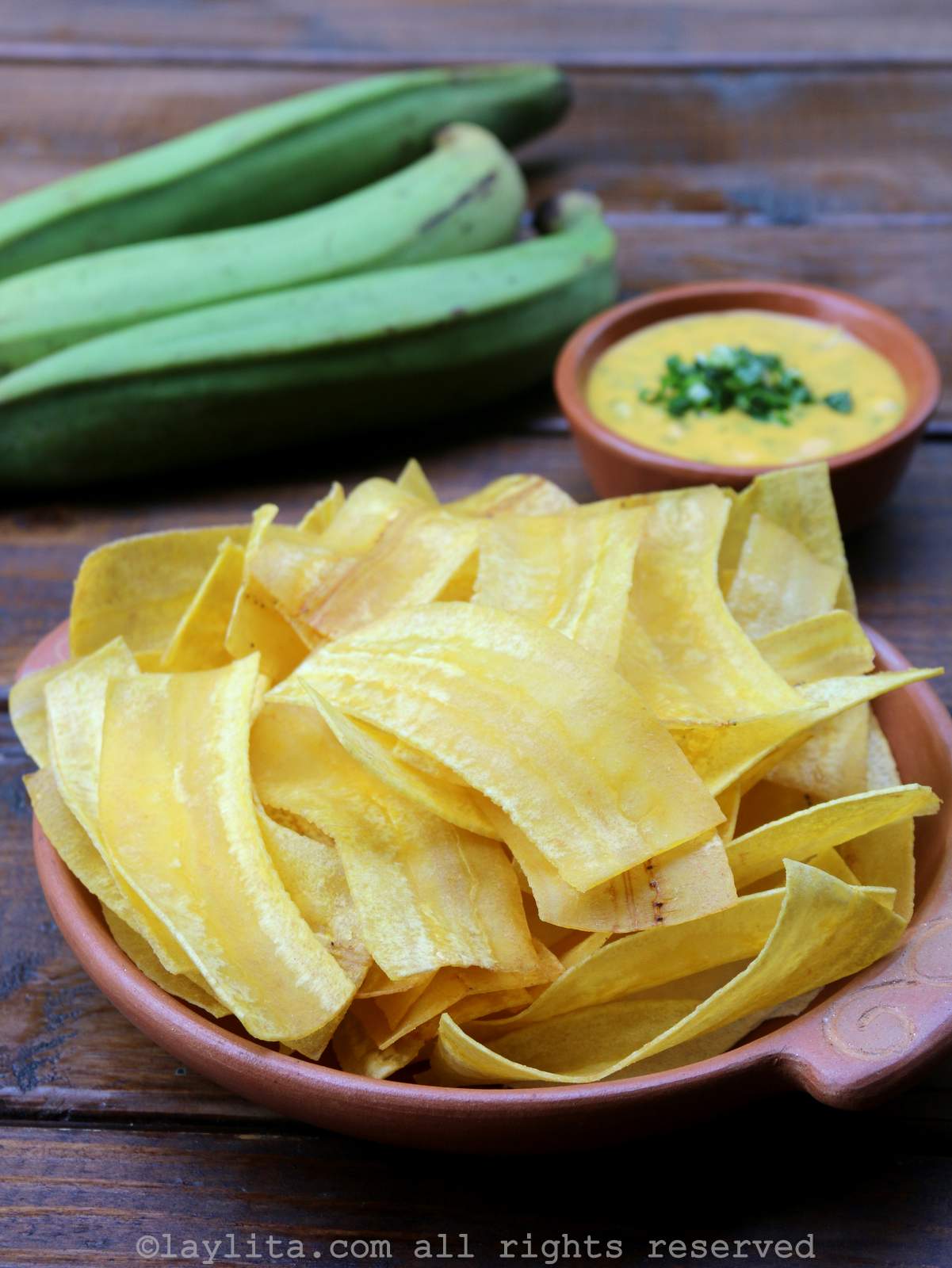
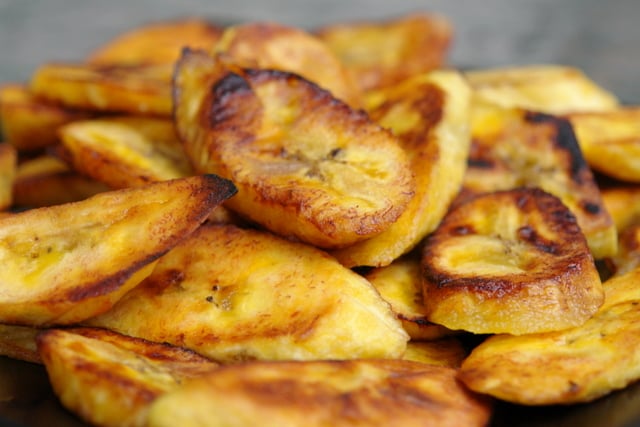
Homemade recipe for chifles or thin fried green plantain chips. These crunchy chips are also known as mariquitas, chicharitas, platanutres, platanitos or plataninas. You can also make them with very green bananas.
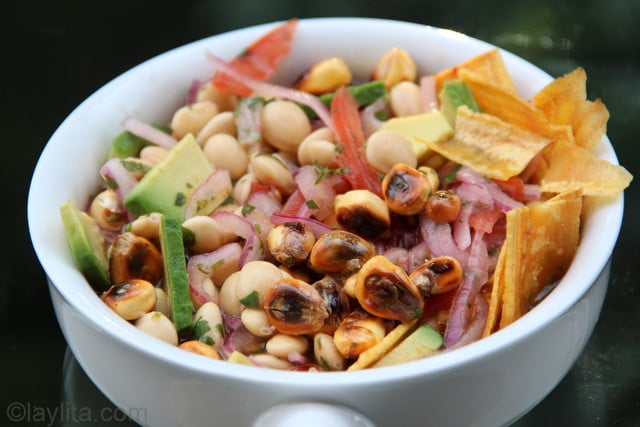
Ceviche de chochos is a vegetarian ceviche made with chocho beans (lupini beans), onions, tomatoes, cilantro, limes, oranges and tomato sauce. It is served with maiz tostado, chifles or plantain chips, avocados and hot sauce.
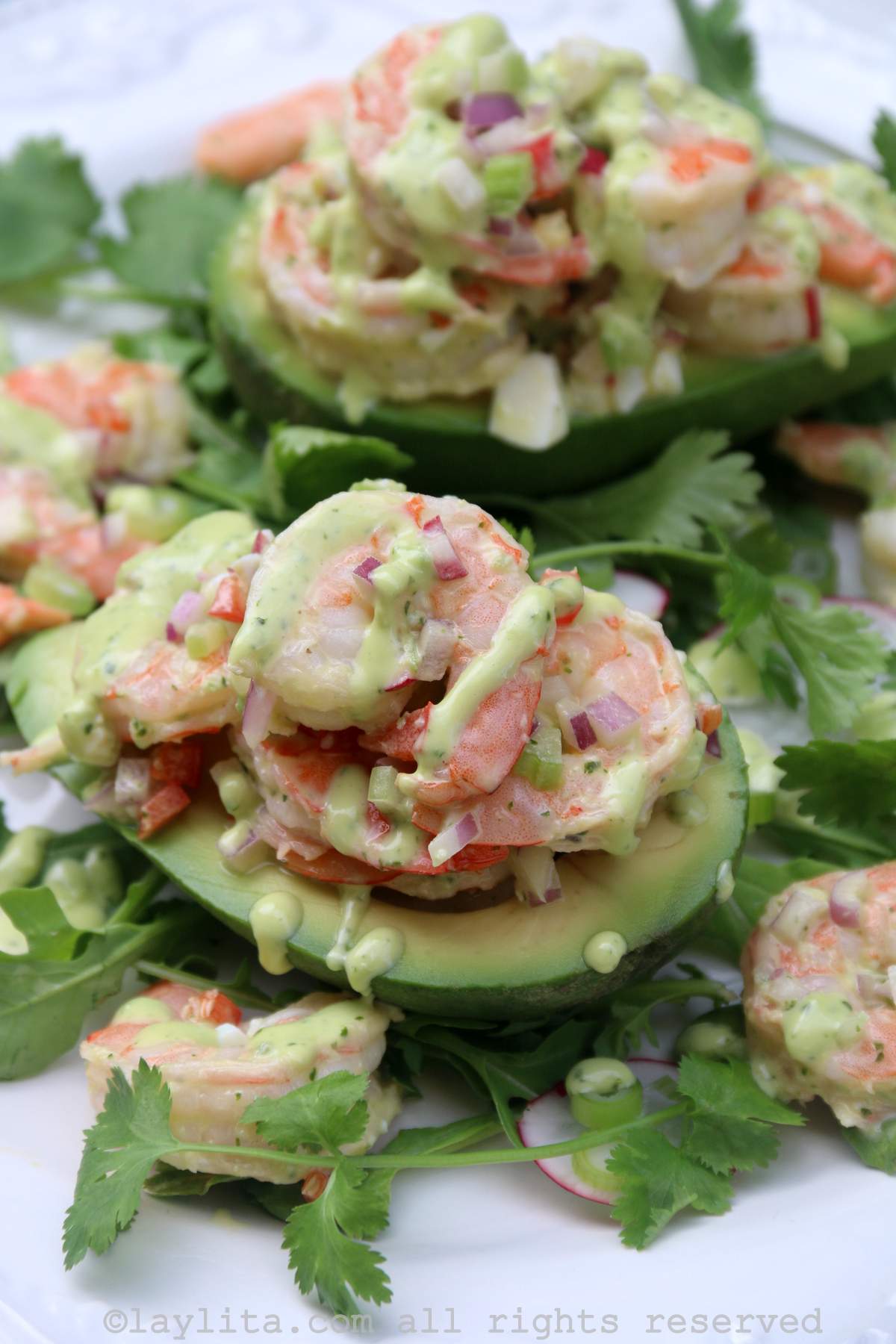
Shrimp Stuffed Avocados (Aguacate Relleno con Camarones)
Delicious recipe for shrimp stuffed avocado that consists of avocado boats filled with a shrimp salad made with red onion, radish, bell pepper, celery and cilantro aioli.
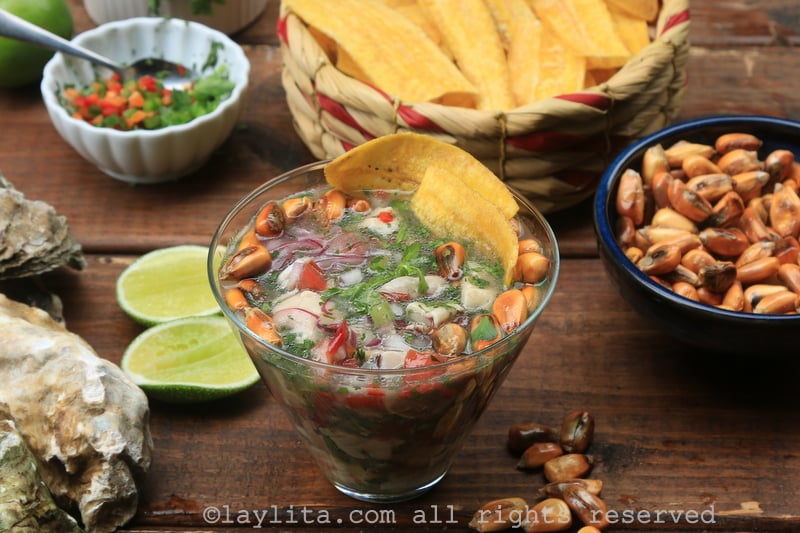
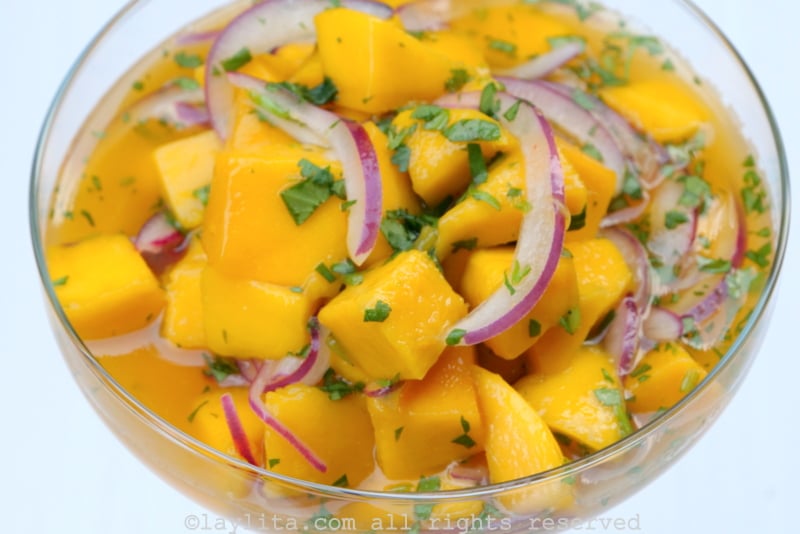
Ceviches are very popular in the coastal region of Ecuador. There’s nothing more refreshing than having a bowl of freshly made ceviche by the beach. However, you can also find ceviche in the highlands. Ecuadorian ceviches are not limited to seafood. We have vegetarian/vegan ceviches made with chochos, a type of lupini bean, hearts of palm (palmito), mushrooms, and fruits like mango. In Quito you can also find chicken ceviche (made with fully cooked chicken). In Macara, a city in my province of Loja, you can also find a delicious ceviche made with cooked beef.
17
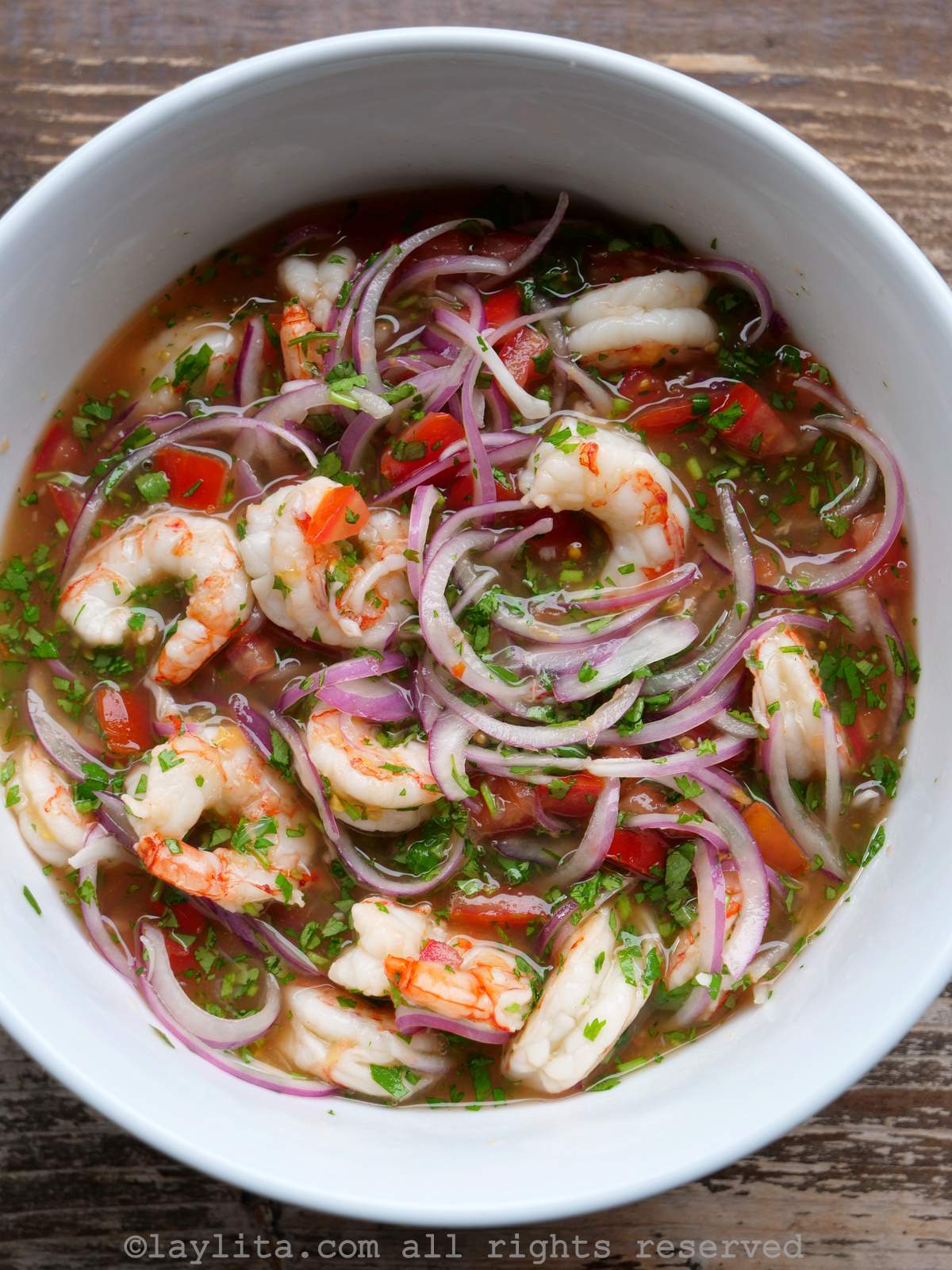
Ecuadorian shrimp ceviche {Ceviche de camarón}
Traditional Ecuadorian shrimp ceviche recipe made with poached shrimp marinated in lime and orange juice with red onions, tomato and cilantro
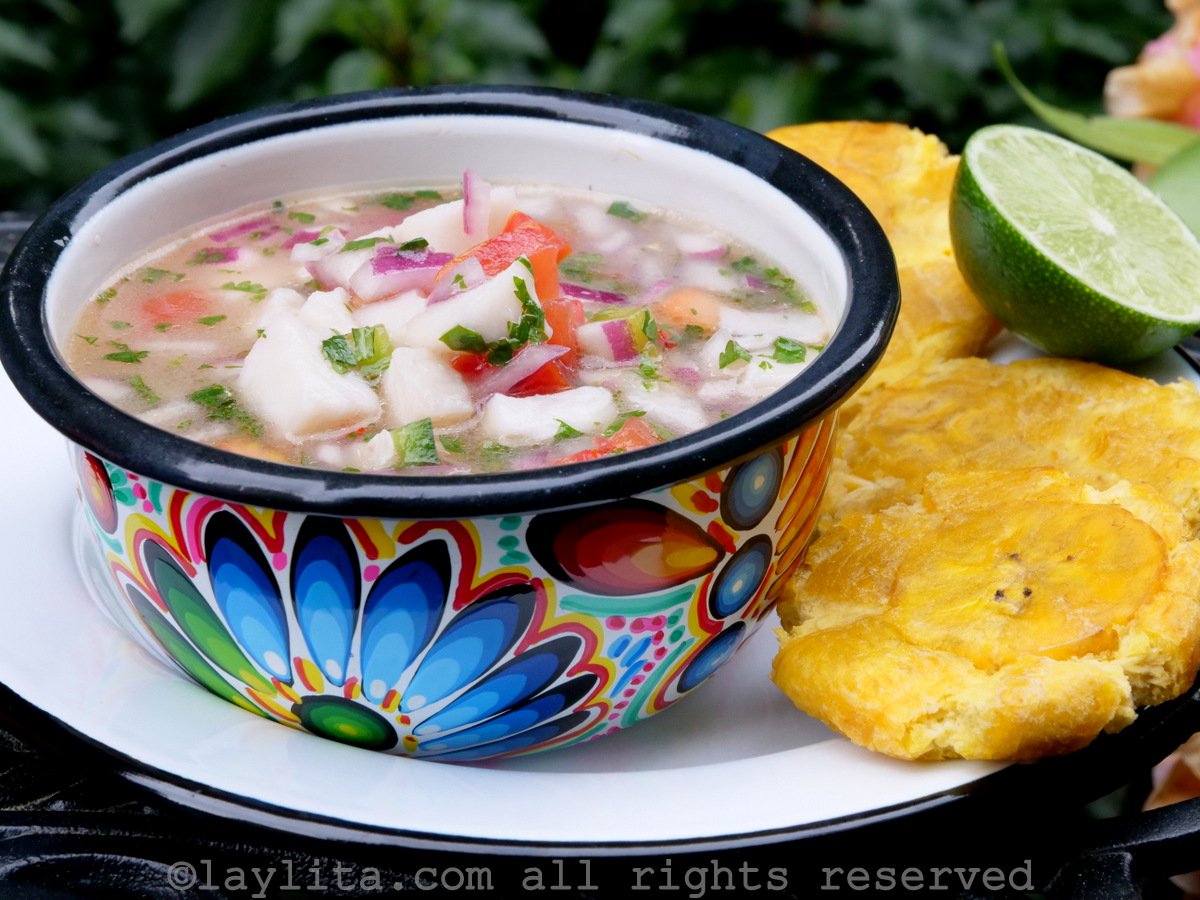
Ecuadorian fish ceviche {Ceviche de pescado ecuatoriano}
Recipe for Ecuadorian fish ceviche {ceviche de pescado ecuatoriano} made by marinating or cooking raw fish in lime juice and mixing it with onions, tomatoes, peppers, and cilantro.
Ceviche de chochos is a vegetarian ceviche made with chocho beans (lupini beans), onions, tomatoes, cilantro, limes, oranges and tomato sauce. It is served with maiz tostado, chifles or plantain chips, avocados and hot sauce.
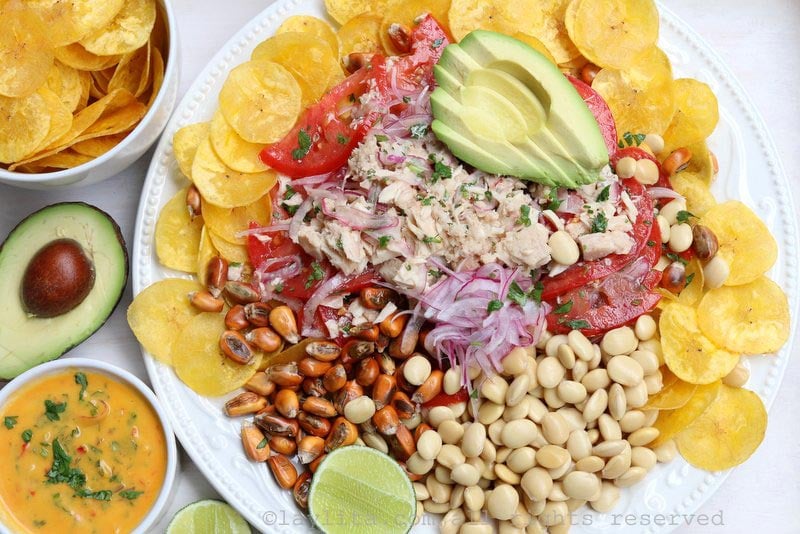
Recipe for tuna fish ceviche, also known as ceviche volquetero, an Ecuadorian ceviche made with canned tuna fish, onions, tomato, lime juice, cilantro, and served on a platter with chifles or green plantain chips, chochos (lupini beans), toasted corn nuts, and hot sauce.
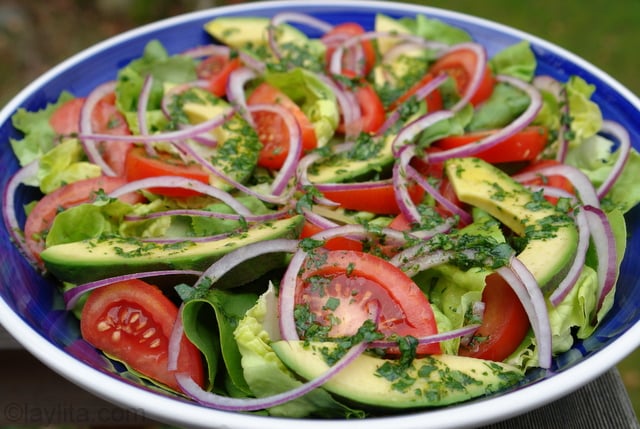
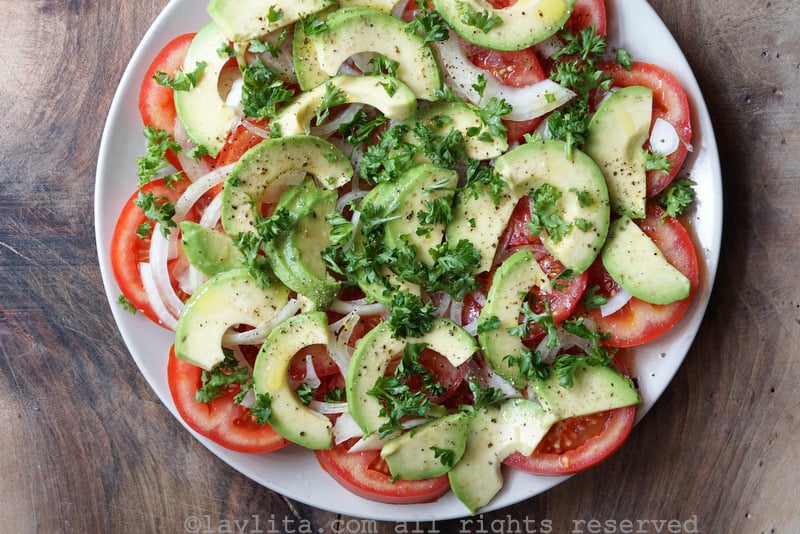
Salads in Ecuador are usually served as a side dish for a main meal or as an appetizer, though it is becoming more mainstream to have salads served on their own. Salads using seafood, avocado, potatoes, carrots, beans, corn, broccoli, etc are very common. The salad dressings are either lemon/vinegar based or mayonnaise based for potato/vegetable salads.
23
Shrimp potato salad {Ensalada de papas con camarones}
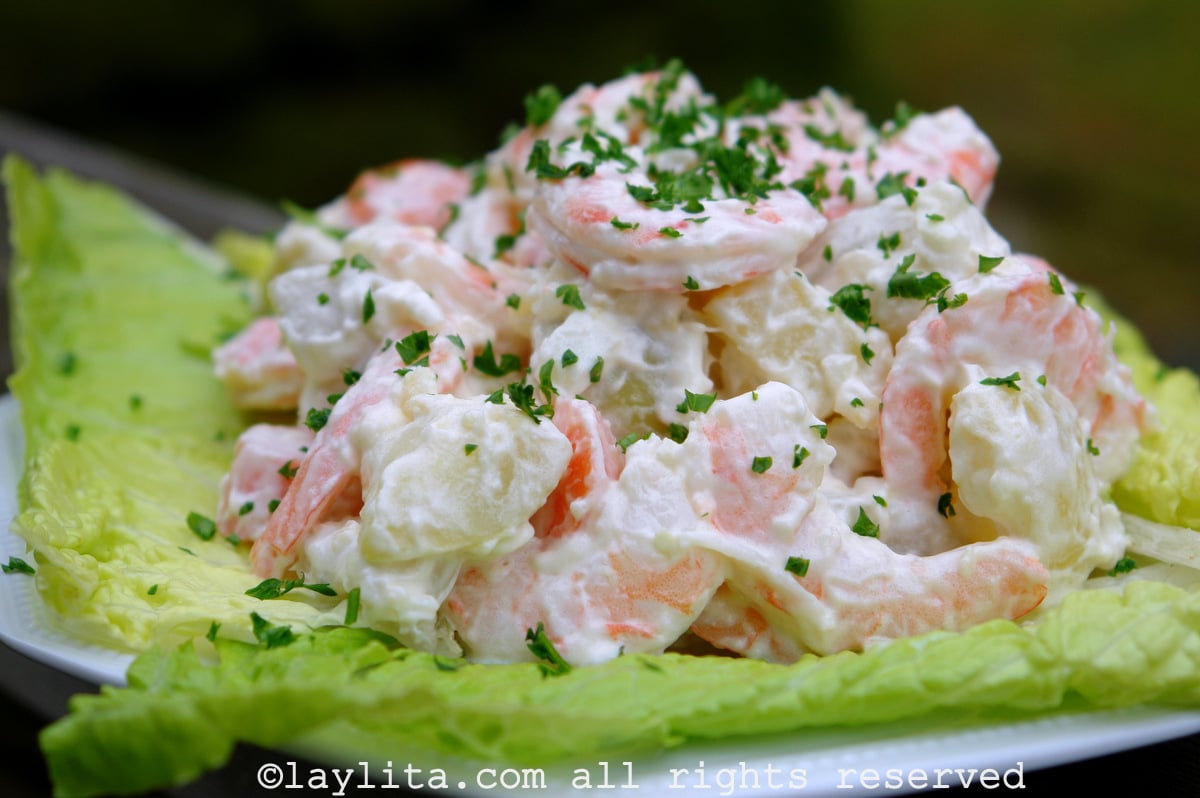
Latin/Ecuadorian style shrimp potato salad made with shrimp, potatoes, carrots, onion, garlic and mayonnaise.
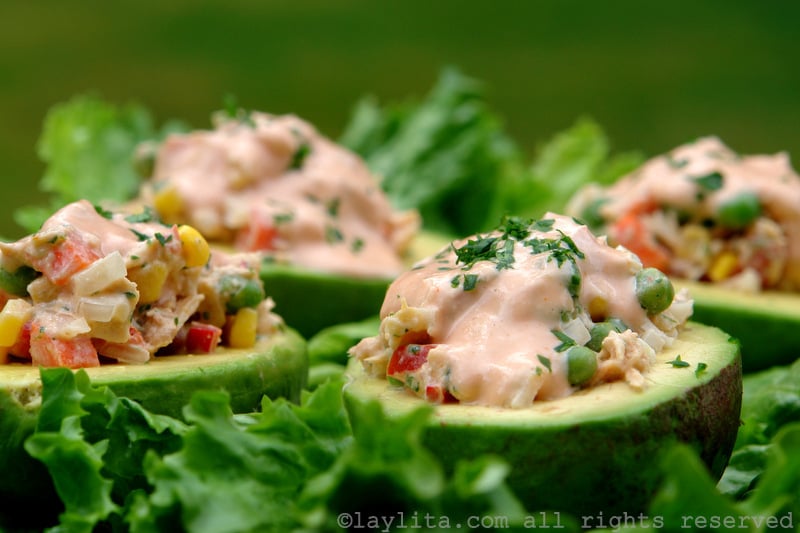
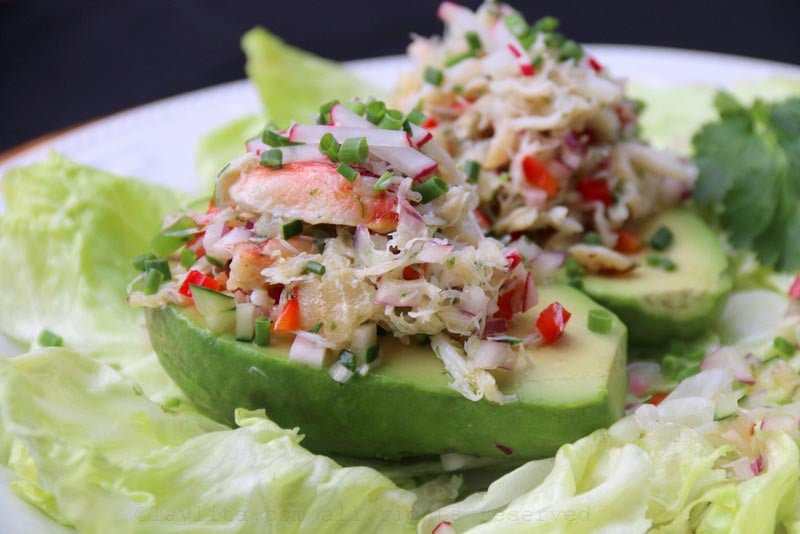
Crab salad stuffed avocados prepared by filling ripe avocados with a salad of crab, red onion, bell pepper, cucumber, radishes, lime juice, olive oil, and cilantro.
Chochos (lupini beans) and green bean salad or side dish made with green beans, chocho beans (lupini beans), potato, tomatoes, onions,olive oil, and fresh herbs.
There are so many Ecuadorian soup recipes, even after years of blogging I still have a long list of soup recipes to share. Soups are usually served as the first course for most Ecuadorian lunches. The main lunch course is called “Segundo” which means second because it’s served after the soup.
32
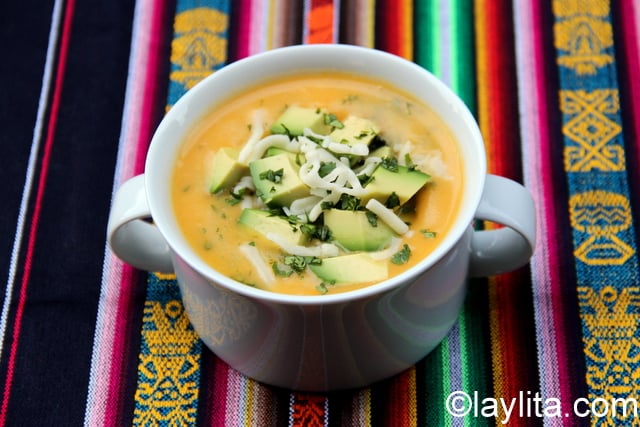
Locro de papa {Ecuadorian potato and cheese soup}
Recipe for locro de papa or potato soup, a traditional Ecuadorian soup made with potatoes, onion, garlic, cumin, achiote or annatto, milk, cheese and cilantro.
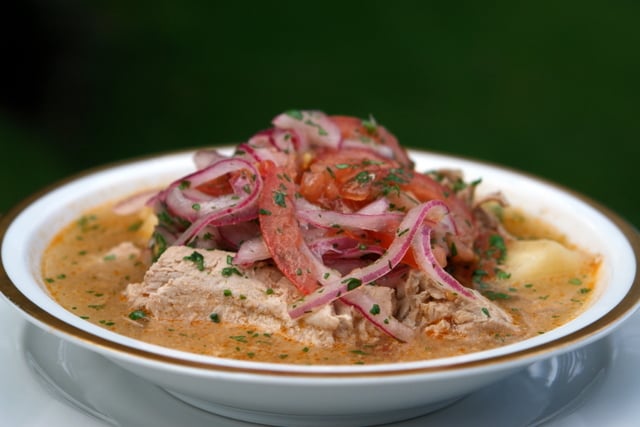
{Encebollado de pescado} Ecuadorian tuna fish soup
Encebollado de pescado is an Ecuadorian fish soup made with fresh tuna, yuca or cassava, tomato, onions, cilantro, cumin, hot pepper and topped with pickled red onions.
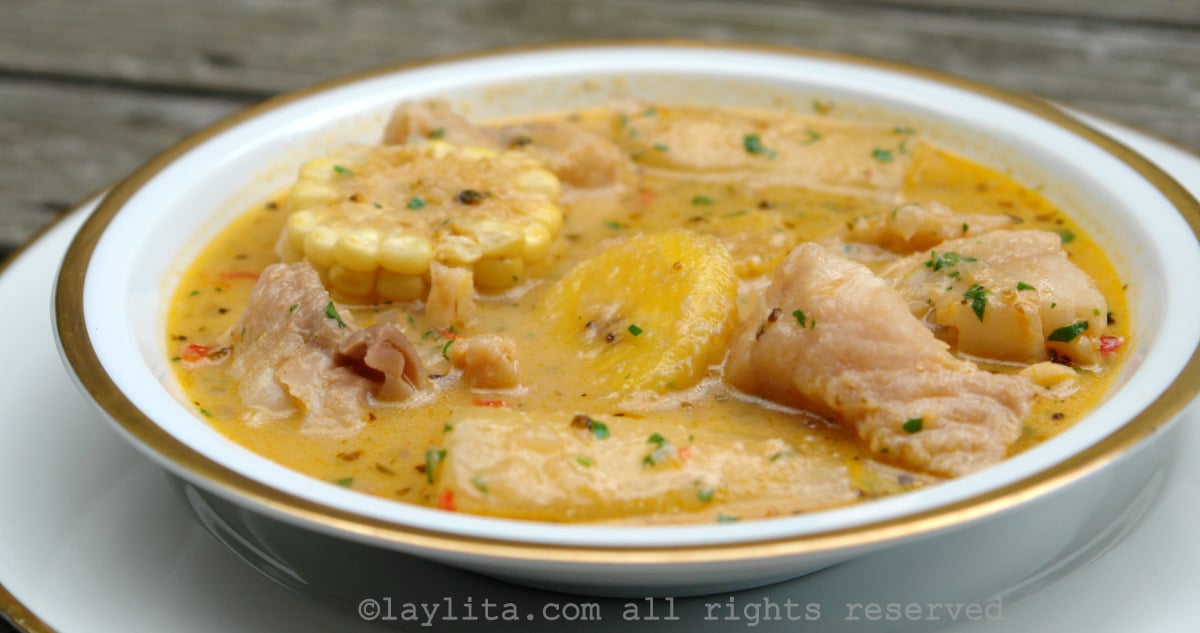
Biche de pescado, or viche de pescado, is a traditional coastal Ecuadorian soup made with fish, peanuts, yuca, sweet plantains, corn, and other vegetables and spices.
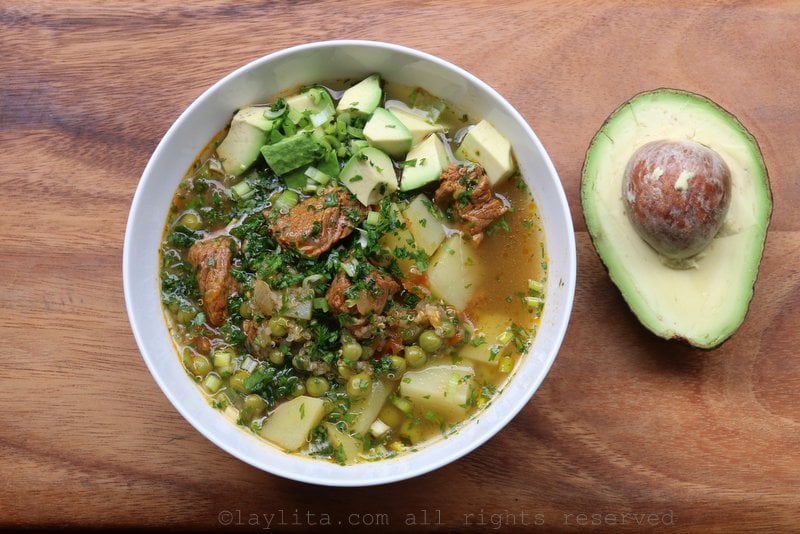
Easy quinoa soup with beef recipe made with onions, garlic, tomatoes, cumin, achiote/annatto, beef, potatoes, peas, parsley and cilantro. Served with avocado, pickled red onions, and hot sauce.
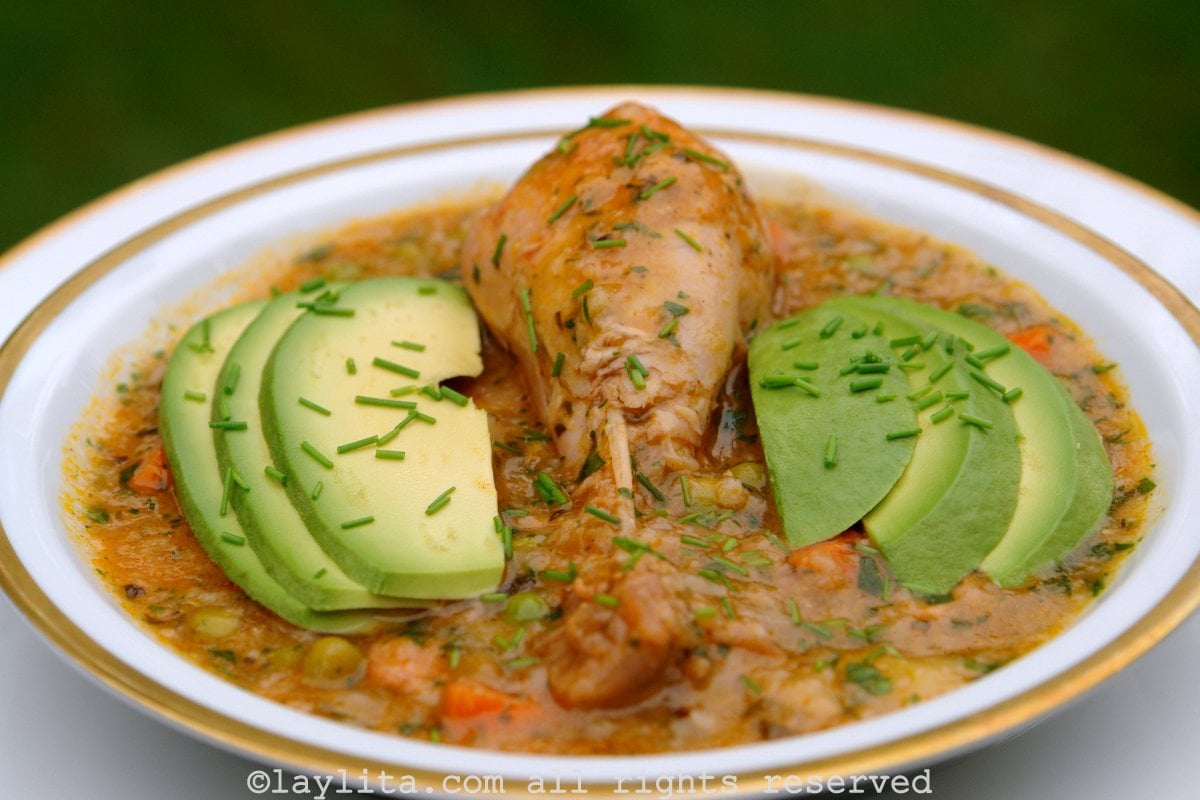
Ecuadorian chicken rice soup or aguado de gallina is a thick soup made with chicken, rice, potatoes, onions, peppers, other vegetables, herbs and spices.
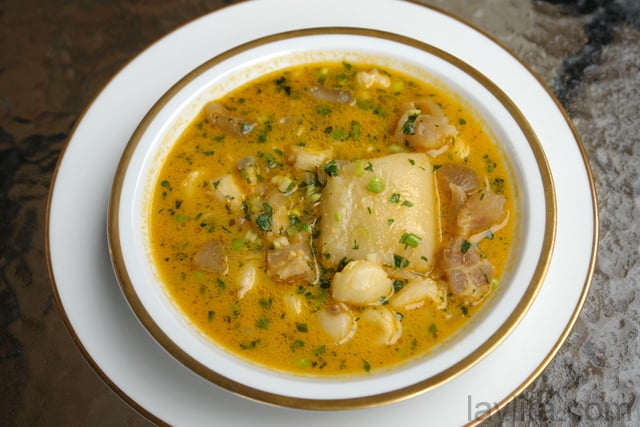
Caldo de pata de res or cow feet soup is a traditional Latin American comfort soup made with cow feet, yuca, mote or hominy, cilantro, parsley, onions, garlic, achiote, cumin, peanuts, milk, oregano.
Ecuadorian green plantain dumpling soup – Caldo de bolas de verde
Caldo de bolas de verde is a typical Ecuadorian soup of green plantain balls or dumplings stuffed with meat and served in a delicious broth with corn and yuca.
Ecuadorian main meals can be very filling, especially lunch. There’s usually a protein component that could be meat, fish, seafood, poultry. Sides include rice, which could also be part of the dish, and additional starches like potatos, yuca or cassava, plantains, corn, beans. A small side salad might also be part of the main dish. For those who find that there’s an over-abundance of starches, you can choose the one(s) you want when cooking at home.
40
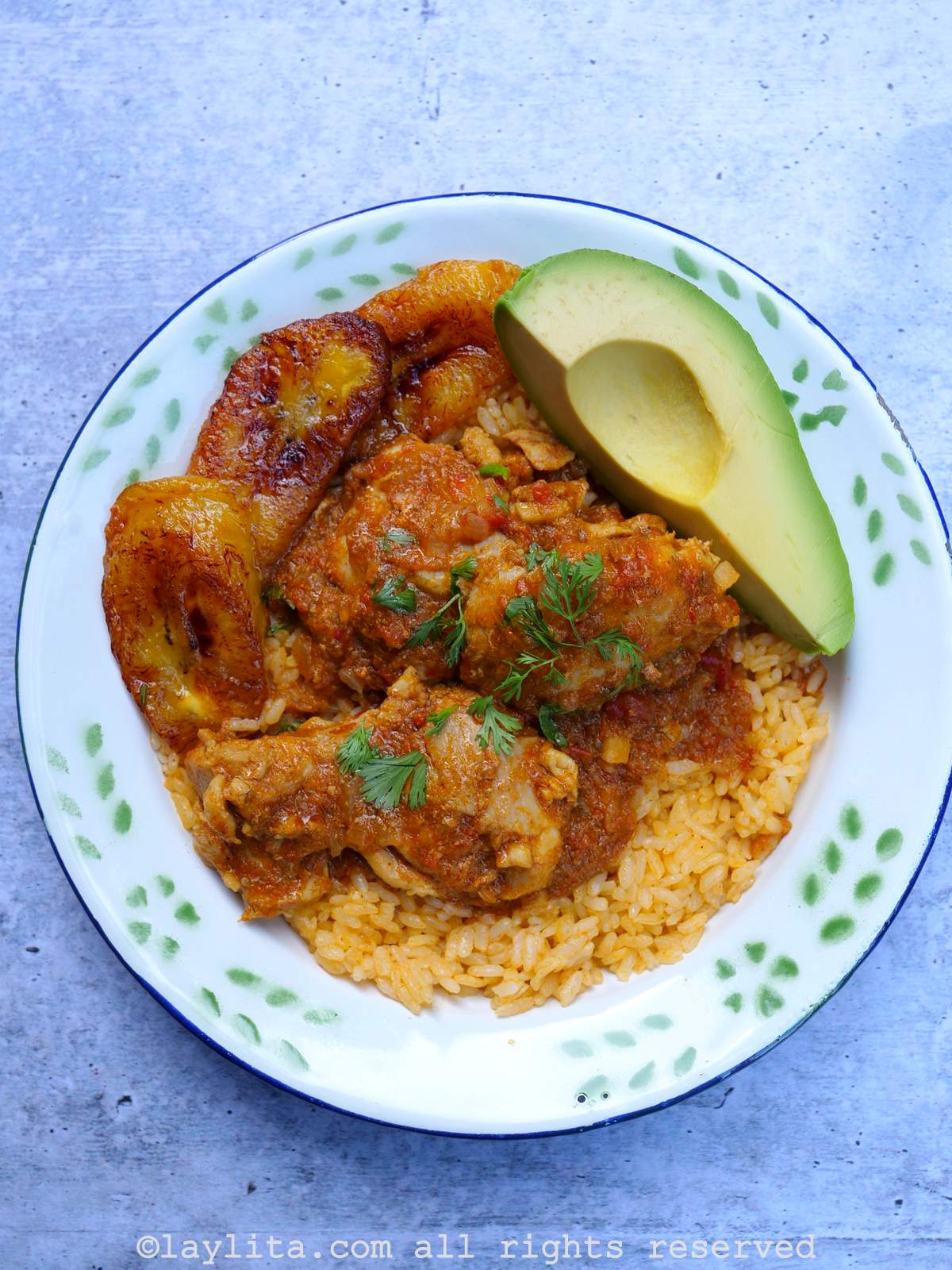
Seco de pollo {Ecuadorian chicken stew}
Seco de pollo or seco de gallina is an Ecuadorian chicken stew cooked slowly in a sauce of beer (or chicha), naranjilla juice, onions, garlic, peppers, tomatoes, herbs and spices.
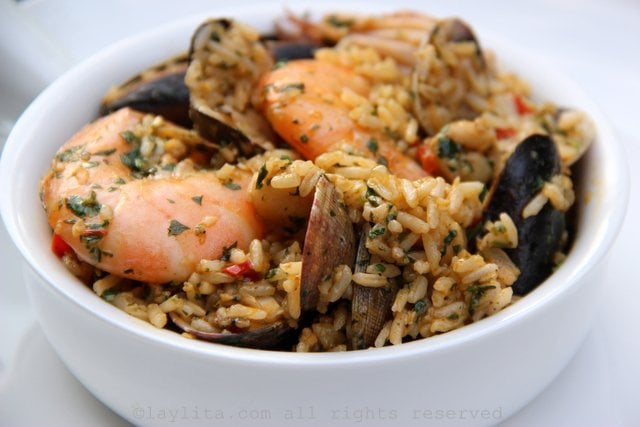
Seafood rice {Arroz marinero / Arroz con mariscos) is a Latin/South American dish similar to Spanish paella, that is made with rice cooked in seafood broth and sautéed with shrimp, clams, squid, bay scallops, onions, garlic, bell pepper, cilantro and spices.
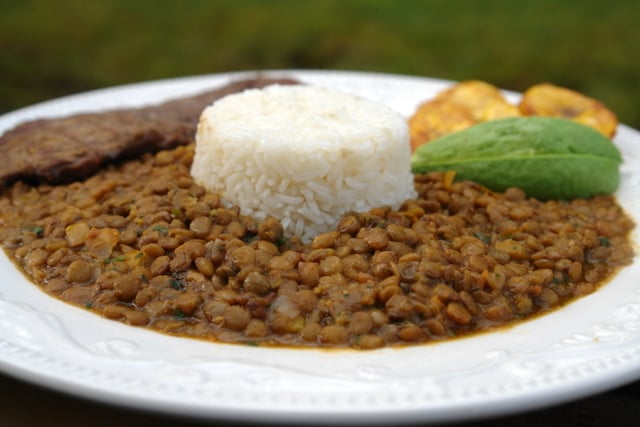
Arroz con menestra de lentejas is a traditional Ecuadorian lentil stew simmered with onion, pepper, tomato, garlic, cumin, and cilantro. Menestra is usually served with rice and thin grilled steaks or carne asada.
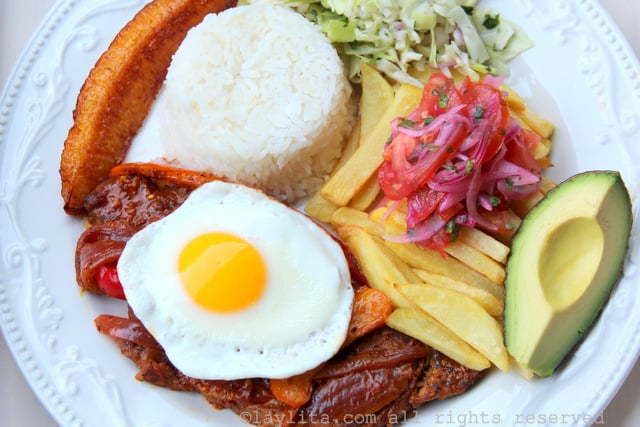
Ecuadorian churrasco is a traditional dish made with steaks, grilled , or sometimes fried in an onion and pepper sauce, topped with a fried egg and served with rice, fries, plantains and salad.
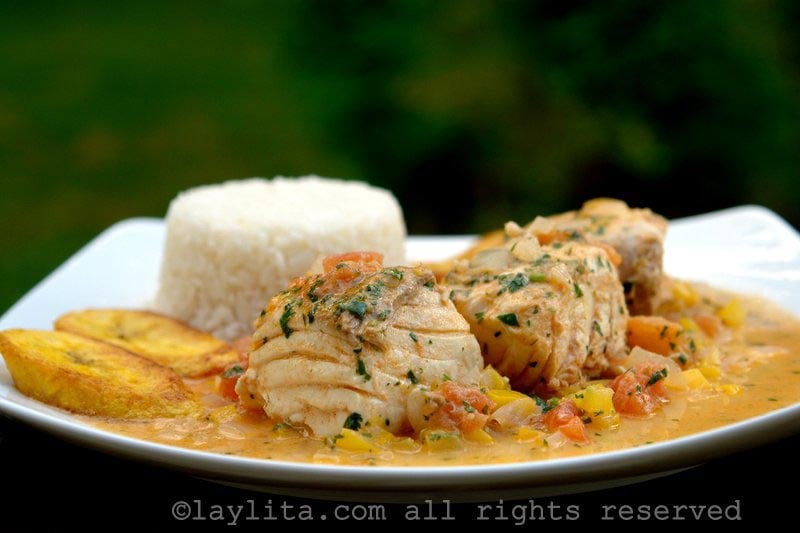
Pescado encocado or fish with coconut sauce is an Ecuadorian coastal dish of fish seasoned with citrus and spices and then cooked in a sauce of cilantro, onions, tomatoes, bell peppers and coconut milk.
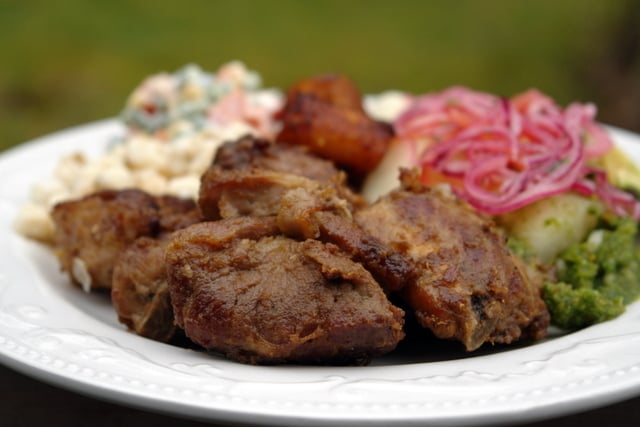
Fritada de chancho a popular weekend dish in Ecuador, in this traditional dish the pork is cooked in a mix of water, orange juice with onion, garlic and cumin until the liquid is gone and the pork browns in the “mapahuira” or mix of its own grease and spices/flavors from the onion/garlic
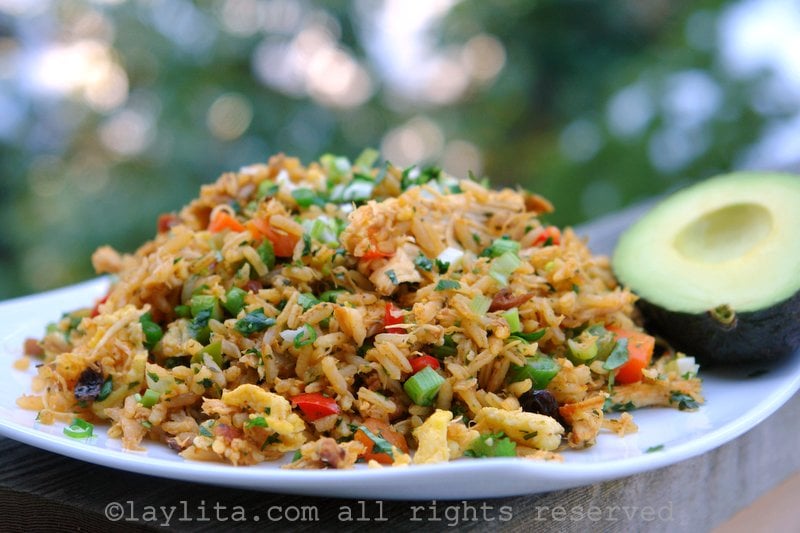
Chaulafan de pollo is an Ecuadorian chicken fried rice made with rice, chicken, bacon, onions, garlic, peppers, bell peppers, peas, carrots, scrambled eggs, raisins, spices and herbs.
Ecuadorian seco de chivo is a goat stew dish braised in a sauce of garlic, cumin, achiote, oregano, peppers, onions, cilantro, tomatoes, chicha or fermented corn drink, naranjilla or lulo juice, panela and spices.
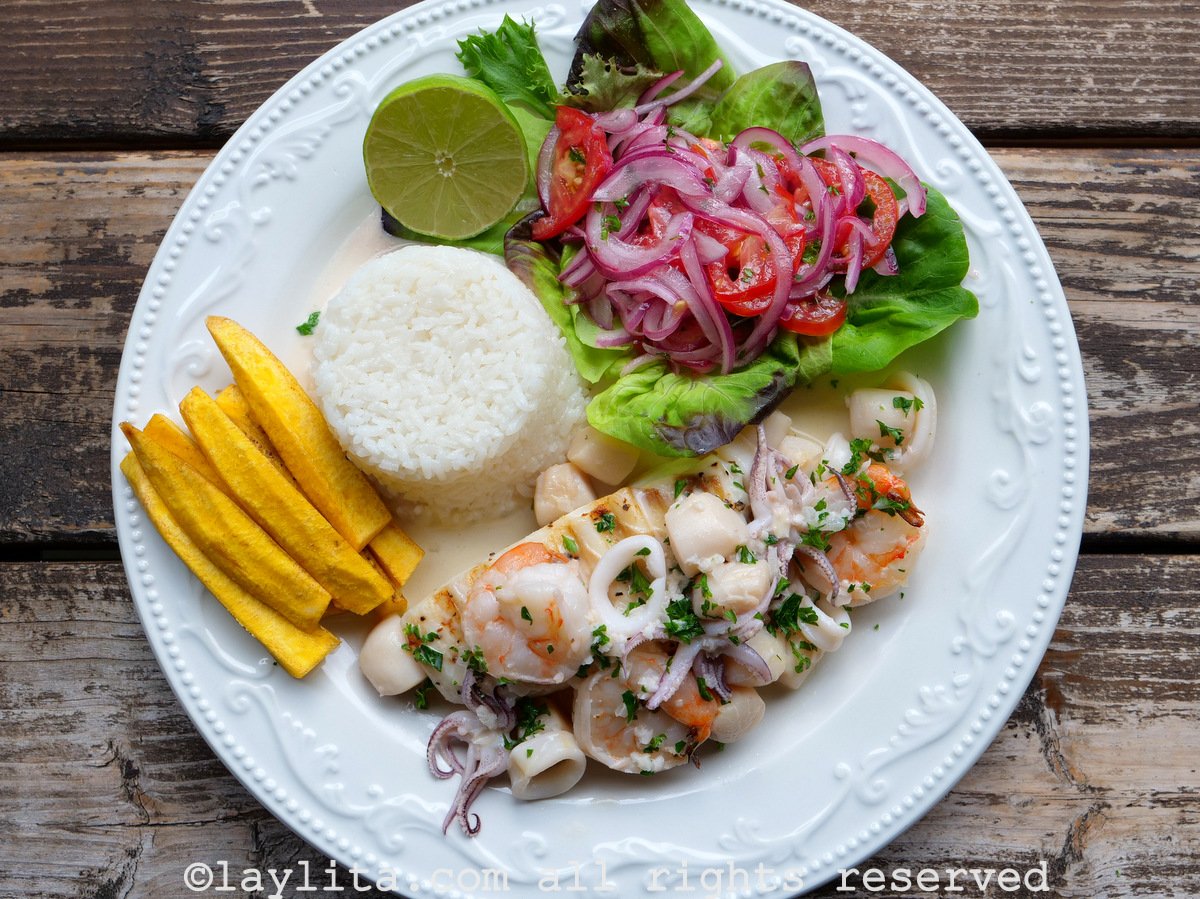
Recipe for grilled fish with seafood sauce, prepared with grilled fish (cod, halibut, mahi-mahi, etc) topped with a creamy garlic seafood sauce made with shrimp, calamari, scallops, garlic, onion, white wine and cream.
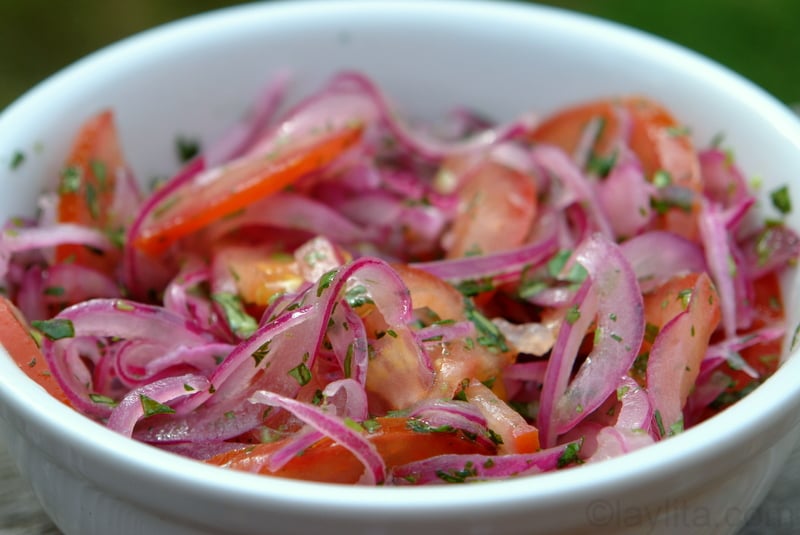
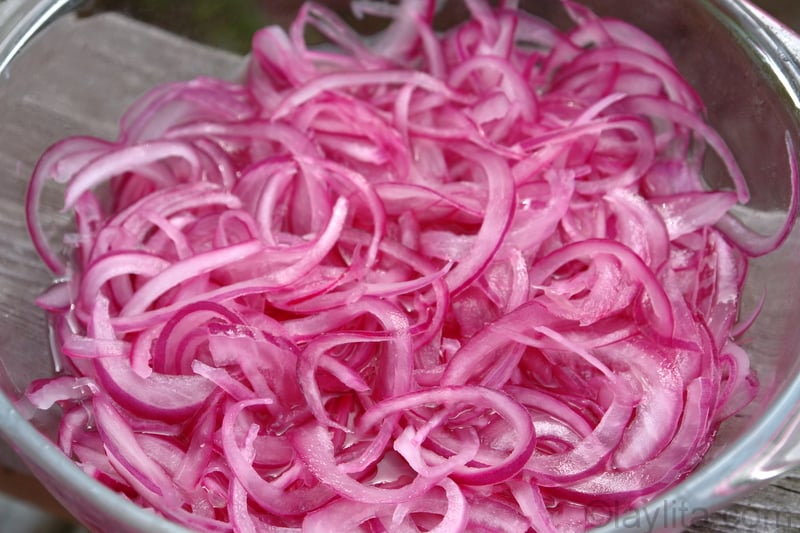
Recipe for lime pickled onions or cebollas encurtidas, these Latin/Ecuadorian marinated or pickled red onions made by marinating thinly sliced red onions with lime juice and salt.
Recipe for passion fruit hot sauce, or ají de maracuya, is a mildly spicy creamy salsa made with passion fruit juice, ajies or hot chile peppers, lime juice, olive or avocado oil, and cilantro.
Espumillas are a a popular street food in Ecuador, this dessert is a meringue cream made with fruit pulp, typically guava or guayaba, egg whites and sugar.
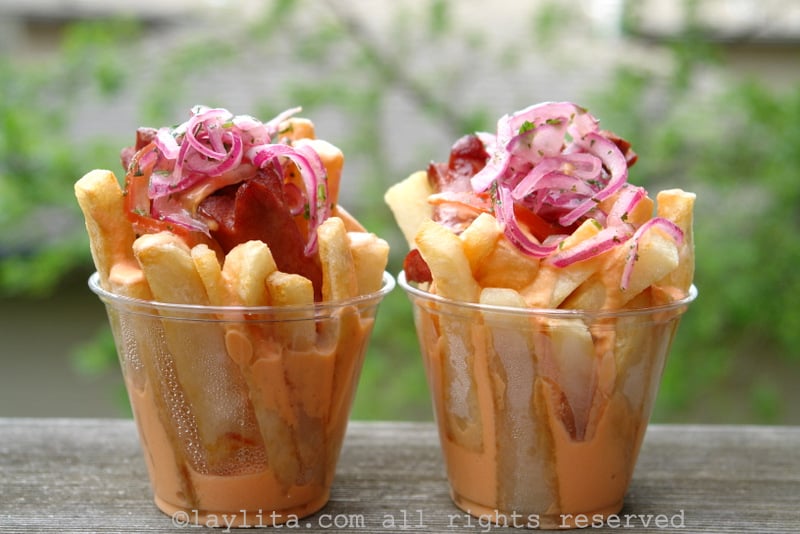
Salchipapas {South American style french fries with sausages + topping sauces}
Salchipapas, or French fries with hot dog sausages, are a typical South American snack/street food. These salchipapas are topped with tomato onion salsa and homemade salsa rosada.
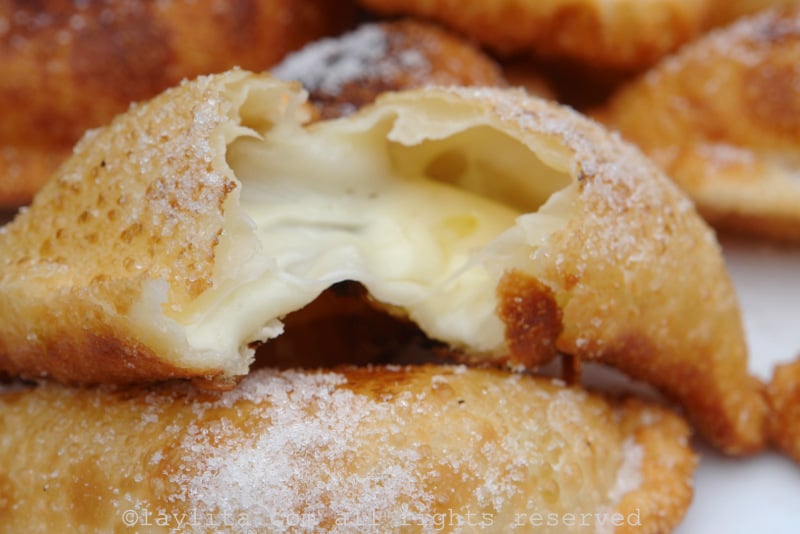
Recipe for empanadas de viento or fried cheese empanadas, these delicious traditional Ecuadorian empanadas are filled with cheese, fried until crispy, and served sprinkled with sugar.
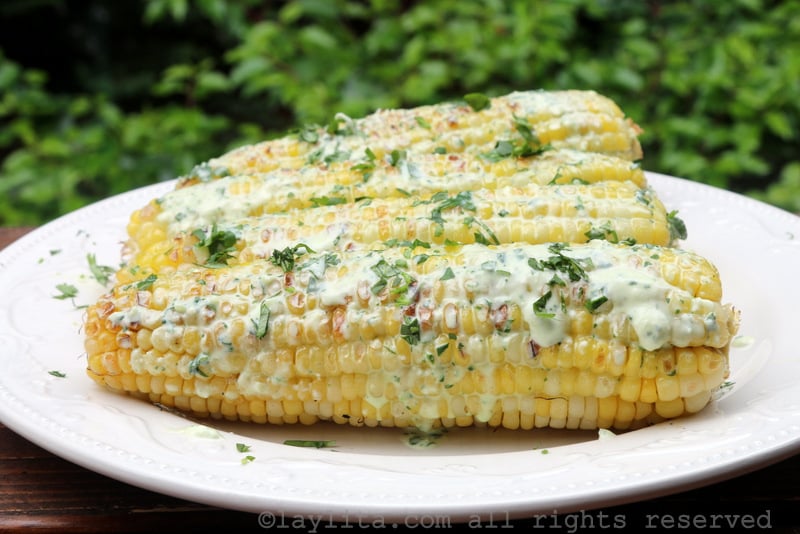
Recipe for grilled corn on the cob with a cilantro queso fresco sauce, inspired by Ecuadorian street food of choclos asados con salsa de queso y cilantro.
Thin beef skewers {Carne en palito/chuzos/pinchos}
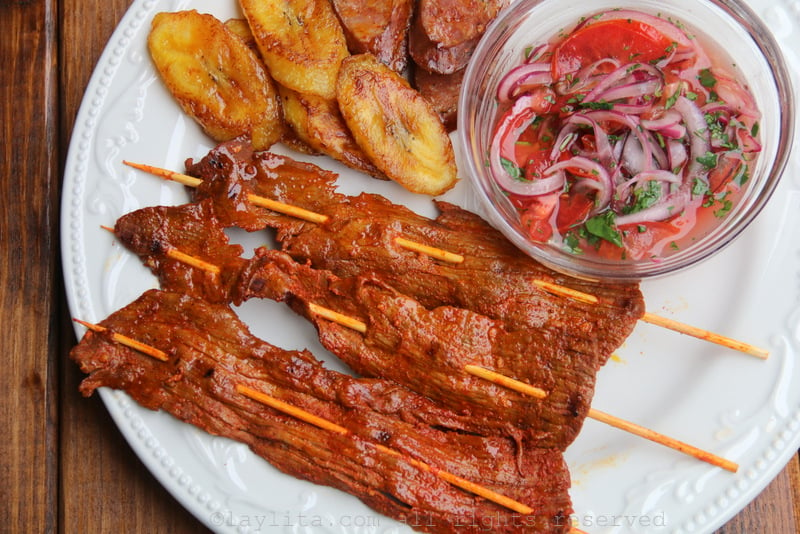
Recipe for grilled thin beef skewers, or Ecuadorian carne en palito or chuzos, made with thinly sliced meat seasoned with garlic, achiote and cumin and grilled on skewers.
Homemade recipe for chifles or thin fried green plantain chips. These crunchy chips are also known as mariquitas, chicharitas, platanutres, platanitos or plataninas. You can also make them with very green bananas.
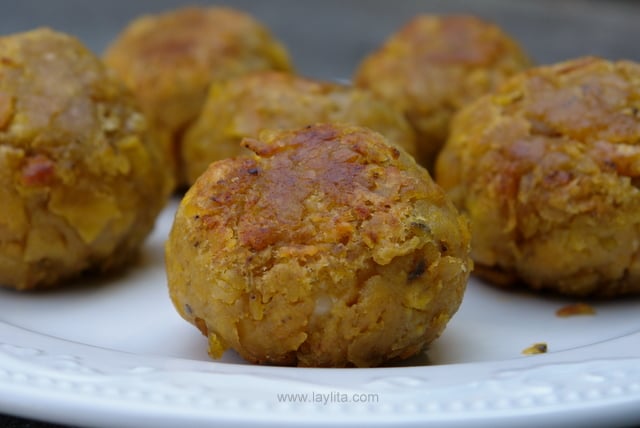
Green plantain patties stuffed with cheese {Tortillas de verde}
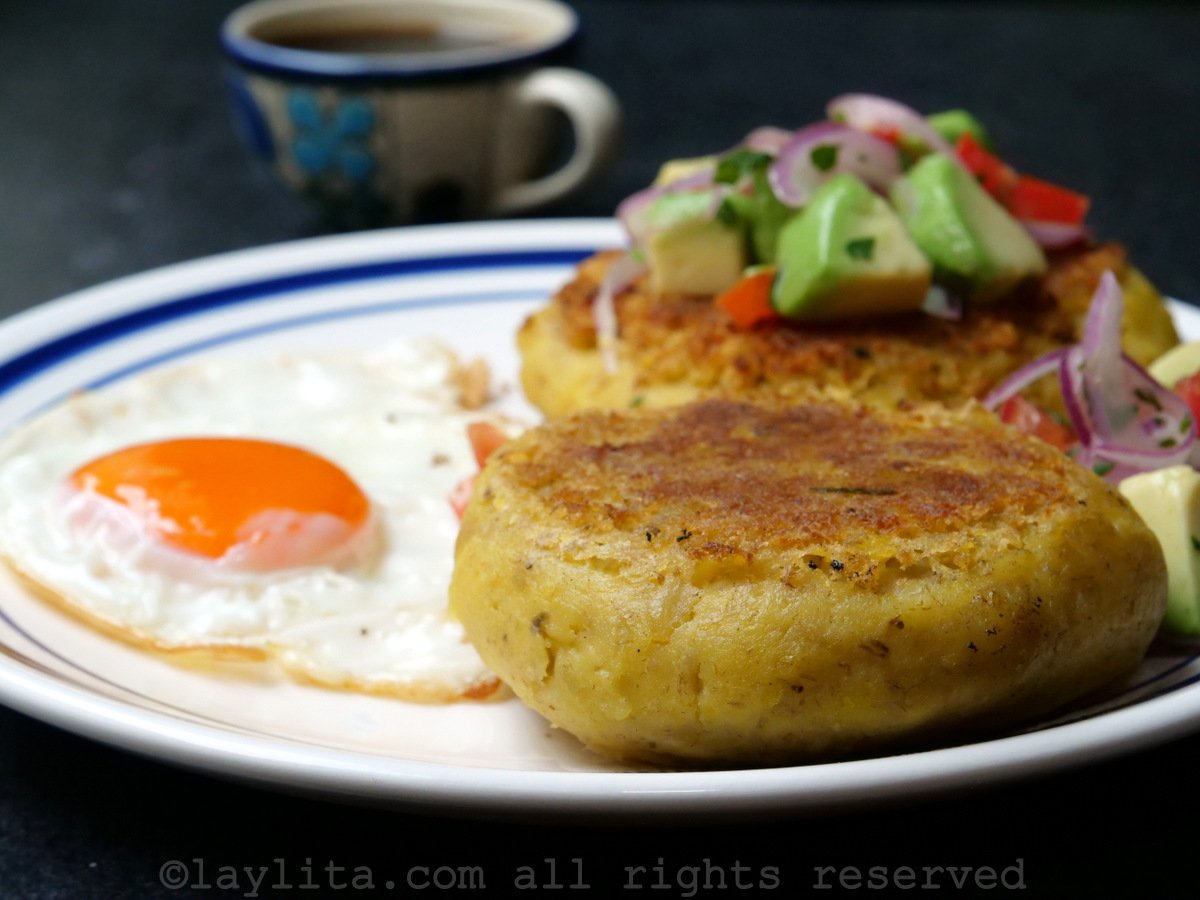
Ecuadorian green plantain patties stuffed with cheese, also known as tortillas de verde, made with a dough of green plantains, a cheese filling (or your choice of filling), and cooked on a griddle or frying pan.
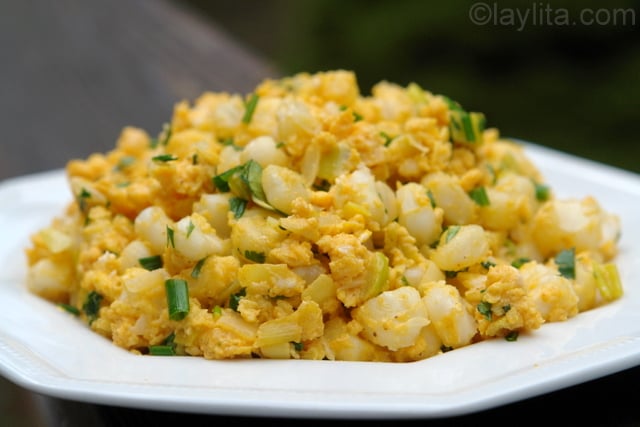
Ecuadorian mote pillo consists of hominy corn sautéed with onions, garlic, achiote, eggs, milk, chives and cilantro or parsley, and served with hot black coffee and slices of fresh cheese
Recipe for empanadas de viento or fried cheese empanadas, these delicious traditional Ecuadorian empanadas are filled with cheese, fried until crispy, and served sprinkled with sugar.
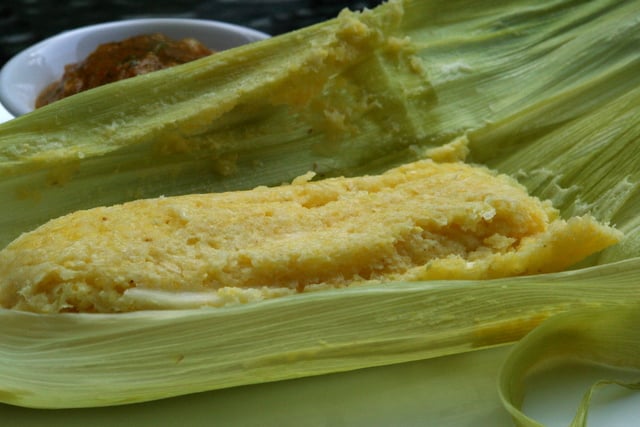
Humitas or steamed fresh corn cakes {My mom’s recipe}
Recipe for humitas or savory steamed fresh corn cakes made from a mixture of freshly ground corn, onion, garlic, cheese, eggs, and cream, which is placed inside corn husks and steamed.
Ecuadorian fruity oatmeal drink – Colada de avena con naranjilla
Colada de avena is a traditional Ecuadorian fruity oatmeal drink, it is made with oats, naranjilla fruit, panela or brown sugar, water and cinnamon. Colada can be served cold on warm days or warm during cold winter days.
Recipe for making homemade alfajores or dulce de leche sandwich cookies. These Latin American cookies are made with all purpose flour, cornstarch, butter, baking powder, egg yolks, sugar, lemon zest, milk, and vanilla. They are filled with caramel and decorated with coconut or icing sugar.
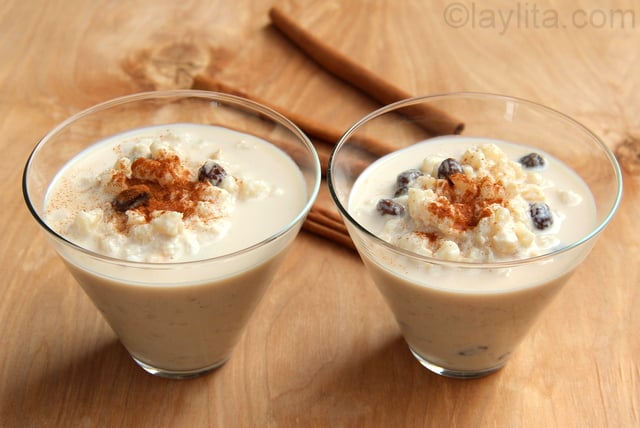
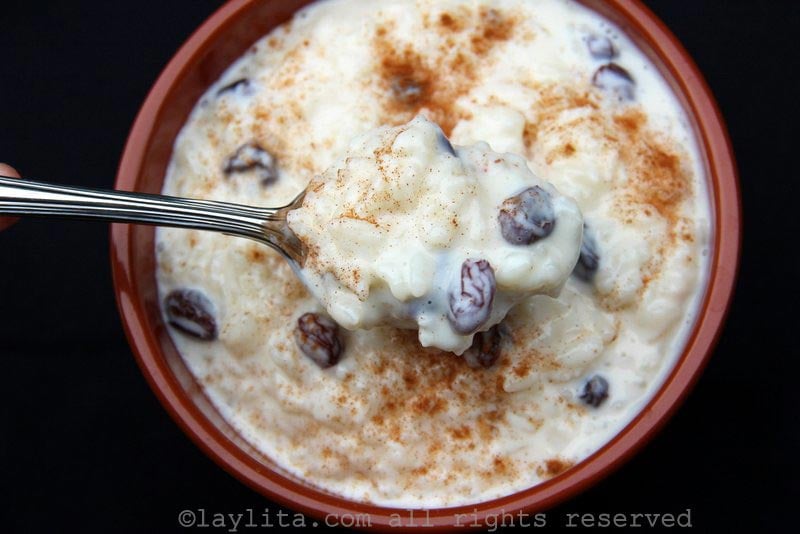
Easy recipe for homemade arroz con leche, a classic Latin American rice pudding dessert made with rice, milk, cinnamon, sugar, raisins, and condensed milk.
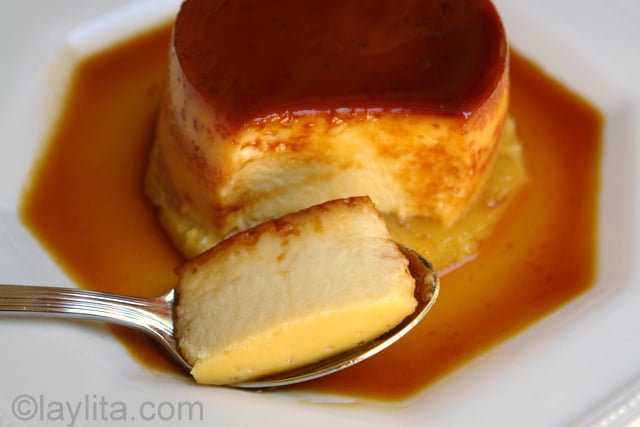
Pineapple flan, also known as flan de piña or queso de piña, is a custard like dessert made with fresh pineapple juice, sugar, milk, eggs, vanilla and rum.
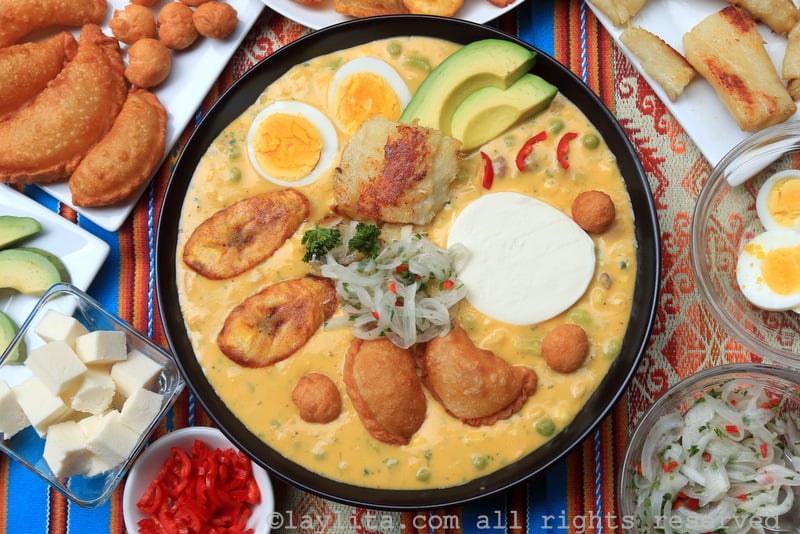
Recipe for fanesca, an Ecuadorian soup or stew made only during Lent and Easter. This soup is made with bacalao or salted cod, squash, fava beans, chochos, corn, peas, porotos or fresh beans, rice, onions, garlic, cumin, achiote, peanuts, milk, cream and cheese.
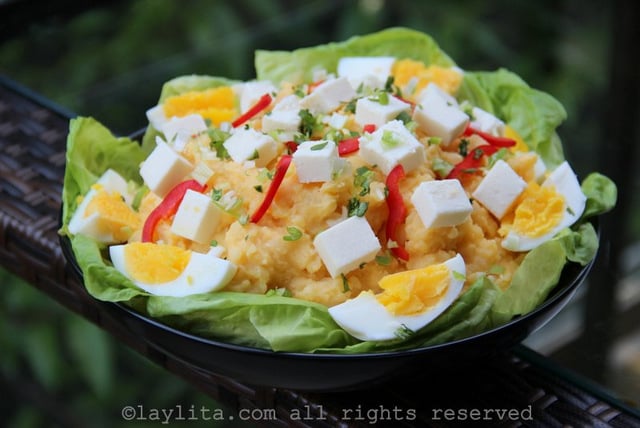
Molo is an Ecuadorian version of mashed potatoes made with milk, cream, queso fresco and a refrito of onions, garlic, and achiote or annatto. Molo is served with lettuce leaves, hard boiled eggs, hot pepper slices, avocados, scallions, cilantro or parsley, tomato and onion curtido and aji or hot sauce.
Ecuadorian Colada Morada: a spiced berry and purple corn drink
This Ecuadorian colada morada is a traditional thick drink made with fruits, spices, and purple corn flour. Colada morada is prepared for the Day of the Deceased celebrations in Ecuador.
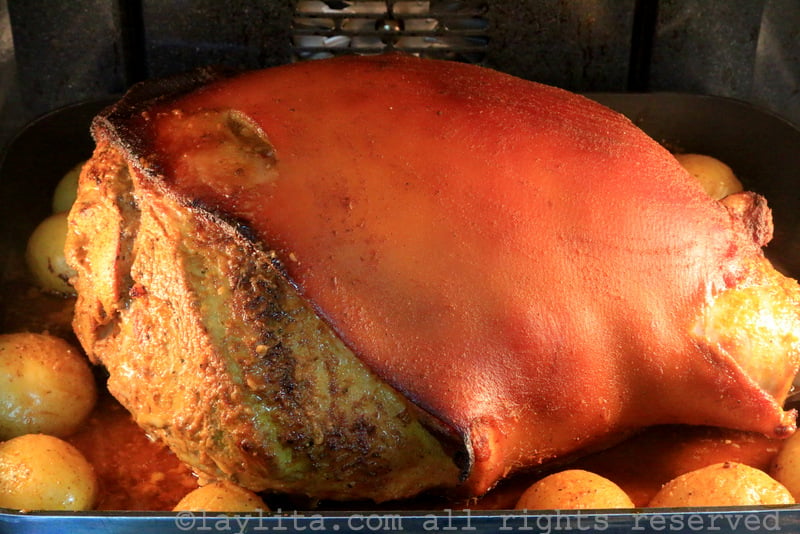
Whole roasted pork leg or hornado de pierna de chancho, prepared by marinating the pork in a sauce of beer, garlic and spices. Slow roasted with butter and spices.
I am really happy this website exists!!! We left Ecuador about 5 years ago and i have not stopped missing the food. There are two things I seriously cannot live without (they arent on here though, maybe one day? ?) bollo de pescado and hayacas… If i could eat nothing but bollo for the rest of my life i would be content. The recipes on here are great we love the ceviche especially and hope to try encebollado soon! Thank you!!
Just found your site and am in 7th heaven. We have been living in Cuenca, Ecuador for 3 years now and I am slowly learning how to cook Ecuadorian dishes. Thank you so much for posting these.








I am really happy this website exists!!! We left Ecuador about 5 years ago and i have not stopped missing the food. There are two things I seriously cannot live without (they arent on here though, maybe one day? ?) bollo de pescado and hayacas… If i could eat nothing but bollo for the rest of my life i would be content. The recipes on here are great we love the ceviche especially and hope to try encebollado soon! Thank you!!
Just found your site and am in 7th heaven. We have been living in Cuenca, Ecuador for 3 years now and I am slowly learning how to cook Ecuadorian dishes. Thank you so much for posting these.
Hola Laylita – Saludos desde Darwin, Australia. Tu sitio web es mi biblia cuando, como familia, extrañamos comida ecuatoriana. Gracias! …de corazón